Shopify Product Compliance Warnings: Add Them at Scale
On this page
Shopify Product Compliance Warnings: How to Add Them at Scale Without Editing Every Listing
A consumer electronics retailer based in Melbourne recently received a warning letter from an EU distributor. Their Shopify store listed 400+ products for European sale, but the product pages had no CE marking declarations, no RoHS statements, and no reference to EU safety compliance. The physical products were compliant. The product pages were not.
This gap is more common than most Shopify merchants realise. Product compliance in most markets means two things: the physical product must meet requirements, and the product listing must disclose that it does. For merchants selling internationally on Shopify, the listing side is usually the part that gets missed.
Adding compliance language manually to 400 product pages takes weeks. This article covers what compliance disclosure your product pages need, why the manual approach fails at scale, and how Importier's AI-generated compliance warnings automate this across your entire catalogue.
Why Product Page Compliance Is Not the Same as Product Compliance
Most merchants understand physical product compliance: CE marking on electronics, FDA registration for health products, ACCC-aligned labelling for cosmetics sold in Australia. The physical requirements are clear.
What is less understood is that product PAGES in most markets also carry disclosure obligations. Consumer protection law in the EU, UK, US, and Australia generally requires that buyers can access material information before purchase. For regulated product categories, that material information includes relevant compliance declarations.
The compliance language required varies significantly by region and product category. Electronics sold in the EU need CE declarations and often RoHS statements. Health supplements sold in the US carry FDA disclaimer requirements. Cosmetics sold in Australia reference ACCC consumer product safety standards. Electrical goods sold in the UK after Brexit require UKCA marking declarations. Managing different requirements across different markets for hundreds of products is the core problem.
What Compliance Language Shopify Products Need (By Region)
European Union: CE Marking and RoHS
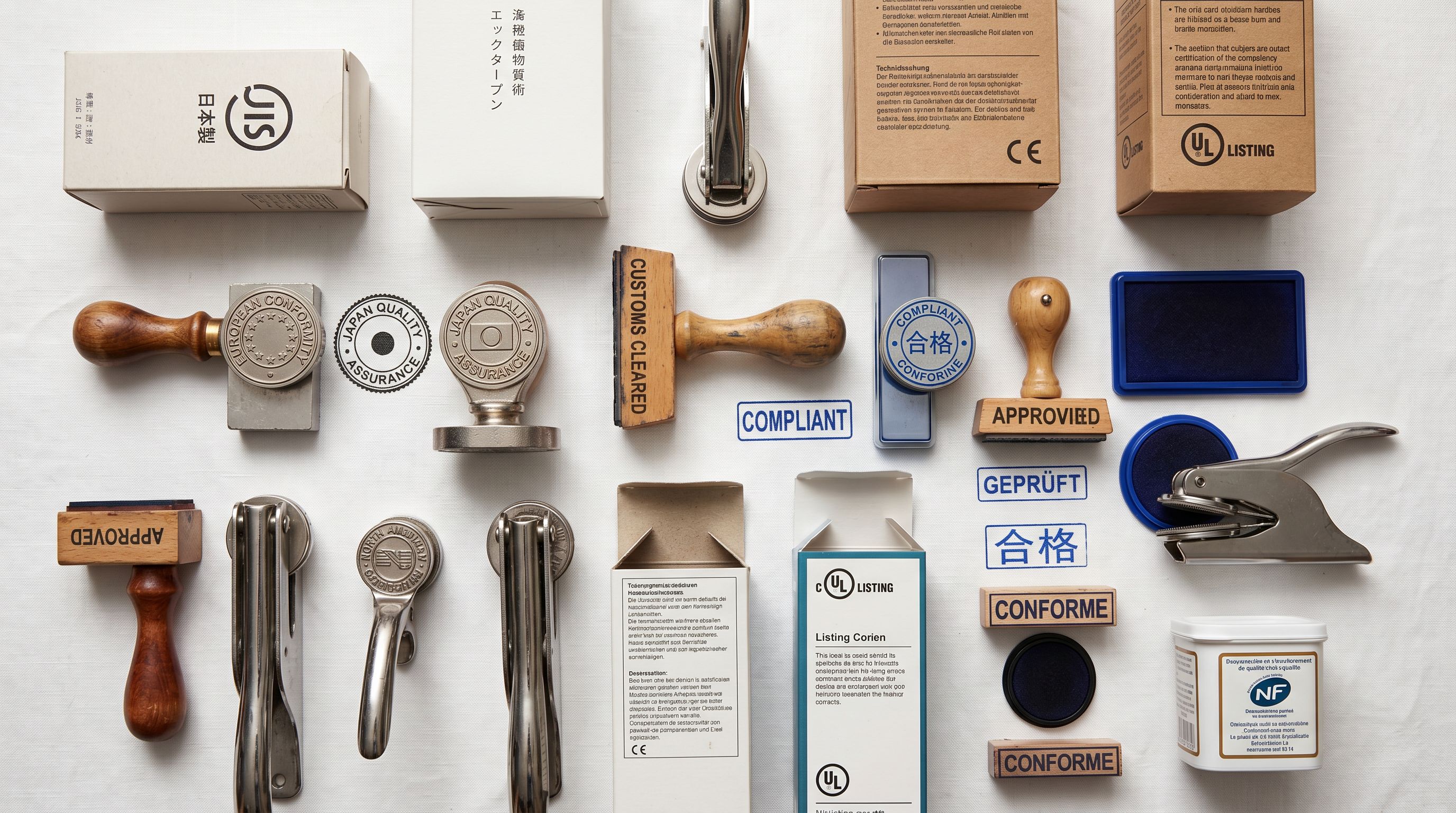
CE marking indicates that a product meets EU health, safety, and environmental requirements under relevant EU Directives. According to the European Commission's CE marking guidance, the CE mark must appear on the product and its documentation, and merchants selling CE-marked goods are expected to provide documentation on request.

For product pages, the practical requirement is a declaration in the description confirming CE compliance and identifying which Directive applies (e.g., Low Voltage Directive 2014/35/EU for electronics). RoHS (Restriction of Hazardous Substances) declarations are expected alongside CE for electronics categories.
United Kingdom: UKCA Marking Post-Brexit
Products sold in Great Britain now require UKCA marking rather than CE marking in most regulated product categories. The transition from CE to UKCA is ongoing, with some categories accepting CE marking until specified deadlines. UK product pages should reference UKCA compliance and the applicable UK legislation.
United States: FDA Disclaimers for Health and Food Products
Products in categories regulated by the FDA (dietary supplements, cosmetics, food, medical devices) must not make unsubstantiated health claims. Product pages for supplements typically include standard FDA disclaimer language: "These statements have not been evaluated by the Food and Drug Administration. This product is not intended to diagnose, treat, cure, or prevent any disease."
Australia and New Zealand: ACCC Product Safety Standards
The ACCC's product safety framework covers mandatory safety standards and information requirements for a range of consumer product categories. Electrical goods sold in Australia require compliance with AS/NZS standards. Cosmetics and personal care products are regulated under the ACCC. Product pages in these categories are expected to reference the applicable standard.
Other Markets
Canada, Norway (VOEC for digital marketplaces), and several other markets have their own product compliance requirements. The breadth of international compliance language requirements scales quickly with the number of markets a Shopify store serves.
The Scale Problem
Why Manual Compliance Updates Fail at Scale
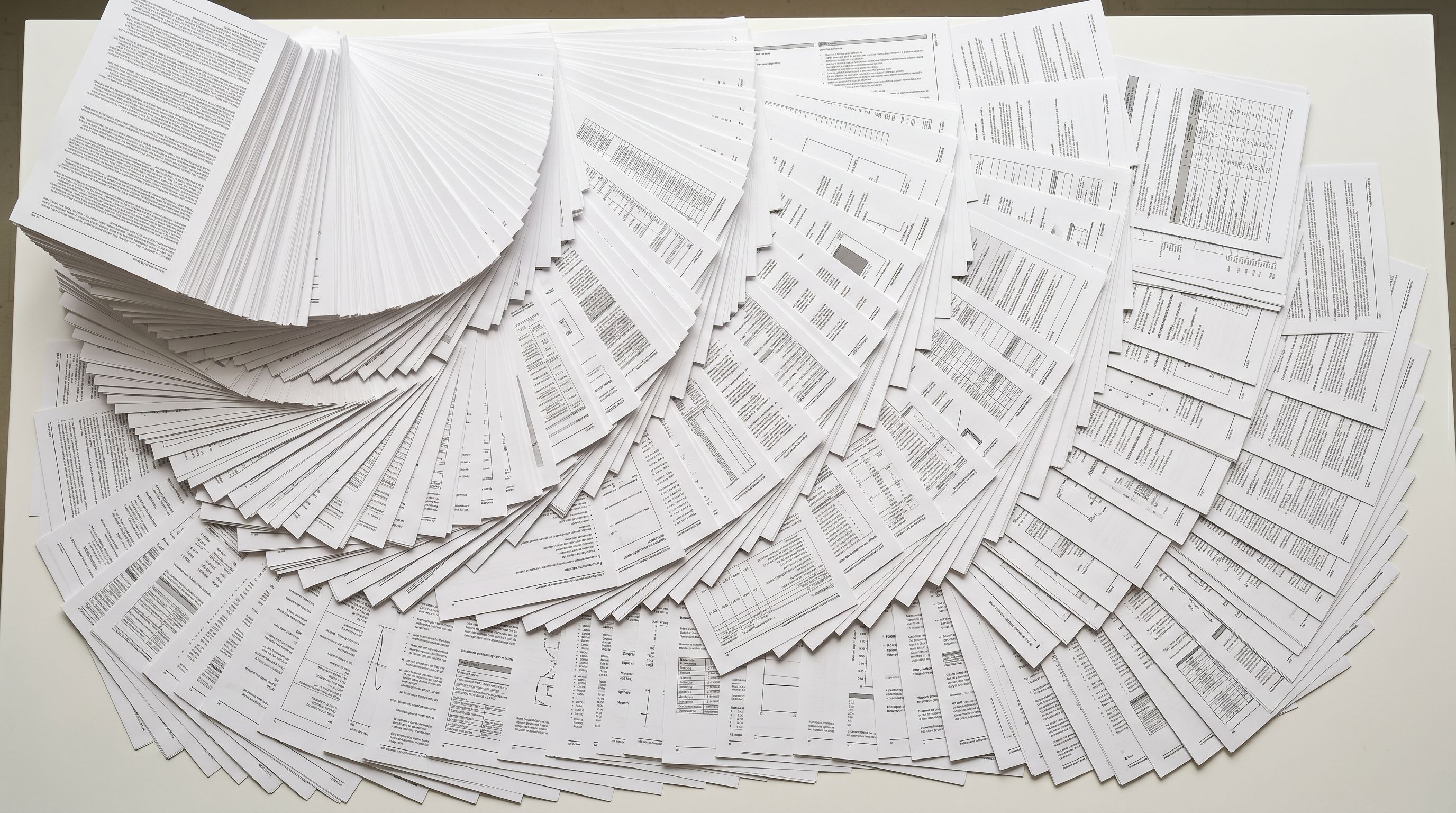
Adding compliance language to a Shopify product page manually takes between 5 and 15 minutes per product, depending on the category and how many markets the product is sold in. For a catalogue of 400 products selling into the EU and Australia, that is a minimum of 33 hours of copy work, before any ongoing maintenance when product lines change or regulations update.
The manual approach breaks down in three specific ways.
Inconsistency across the catalogue. Different team members writing compliance language produce different phrasings, different level of detail, and different reference standards. Buyers and regulators both expect consistent language across a product range.
Maintenance when requirements change. When the UK's UKCA transition extended its deadline, or when an FDA guidance note updated acceptable supplement disclaimer language, merchants with manual compliance copy had to find and update every affected product page individually.
Scaling to new markets. A store that adds Australia to its shipping destinations needs to add ACCC-appropriate language to every applicable product page. With manual updates, each new market is another round of catalogue-wide editing.
- 5-15 minutes per product page manually
- Inconsistent language across the catalogue
- Full re-edit required when requirements change
- Each new market requires another full catalogue pass
- Risk of missing products during manual editing
- Compliance language configured once, applied in every AI description run
- Consistent language from a single source configuration
- Update the configuration once, regenerate via Store Scanner
- Multiple market configurations applied in one generation session
- Entire catalogue covered in a single Store Scanner run
How Importier's Compliance Warnings Work
Importier's AI description generator includes a region-specific compliance warning system covering 12+ countries. When you generate product descriptions (either during a new import or retroactively via the Store Scanner), Importier's AI appends the appropriate compliance language for your configured market to each description.
The compliance warnings are category-aware. Electronics listings in EU-configured stores receive CE/RoHS declarations. Health supplement listings in US-configured stores receive FDA disclaimer language. Cosmetics listings in Australian stores receive ACCC-appropriate language. Importier applies the relevant warning based on the product's category and the compliance market configured in your settings.
This is not boilerplate appended blindly to every product. The system identifies the product category from its data and applies warnings relevant to that category. A children's toy listing gets toy safety compliance language. An electrical appliance listing gets electrical safety compliance language. A food product listing gets food safety compliance language.
What this does not do. Importier's compliance warnings are AI-generated language for product pages, not legal certification. They do not replace proper legal review of your obligations in each market, do not certify that your physical products meet the standards referenced, and do not register your business with any regulatory body. Always verify your specific compliance obligations with a qualified solicitor in each market.
Setup: Configuring Compliance for Your Market
- 01Step 1Open Importier Settings. Navigate to the Tax and Compliance section in your Importier settings panel. This is where both tax registration numbers and product compliance configurations are managed.
- 02Step 2Select your compliance market. Choose the market or markets relevant to your store. Importier supports 12+ countries including EU, UK, US, Australia, Canada, Norway, and others. You can configure multiple markets for stores selling internationally across regions.
- 03Step 3Select compliance categories. Confirm which product categories in your catalogue need compliance language. Electronics, health products, cosmetics, food, electrical goods, and children's toys each trigger different warnings in the relevant markets.
- 04Step 4Generate descriptions with compliance language. Run the AI description generator: either during a new product import via the 14-step wizard, or retroactively via the Store Scanner. Compliance warnings are appended to every generated description for applicable products.
- 05Step 5Review and confirm. Check a sample of generated descriptions to confirm the compliance language is appropriate for your product range. The Store Scanner's Replace mode overwrites existing descriptions, so run it on a small batch first to review before applying catalogue-wide.

Running Compliance Updates on an Existing Catalogue
For stores with existing product listings that need compliance language added, the Store Scanner is the practical tool.
Store Scanner scans your catalogue against configurable criteria (by collection, vendor, SKU pattern, or barcode pattern) and generates AI descriptions for the filtered products. Running it with compliance settings configured means every description generated in that session includes the appropriate compliance language.
For a store with 400 electronics products sold into the EU, the workflow runs in a single Store Scanner session. Set the filter to your electronics collection, configure your compliance market (EU, CE marking + RoHS), choose your description style and persona, and run in Replace mode to overwrite the existing descriptions. A catalogue of 400 products generates in minutes.
Configuring compliance language once in Importier means every product imported or regenerated from that point forward carries the right disclosure automatically.
Pairing compliance warnings with the delivery and returns setup in Importier gives a complete product page footer: delivery policy, returns policy, tax registration, and compliance declarations, all consistent, all generated automatically, all updated from a single configuration when anything changes. The guide on adding delivery and returns to Shopify product pages covers the delivery side of this stack.
Connecting Product Compliance to Tax Registration
Importier's compliance warning system works alongside the Shopify international tax compliance feature, which stores IOSS (EU), UK VAT, VOEC (Norway), and GST (Australia/Canada) registration numbers for display in the delivery section of product descriptions.
The two features address different parts of international compliance. Tax registration numbers appear in the delivery section, confirming your VAT/IOSS status for buyers in regulated markets. Compliance warnings appear in the product description itself, confirming the product's safety and regulatory certifications. Both come from a single Importier configuration rather than requiring manual maintenance on individual product pages.
For stores selling AI-generated product descriptions with brand voice settings configured, compliance language is generated in a tone consistent with the rest of the description, not as a jarring legal appendage.
When Compliance Warnings Matter Most
Not every Shopify product requires compliance language on its listing page. The need is highest for:
Regulated product categories. Electronics, health supplements, medical devices, cosmetics, food, children's toys, electrical goods, and safety equipment all carry category-specific compliance requirements in most international markets.
Multi-market stores. A store selling into three or more markets with different regulatory frameworks benefits most from automated compliance language. The alternative is maintaining separate product content per market or accepting compliance gaps in some regions.
High-volume catalogues. A store with 50 products can manage compliance language manually with reasonable effort. A store with 500+ products that sources from multiple suppliers and updates catalogue regularly cannot.
Stores running Google Shopping in regulated markets. Google's product data policies increasingly require that product listings in regulated categories include relevant compliance declarations. Missing compliance language can contribute to disapprovals or limited placement in Shopping campaigns.
Key Takeaways
- Product page compliance is distinct from physical product compliance. Most international markets require that buyers can verify a product's compliance status from the listing, not just from the physical label.
- The four highest-risk markets for Shopify product page compliance are EU (CE/RoHS), UK (UKCA), US (FDA for health/food), and Australia (ACCC). Each requires different language for different product categories.
- Manual compliance updates at scale are unsustainable: 5-15 minutes per product page, full re-edit when requirements change, and no guarantee of consistency.
- Importier generates region-specific compliance warnings as part of AI description generation, covering 12+ countries with category-appropriate language applied automatically.
- Compliance warnings work alongside tax registration (IOSS, UK VAT, GST) and delivery policy for a complete, automatically maintained product page footer.
- Importier's compliance language is a product page disclosure tool, not a legal certification. Always verify your obligations with qualified solicitors in each market.
See how Importier handles this at importier.app.
Set up your first import in under five minutes.
Importier brings products into Shopify with AI descriptions, category metafields, and data enrichment on every run.