Shopify Wine and Spirits Import: Vintage, Compliance Guide
On this page
A fine wine merchant in the Barossa Valley has 180 products ready to import into Shopify: 130 wines spanning 14 vintages and four grape varietals, plus 50 spirits covering single malts, blended Scotch, Australian gins, and aged rum. The spreadsheet contains everything: vintage year, appellation, grape varietal, Robert Parker score, ABV, bottle volume, producer name, region of origin, and recommended drinking window. Every column is filled with precise, accurate data.
Then the merchant tries to map those columns to Shopify's standard product fields. Title, price, and vendor map cleanly. The rest does not. There is no native Shopify field for vintage year. No field for appellation. No field for critic scores. No field for drinking window. The merchant's carefully structured product data has nowhere obvious to go.
Why Wine and Spirits Imports Are Structurally Different
Standard product categories have a predictable variant structure. Clothing varies by size and colour. Electronics vary by storage capacity and colour. These are attribute dimensions that do not fundamentally change the product's identity, value, or regulatory status.
Wine and spirits do not work this way.
A 2018 Penfolds Bin 389 Cabernet-Shiraz and a 2021 Penfolds Bin 389 are not the same product in different sizes. They have different prices, different Robert Parker scores, different tasting profiles reflecting each growing season's weather, different projected peak drinking windows, and different inventory counts. The 2018 may be at its drinking peak now while the 2021 requires another four years of cellaring. These are distinct products that happen to share a label name.
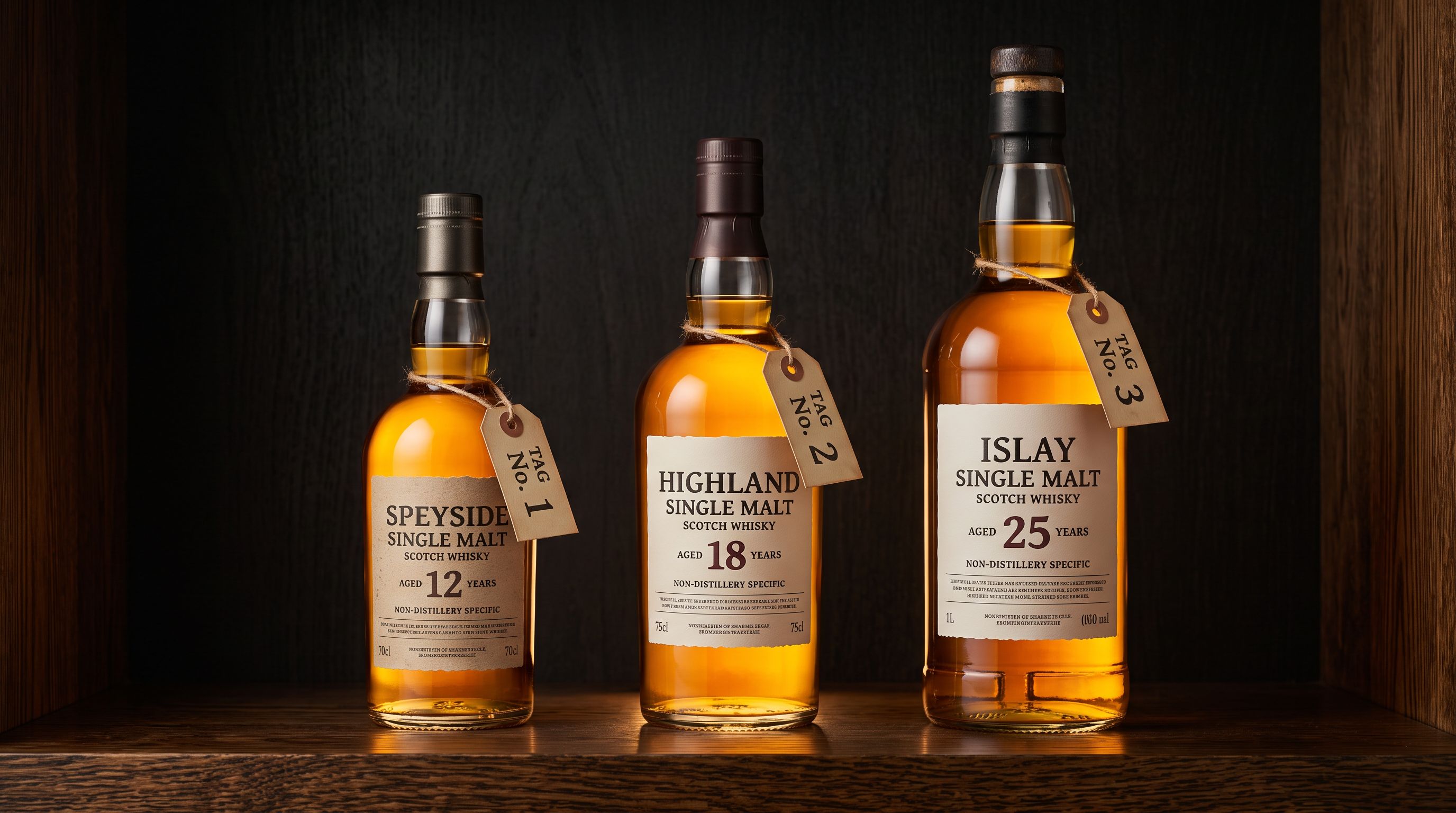
Spirits carry different structural complexity. A 12-year Glenfarclas single malt and an 18-year Glenfarclas are not the same product with a different age variant. The 18-year commands a higher price, has spent more time in sherry casks, and carries regulatory labels confirming the age statement under Scotch Whisky Association rules. Grouping them as variants on one Shopify product collapses all of that into a single price field and a single description, which cannot accurately represent both products.
The structural principle: when price, description, and compliance documentation differ across items that share a brand name, they must be separate Shopify products. When only one attribute differs (say, bottle volume: 375ml versus 750ml of the same wine from the same vintage), variants are appropriate.
The Vintage Year Problem: Variants or Separate Products
The most common import mistake for wine merchants is treating vintage year as a product variant the same way clothing sizes are variants.
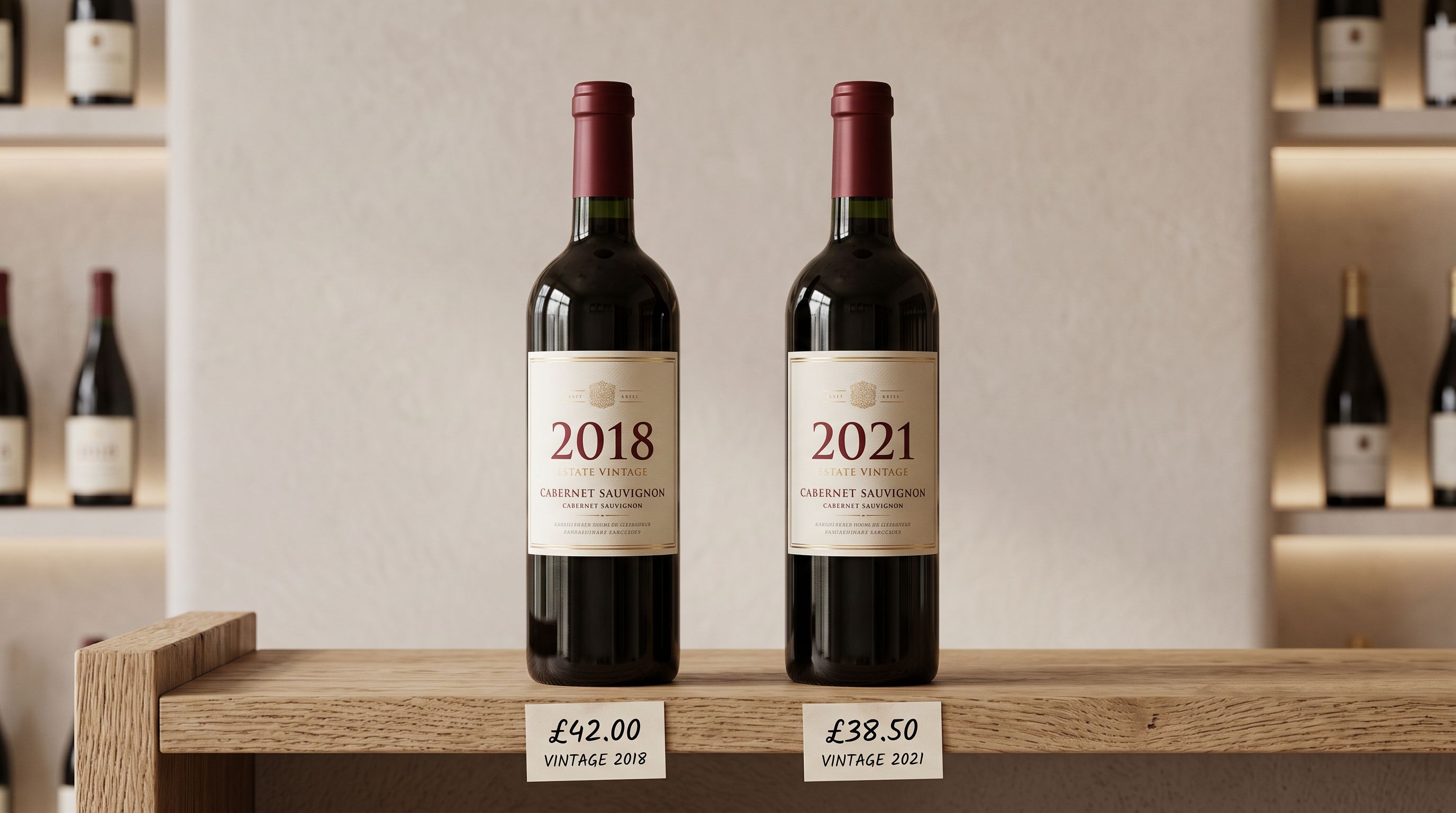
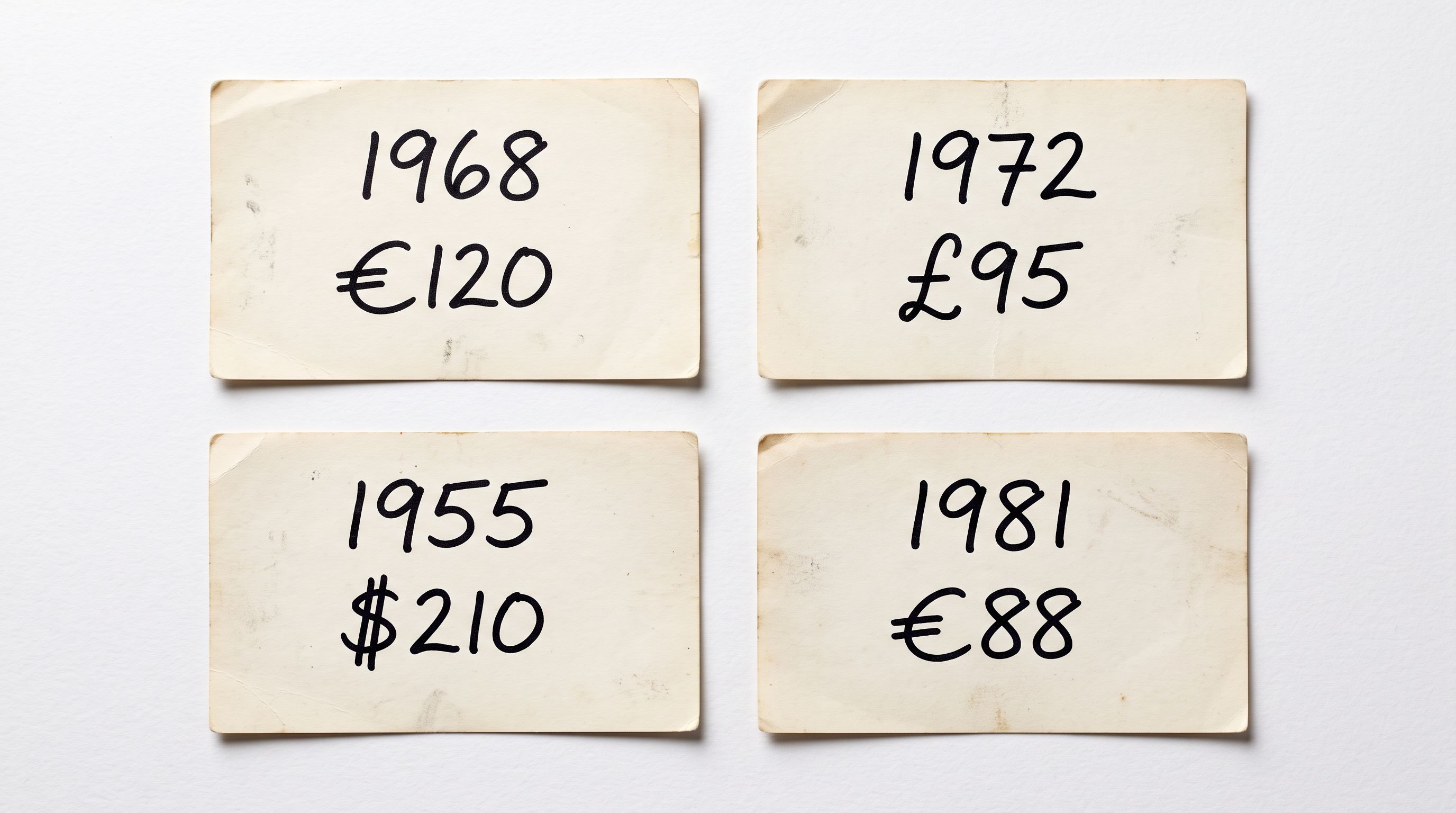
Importing a wine as one product with Vintage: 2018, 2020, 2021 as options creates a product where all three vintages share the same price, the same description, and the same featured image. To set a different price for the 2018 (which may have won awards and appreciated in value), the merchant must create a separate variant price override. To show vintage-specific tasting notes, the merchant must either use a single generic description or implement a complex conditional display in the theme. Robert Parker scores cannot be stored per-variant in Shopify's standard metafield structure: metafields attach at the product level, not the variant level, for most field types.
The correct approach is one product per vintage per label. A wine label with four active vintages in stock becomes four Shopify products: each with its own title (including the vintage year), its own price, its own stock level, and its own metafields for critic score, tasting notes, and drinking window.
Importier's Smart Variant Detection handles this correctly. When importing a wine catalogue where the spreadsheet uses vintage year as a column, the import can be configured to use vintage year as a product-splitting field rather than a variant-grouping field. Each vintage row becomes a separate product. Volume variants (375ml, 750ml, 1.5L magnum) of the same vintage are grouped as variants on that product, because they share the same price proportionally and the same tasting notes.
Setting up wine and spirits metafields
Appellation and Provenance Data as Shopify Metafields
Appellation data is what separates a $15 table wine from a $120 GI-protected regional wine in the merchant's catalogue. Displaying appellation correctly (Barossa Valley, Clare Valley, Margaret River, McLaren Vale) is both a marketing requirement and, in some markets, a legal compliance requirement.
Shopify metafields are the right place for appellation data. A metafield with namespace wine and key appellation stores the geographical indication as a text value. A second metafield (wine.region) stores the broader region. A third (wine.sub_region) stores the sub-appellation where applicable (Eden Valley within Barossa Valley, for instance).
According to Wine Australia's geographical indications framework, Australian wines may only carry a GI label if the wine meets origin verification standards. For merchants selling Australian wines internationally via Shopify DTC, displaying the correct appellation in product metadata is part of meeting labelling requirements in destination markets.
Importier's Beverages and Spirits Industry Pack includes pre-configured metafields for:
wine.appellation: the GI or controlled designation of originwine.region: broader geographic regionwine.varietal: grape variety or blend (Shiraz, Cabernet Sauvignon, Grenache Blanc)wine.vintage_year: four-digit vintage yearwine.drinking_window: recommended drinking range (2025-2032)wine.critic_score_rp: Robert Parker scorewine.critic_score_ws: Wine Spectator scorewine.closure_type: cork, screwcap, Diam
At import time, the merchant maps their spreadsheet columns to these metafield keys. The Industry Pack applies them to every product row. A 180-product wine catalogue with six metafield columns maps and imports in a single operation rather than requiring 180 individual product edits in the Shopify admin. For suppliers whose column headers use non-standard naming conventions, the Shopify import column mapping guide covers how to translate custom field names to Shopify fields during the import wizard's mapping step.
Spirits-Specific Data: Age Statement, Distillery, and Cask Type
Spirits carry a distinct set of metafields that wine catalogues do not require. The most important is the age statement.
An age statement on a spirits label (12 Year, 18 Year, 21 Year) is a legal declaration under the rules of the relevant spirits category. For Scotch whisky, the Scotch Whisky Regulations 2009 require that any age statement on a bottle reflects the youngest whisky in the blend. This is not a marketing claim; it is a regulatory requirement that must appear accurately in product metadata for merchants selling via DTC channels into regulated markets.
Importier's spirits metafields accommodate:
spirits.age_statement: numeric age in years (12, 18, 21)spirits.distillery: the producing distillery or brand ownerspirits.country_of_origin: origin country (Scotland, Ireland, Japan, Australia)spirits.cask_type: cask maturation type (ex-bourbon, sherry, port, virgin oak)spirits.abv: alcohol by volume as a decimal percentagespirits.spirit_type: single malt, blended malt, blended Scotch, bourbon, rum, ginspirits.nose,spirits.palate,spirits.finish: structured tasting note fields
The tasting note fields (nose, palate, finish) are particularly useful for spirits merchants who want to display structured tasting data in a consistent format across the catalogue, matching the three-part format used in whisky review publications and producer tasting notes.
- 01Map your spirits spreadsheet columns to Importier's metafield keys at the column mapping step. Nose, palate, and finish notes become separate metafield values rather than one combined text field.
- 02Set vintage year or batch number as a product-splitting field so each bottling becomes a separate Shopify product. For spirits without a vintage, use the age statement plus release year as the identifier.
- 03Configure the ABV field to import as a numeric metafield, not as a product title suffix. This enables filtering by ABV in collections and search.
- 04Apply the Beverages and Spirits Industry Pack to assign all spirits metafield definitions in one step. The pack includes 3,758 attributes across 22 industry categories, with Beverages covering both wine and spirits fields.
- 05After import, run the AI description generator with a spirits persona from the 156 expert personas. The persona understands tasting note conventions and writes nose, palate, and finish descriptions from the structured metafield data.
AI Description Generation for Tasting Note Language
Tasting note copy is one of the most specialised forms of product description in retail. The vocabulary is specific: wine descriptions reference fruit profile, structure, acidity, tannin grip, oak integration, and finish length. Spirits descriptions use nosing language for volatile esters and aldehydes that require training to write accurately.
A generic AI model writing product descriptions for a wine will produce copy that sounds approximately correct but uses the wrong vocabulary for the specific wine's style. A Barossa Valley Shiraz and a Clare Valley Riesling require completely different registers: the Shiraz calls for language around dark fruit, plush tannins, and warm alcohol character; the Riesling requires language around citrus, slate minerality, high natural acidity, and cellaring potential.
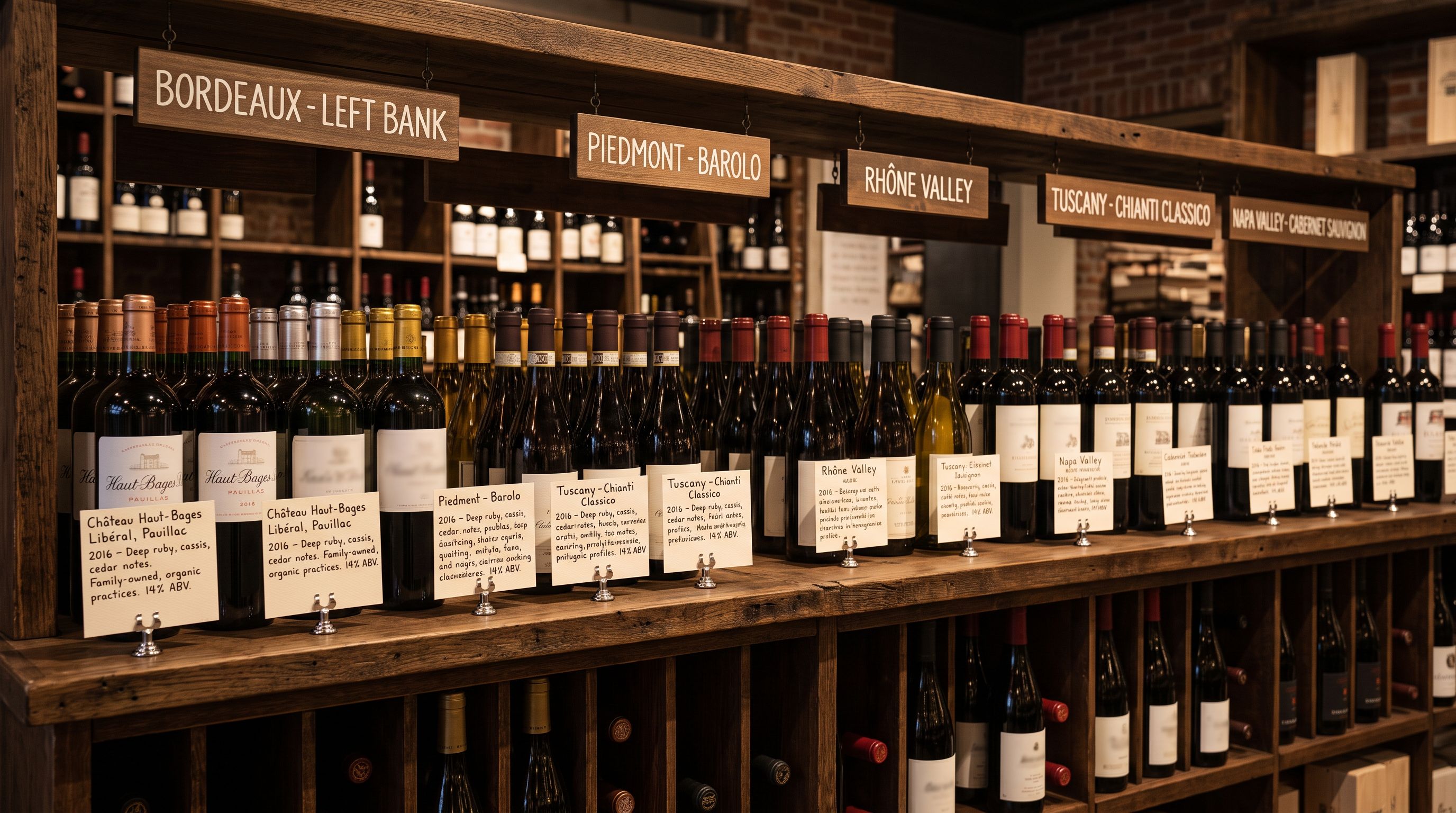
Importier's 156 expert personas include wine and spirits specialists whose writing style matches the conventions of each category. A persona configured for fine wine DTC writes in the vocabulary of the wine trade: bin numbers, vintage reports, drinking windows, and cellar recommendations. The enrichment context field adds precision: supplying "Barossa Valley Old Vine Shiraz, 2019 vintage, warm growing season" tells the persona enough to write copy that a sommelier would recognise as accurate for that specific context.
The AI description generator reads vintage year, appellation, varietal, and critic score as structured inputs, then writes tasting notes at the register of a trained sommelier rather than generic product copy.
For spirits, the nose, palate, and finish metafield values become inputs to the description generator. Rather than writing free-form tasting notes from scratch, the AI formats the structured data into retail copy that matches the three-part tasting note convention. A 12-year single malt with nose: "dried fruit, vanilla, light peat", palate: "honeyed barley, warming spice", finish: "long, with gentle smoke" produces a complete tasting note in the correct register.
According to Shopify's guide on product metafields, metafield values can be used to populate theme sections, filter collections, and enable faceted search. For a wine and spirits merchant, this means appellation, varietal, and ABV can become collection filter criteria once the metafields are populated, allowing customers to filter by region, grape type, and alcohol content without the merchant manually tagging each product.

- Enter vintage year, appellation, and varietal for 180 products individually in Shopify admin
- Add critic scores and drinking window to product descriptions as unstructured text
- Create separate variant definitions for each bottle volume manually
- Write tasting note copy from scratch for each product or hire a copywriter
- Set ABV as a tag or description suffix with no filtering capability
- Map spreadsheet columns to pre-configured wine metafields in one operation
- Critic scores and drinking windows import as structured, filterable metafields
- Volume variants auto-detected and grouped per vintage product by Smart Variant Detection
- AI description generator writes tasting notes from structured metafield inputs
- ABV imports as a numeric metafield enabling collection filtering by alcohol strength
Key Takeaways for Shopify Wine and Spirits Product Import
Wine and spirits catalogues require a different structural approach than standard product categories. Vintage year, appellation, and compliance data belong in metafields, and vintage year should drive product splitting rather than variant grouping in most DTC contexts.
- Treat each vintage as a separate product, not a variant: a 2018 and a 2021 of the same label have different prices, different descriptions, and different critic scores. Variant structure cannot represent this accurately. Import each vintage as a standalone product with its own metafields.
- Use the Beverages and Spirits Industry Pack for metafield assignment: the pack includes pre-configured metafield keys for appellation, varietal, vintage year, drinking window, critic scores, distillery, age statement, cask type, ABV, and structured tasting notes. Mapping at import time eliminates 180 individual admin edits.
- Import ABV as a numeric metafield, not as a title suffix: numeric metafields enable collection filtering by alcohol strength, compliance filtering for age-gated content, and accurate display in product pages. Title suffixes (Glenfarclas 12 Year 43% ABV) are harder to filter and search.
- Use structured tasting note fields for spirits: importing nose, palate, and finish as separate metafields rather than one combined text field enables consistent formatted display across the catalogue and gives the AI description generator structured inputs to work from.
- Cross-reference appellation compliance before import: for Australian wines carrying GI designations and Scotch whisky with age statements, verify that the spreadsheet data matches what will appear on the product label. Importing incorrect appellation or age statement data creates compliance exposure for DTC exports. The Craft Beer and Brewery Import guide covers similar compliance considerations for the beverage category.
Import your wine and spirits catalogue with full vintage, appellation, and compliance metafields at importier.app.
Set up your first import in under five minutes.
Importier brings products into Shopify with AI descriptions, category metafields, and data enrichment on every run.