Shopify Trading Card Import: PSA Grading, Sets, and Variants
On this page
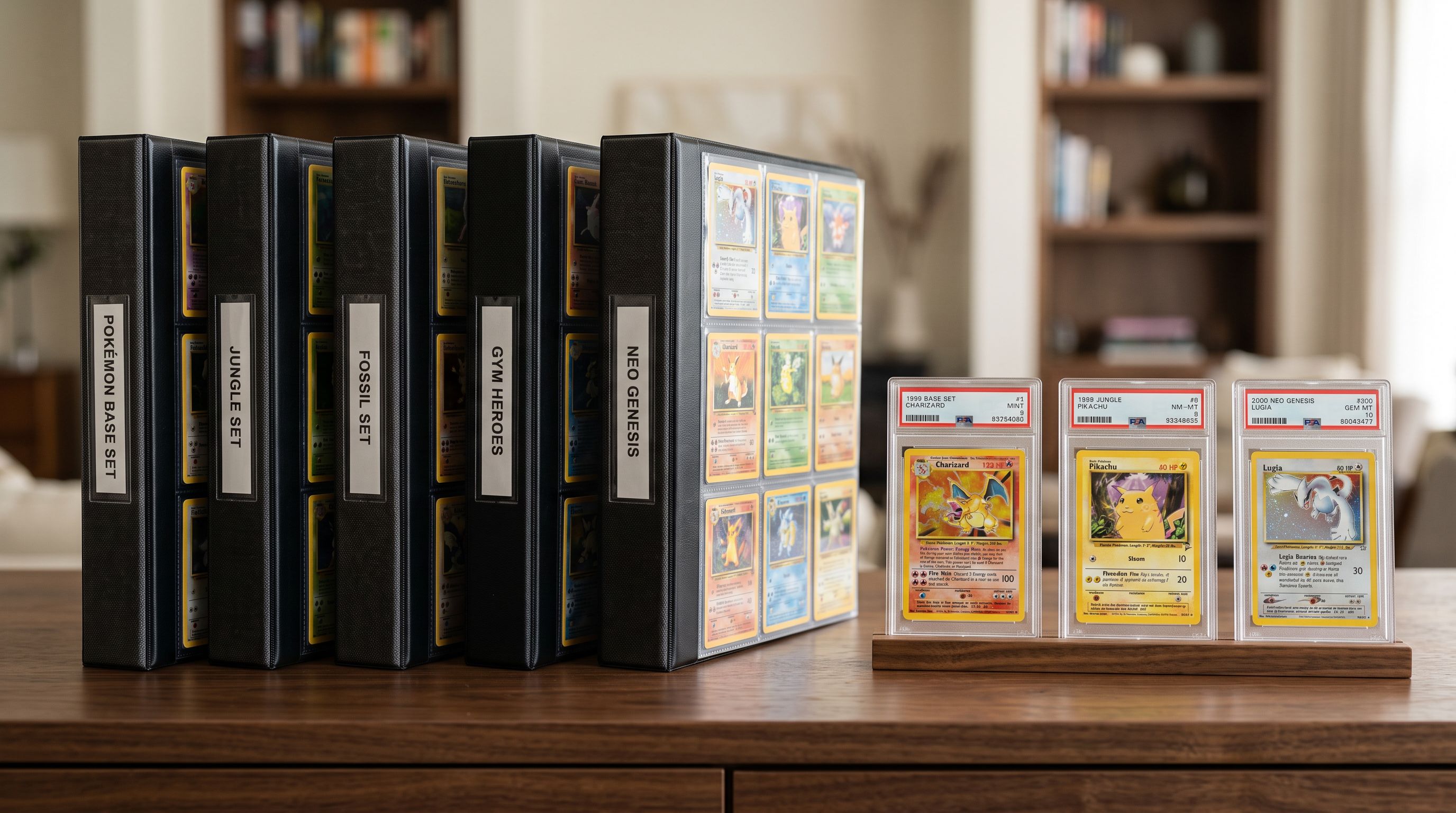
A sports card dealer has 850 Pokémon cards ready to import into Shopify. The inventory spans four sets (Base Set, Jungle, Fossil, Gym Heroes), covers 23 different card names, and includes raw ungraded copies alongside PSA-graded copies at grades PSA 7, PSA 8, PSA 9, and PSA 10. The dealer's spreadsheet has everything: card name, set, year, condition, PSA grade, price, and quantity on hand.
The import question is not how to get the data into Shopify; it is how to structure it. Should a PSA 10 Base Set Charizard and a PSA 7 Base Set Charizard be separate products or variants of the same product? Should a Base Set Charizard and a Base Set Blastoise share anything? Should the Base Set print run and the Shadowless variant of the same card be the same product with a variant, or two separate products?
Getting this structure wrong produces a catalogue that cannot be searched, filtered by condition, or correctly priced by grade.
The Core Structural Question: Variants or Separate Products
Trading cards require merchants to make a structural decision that most product categories never face: when does a condition difference create a variant, and when does it create a separate product?
The rule for trading cards: same card name, same set, same print run, same artwork: condition grades are variants. Different card name, different set, or different print run: separate products.
Under this rule, a PSA 7 and a PSA 10 of Base Set Charizard are variants on one Shopify product. The card name is identical, the set is identical, the print run is Base Set first edition. Condition is the only differentiating attribute. A customer searching for Base Set Charizard finds one product and selects their grade from the variant dropdown.
A Base Set Charizard and a Base Set Blastoise are separate products. Same set, but different cards entirely. Grouping them as variants (with card name as the option) would put two completely different cards under one product, which confuses search, collections, and inventory management.
The Shadowless variant of Base Set Charizard (which lacks the drop shadow on the artwork, indicating an early print run) is a separate product from the standard Base Set Charizard. The card name is the same, the set is nominally the same, but the print run is different and the Shadowless version commands a significant price premium. It is not a condition difference; it is a production difference that makes it a distinct collectible.
Importier's Smart Variant Detection applies this logic at import time. The merchant configures card name as the product-grouping field. PSA grade (and raw/ungraded status) becomes a variant option. Print run or edition becomes a product-splitting field when present. Each unique card identity becomes one Shopify product; each condition state becomes a variant within that product.
Mapping trading card data fields
Trading Card Data: Set, Year, Rarity, and Foil
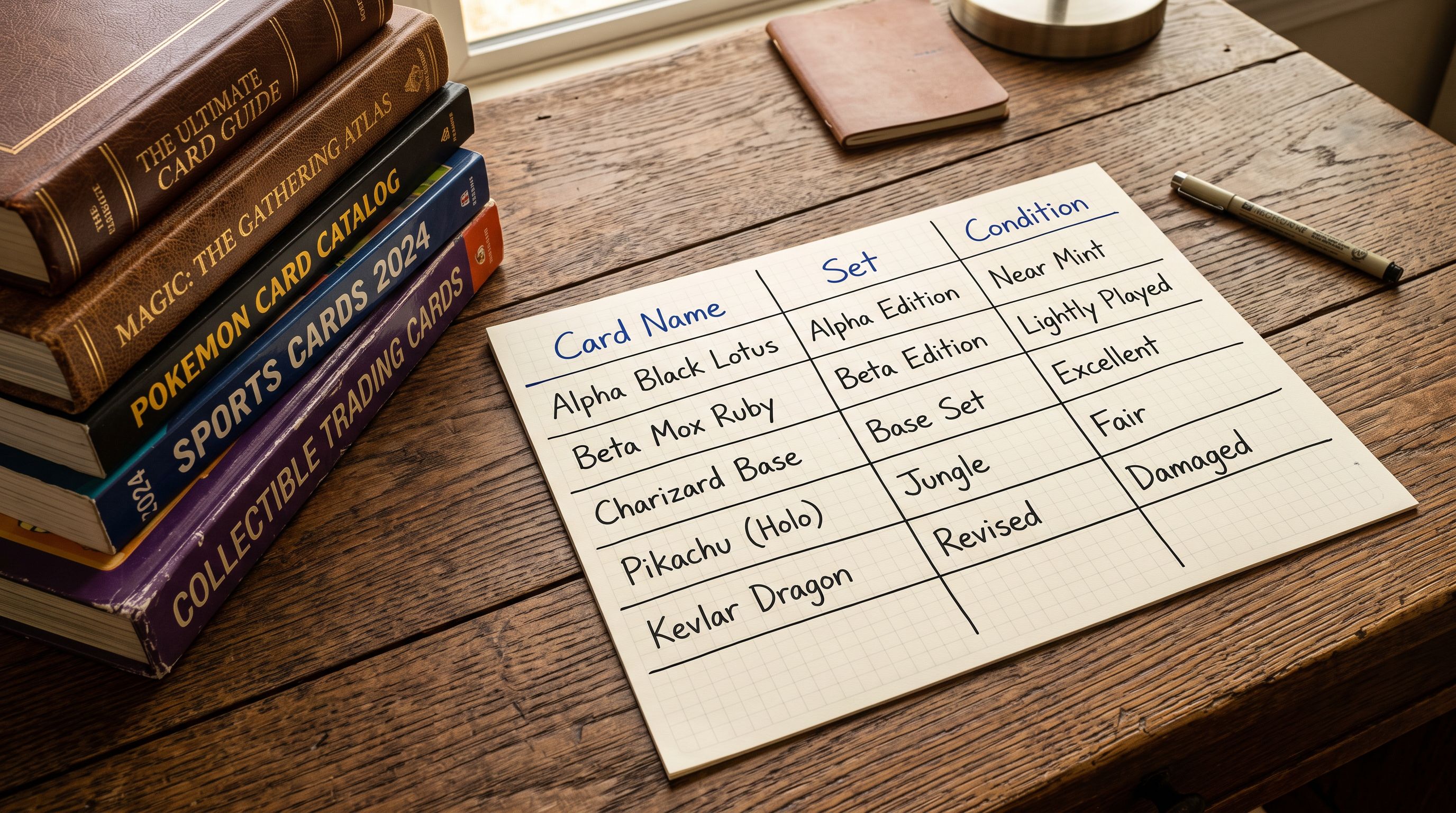
A trading card spreadsheet from a dealer or marketplace export typically contains more fields than a standard product spreadsheet. Beyond title and price, each row carries:
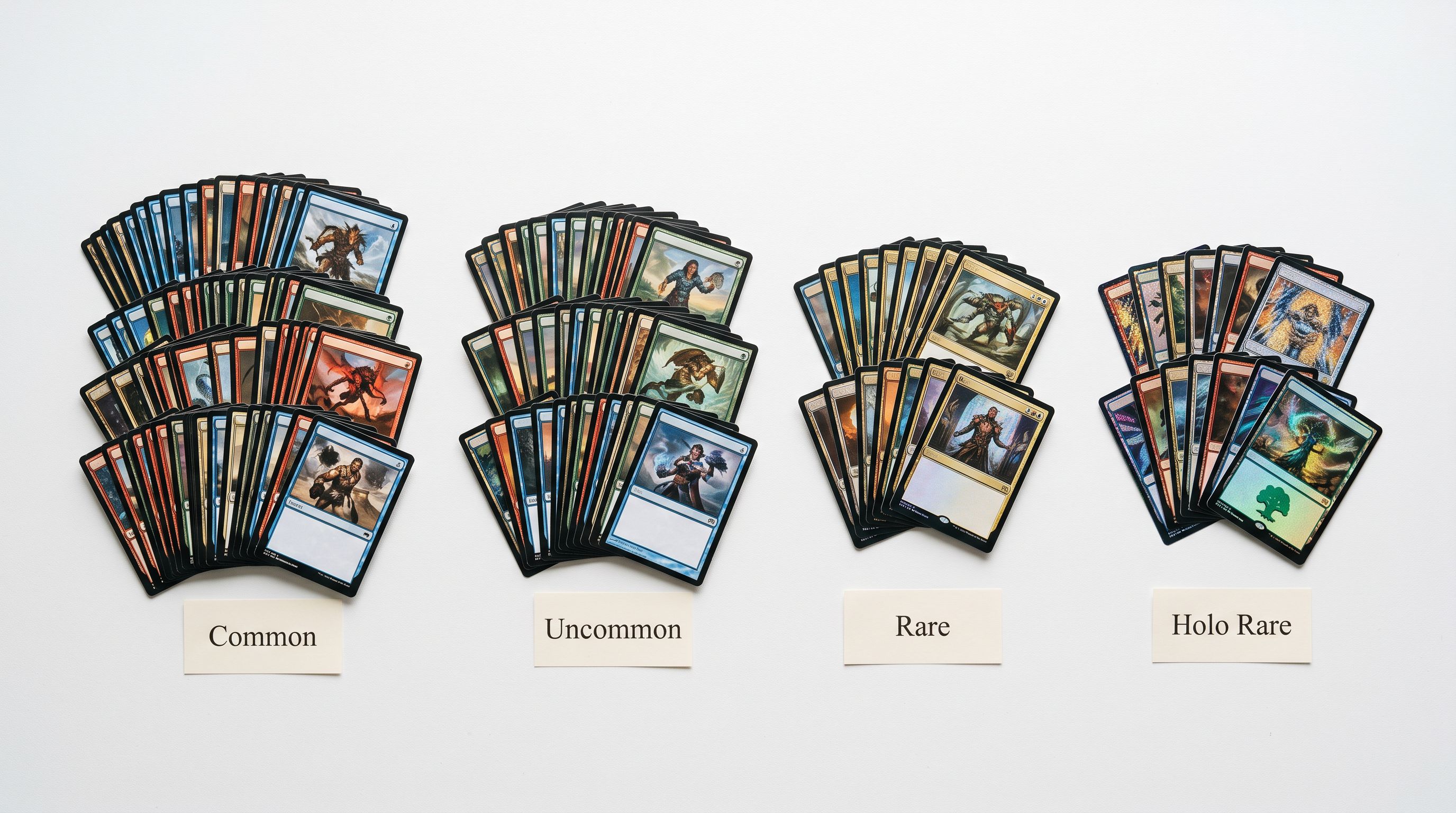
Set name. The expansion set the card belongs to: Base Set, Jungle, Fossil, Team Rocket, Gym Heroes for older Pokémon; Alpha, Beta, Unlimited, Revised for Magic: The Gathering. Set name is a product-splitting field: cards from different sets are different products even when the card name appears in multiple sets.
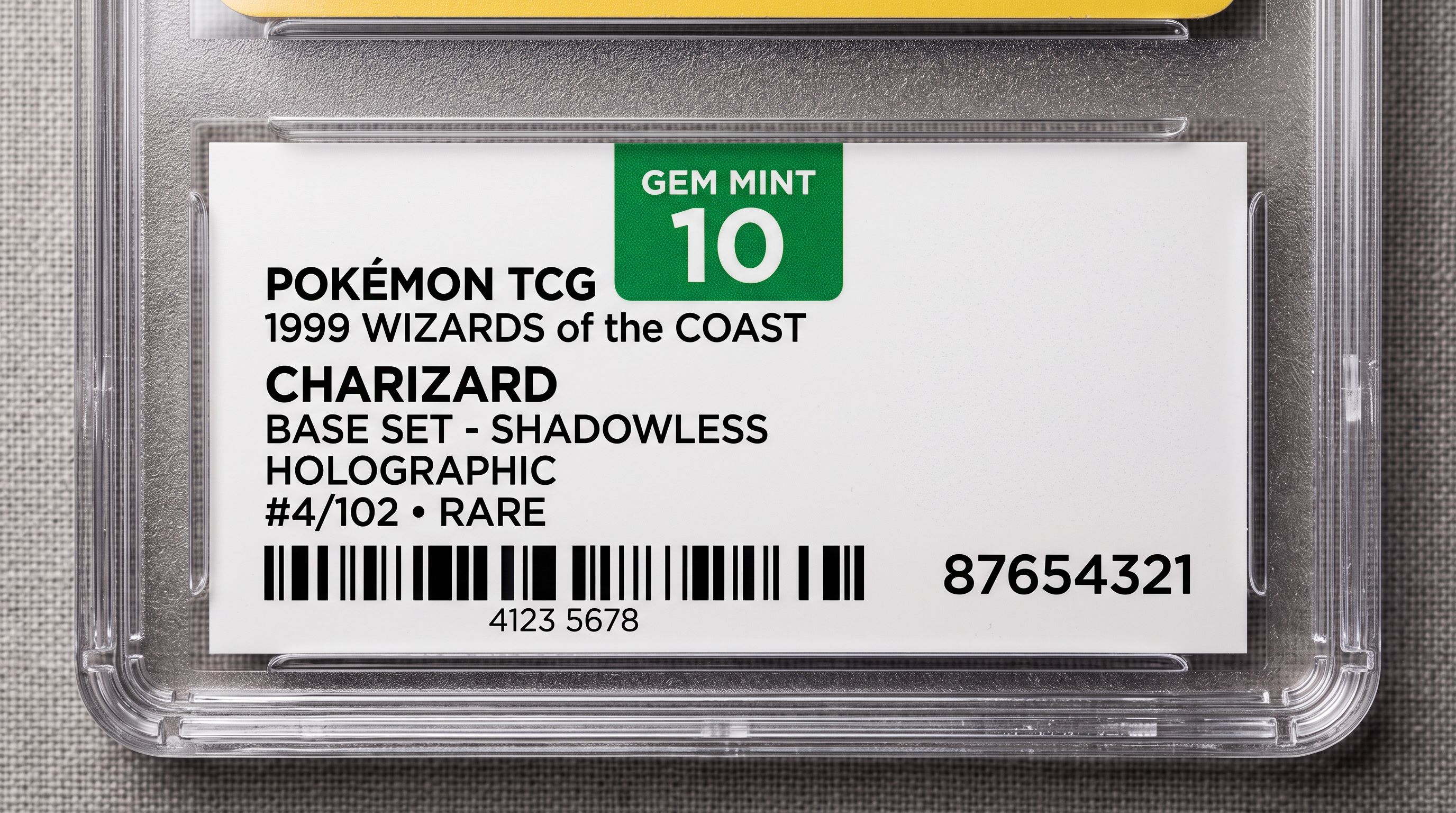
Card number within set. A card's position in the set (e.g., 4/102 for Charizard in Base Set). Two cards with the same name but different card numbers within the same set are different cards from different sets or different rarity printings.
Rarity. Common, Uncommon, Rare, Holo Rare, Secret Rare, and their equivalents across trading card games. Rarity affects price independently of condition grade. A Holo Rare card in PSA 8 and a Common card in PSA 8 have entirely different market values despite identical grade.
Foil or non-foil. For many sets, the same card exists in both non-foil and foil versions. These are separate products with different prices. In some sets, the foil version is a different rarity tier entirely.
Language. Japanese, English, and other language printings of the same card are separate products with separate collector markets. Japanese Base Set Charizard and English Base Set Charizard are not variants; they are separate products.
Importier's Trading Cards and Collectibles Industry Pack includes pre-configured metafields for all of these attributes:
card.game: the trading card game (Pokemon, Magic: The Gathering, Yu-Gi-Oh, Disney Lorcana, One Piece)card.set_name: the expansion set namecard.set_number: card number within the set (e.g., 4/102)card.rarity: rarity classificationcard.foil: boolean, true for foil printingscard.language: print languagecard.edition: first edition, shadowless, unlimited, etc.
At import time, the merchant maps their spreadsheet columns to these metafield keys via Importier's column mapping step. The Industry Pack assigns all seven metafields to every product row in a single operation, rather than requiring the merchant to create custom metafield definitions manually in the Shopify admin.
Shopify Trading Card Variants: PSA, BGS, and CGC Grading as Options
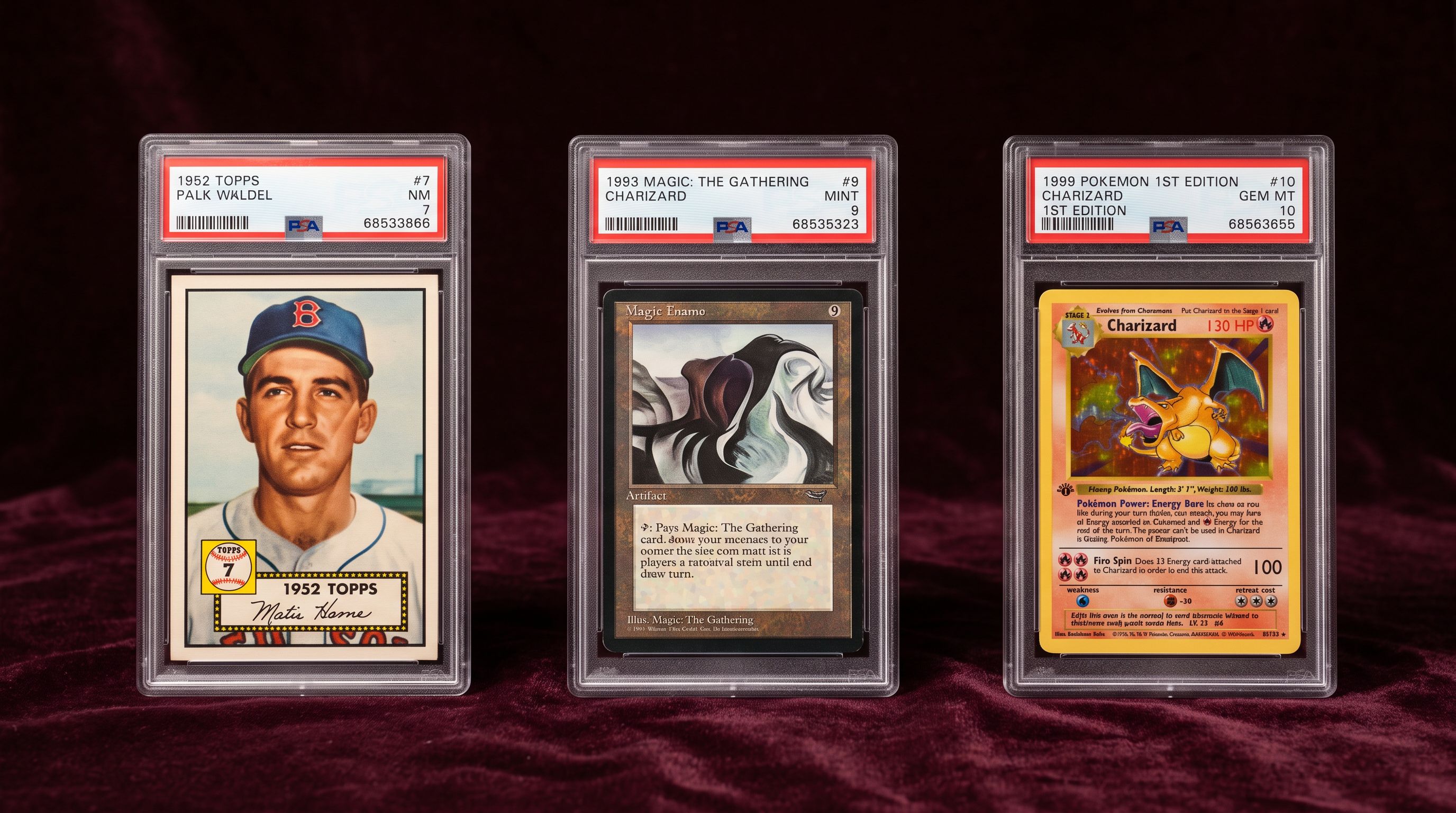
Graded trading cards carry an official condition assessment from a third-party grading company. The three major grading services are PSA (Professional Sports Authenticator), BGS (Beckett Grading Services), and CGC (Certified Guaranty Company, which entered trading cards after establishing itself for comic books). Each uses its own scale.
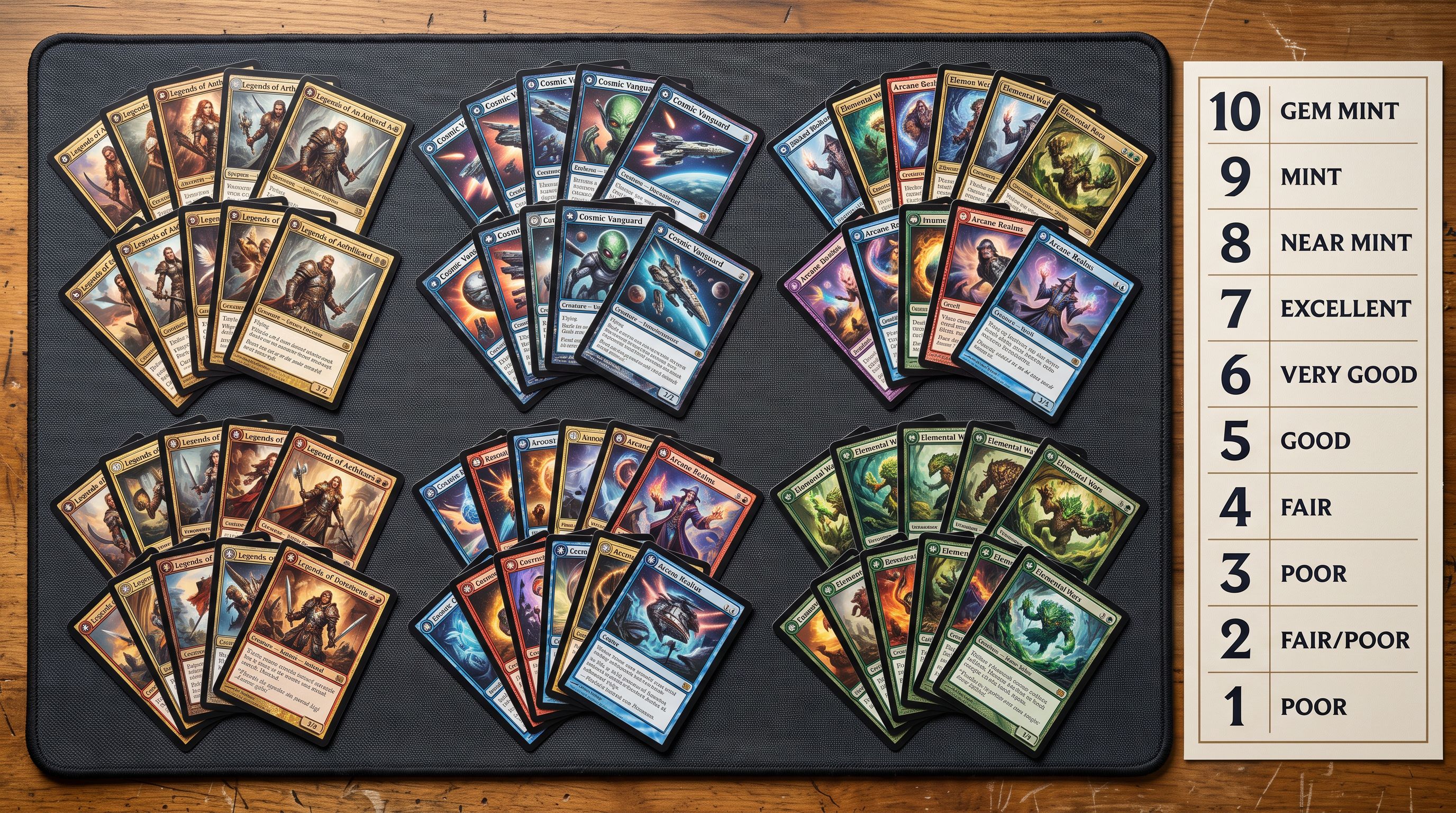
According to PSA's grading standards, PSA grades cards on a 1-10 scale, where PSA 10 (Gem Mint) represents a card with four sharp corners, no staining, no print defects, and full original gloss. PSA 9 (Mint) allows for one minor imperfection. The difference between a PSA 9 and a PSA 10 of a high-value card can represent thousands of dollars in price difference on the secondary market.
BGS uses a 1-10 scale with half-point increments and a sub-grade system (centering, corners, edges, surface each receive a sub-grade). BGS 9.5 (Gem Mint) and BGS 10 (Pristine) are the most sought-after grades for modern cards.
CGC grades on a 1-10 scale as well, and has gained significant market share for sports cards and certain trading card game releases.
A Shopify product representing a graded card should expose condition grade as a variant option, allowing customers to select their preferred grade and see the corresponding price. Importier's Smart Variant Detection configures this at import time:
- 01Set card name as the primary product-grouping field. All rows in your spreadsheet with the same card name, set, and edition will be grouped under one Shopify product.
- 02Set PSA grade (or BGS/CGC grade, or Raw/Ungraded status) as the variant option. Each unique grade value becomes a selectable variant with its own price and inventory quantity.
- 03Set set name and edition as product-splitting fields. Base Set Charizard and Shadowless Base Set Charizard will be imported as separate products, not grouped, because the edition field differs.
- 04Map rarity, foil, and language columns to the Trading Cards Industry Pack metafields. These fields populate automatically for every product row without requiring individual product edits after import.
- 05Run the import and verify the variant structure in Shopify admin. Each card product should show grade as a dropdown with correct per-grade pricing. Raw ungraded copies should appear as one variant option alongside graded copies.
Condition Metafields Beyond the Grade Number
A grade number alone does not fully describe a graded card for collector purposes. Importier's collectibles metafields include condition detail fields that complement the variant grade:
card.grading_company: PSA, BGS, or CGC. Buyers have strong preferences for specific grading companies; a PSA 9 and a BGS 9 of the same card are not interchangeable in the collector market even though both are labelled grade 9.
card.certification_number: the unique certificate number printed on the grading slab. Serious collectors verify graded cards against the grading company's population report before purchasing. Making the certification number available as a searchable metafield allows buyers to verify authenticity directly from the product page.
card.population_report_psa9 and card.population_report_psa10: the number of copies of this card that have received PSA 9 or PSA 10 grades to date, drawn from PSA's population report. Low population report numbers indicate scarcity at that grade, which significantly affects price. A card with only 12 PSA 10 copies in existence commands a different market than one with 1,200.
The certification number is not decorative metadata. Collectors verify graded cards against PSA's population report before purchasing. A product page that exposes the cert number as a searchable field converts sceptical collectors into buyers.
AI Description Generation for Graded Cards
Product descriptions for graded trading cards follow conventions that differ from standard retail copy. The description for a PSA 10 graded card does not sell the card's gameplay attributes; it sells its investment thesis: scarcity, the significance of the PSA 10 grade relative to the population report, the card's cultural position in the game's history, and its storage and insurance implications.
Importier's 156 expert personas include a trading cards and collectibles specialist that writes in the language of the collector market: centering percentages, surface quality, print run significance, and population report context. The enrichment context field allows the merchant to supply population report data and key condition details: "PSA 10, population 24, Base Set first edition" produces description copy that references the card's scarcity at the top grade and its position as a first-edition printing.
For raw ungraded copies, the description shifts register: it describes the card's visible condition from the merchant's assessment and advises the buyer on likely grade outcome if submitted for grading. A raw card described as "ungraded, near mint condition, sharp corners, minimal play wear, strong candidate for PSA 9 or PSA 10" serves a different buyer segment than a PSA-graded copy, and the persona adjusts the copy accordingly.
According to Shopify's product variant documentation, each variant can carry its own price, inventory count, and barcode. For graded trading cards, this means the PSA 10 variant of a high-value card can be priced at $1,200 while the PSA 7 variant of the same card is priced at $80, all within a single clean product page that a collector can bookmark, compare, and share.
- Create separate products for each PSA grade of every card name
- Manually enter set name, rarity, and card number on each product
- No structured metafield for certification number or population report
- Write condition-specific descriptions from scratch for 850 card variants
- Grade variants priced manually with no batch pricing support
- Smart Variant Detection groups PSA grades as variants under each card product
- Trading Cards Industry Pack assigns set, rarity, foil, language, and edition metafields at import
- Certification number and population report stored as searchable metafields
- AI description generator writes grade-appropriate copy from condition and population data
- Per-variant pricing imports from the grade-price column in the source spreadsheet
Key Takeaways for Shopify Trading Card and Collectibles Import
Trading card catalogues require a different structural approach than most retail product categories. Condition grade is a true variant dimension; set and edition are product-splitting dimensions; and grading company, certification number, and population data are metafields that drive collector purchase decisions.
- Use card name as the product-grouping field, PSA grade as the variant option: this produces one product per unique card identity, with each condition grade selectable as a variant. Buyers find the card they want and choose their grade, the most intuitive structure for a collector browsing a Shopify store.
- Use set name and edition as product-splitting fields: Base Set and Shadowless Base Set are different products. Set them as splitting fields at import time, not as variant options, to avoid grouping cards that collectors treat as distinct items.
- Store certification number as a searchable metafield: this is the single most trust-building element for graded card buyers. Collectors who can verify a cert number before purchasing convert at higher rates than those who cannot.
- Include population report data where available: the
card.population_report_psa10metafield gives collectors the scarcity context they need to assess value. A PSA 10 card with population 8 sells faster and at a higher premium than an identical card with population 800. - Differentiate AI descriptions by grade tier: PSA 10 descriptions sell the investment thesis; raw ungraded descriptions sell the potential grade. The Art and Collectibles import guide covers related considerations for unique one-of-a-kind collectibles where variant structure is not applicable.
Import your trading card catalogue with PSA grading, set metafields, and condition variants at importier.app.
Set up your first import in under five minutes.
Importier brings products into Shopify with AI descriptions, category metafields, and data enrichment on every run.