Shopify Made-to-Order Import: Lead Times and Spec Variants

On this page
A Shopify made-to-order product import carries data that a standard catalogue push ignores: production lead time, minimum order quantity, available specifications, and descriptions that set expectations before purchase. A Brisbane custom furniture maker discovered what happens when none of that data makes it into the import.
The maker had 45 made-to-order products live on their store. All 45 showed as Available. A buyer in October placed an order for three matching dining chairs, a pre-Christmas purchase for a new home. The production lead time was 10 weeks. Nothing on the product page mentioned it. The chairs arrived in January. The buyer cancelled before the order shipped.
The furniture maker's import file had title, price, SKU, and a description that said "Built to last." The production lead time, the minimum order quantity for matching pairs, and the timber species options lived in the owner's head and in an email sent after every order. Six other buyers cancelled their Christmas orders that season for the same reason. Cancellation rate during peak season: 23%.
A Shopify made-to-order product import restructured the catalogue: lead time, minimum order quantity, and material configuration all moved from email into structured metafields. After importing those fields and regenerating descriptions that led with the production timeline, the following Christmas peak cancellation rate was 4%.
What Made-to-Order Products Need That Standard Shopify Imports Don't
Standard product imports assume the item exists and will ship within a predictable window. A made-to-order product is the opposite: it does not exist until after the order. The production timeline IS the product specification from the buyer's perspective, and it belongs in the product data.
Three gaps appear in nearly every made-to-order merchant's initial import:
Lead time has no native Shopify field. Shopify products have no built-in lead time field. Merchants put it in the description ("allow 8-10 weeks") or leave it out entirely. In a description, lead time is unstructured: it cannot drive collection rules, cannot display in a structured metafield component, and cannot be filtered by buyers who need delivery before a specific date.
Specification variants don't fit Shopify's 3-option model cleanly. A custom furniture maker may have timber species, finish, and dimensions as three configurable axes, but a dining table might also offer extension leaf options, leg style, and edge profile. Shopify's 3-option limit forces a choice. Made-to-order merchants resolve this by treating price-differentiating configurations as variant options (the 3 that Shopify supports) and additional configuration data as metafields that the theme or a post-order confirmation step handles.
Descriptions are written for products that exist. Standard import descriptions draw from supplier content or photography. A made-to-order product is often represented by a render or specification drawing. Descriptions must lead with process and specification, not imagery.
The Made-to-Order Metafield Schema
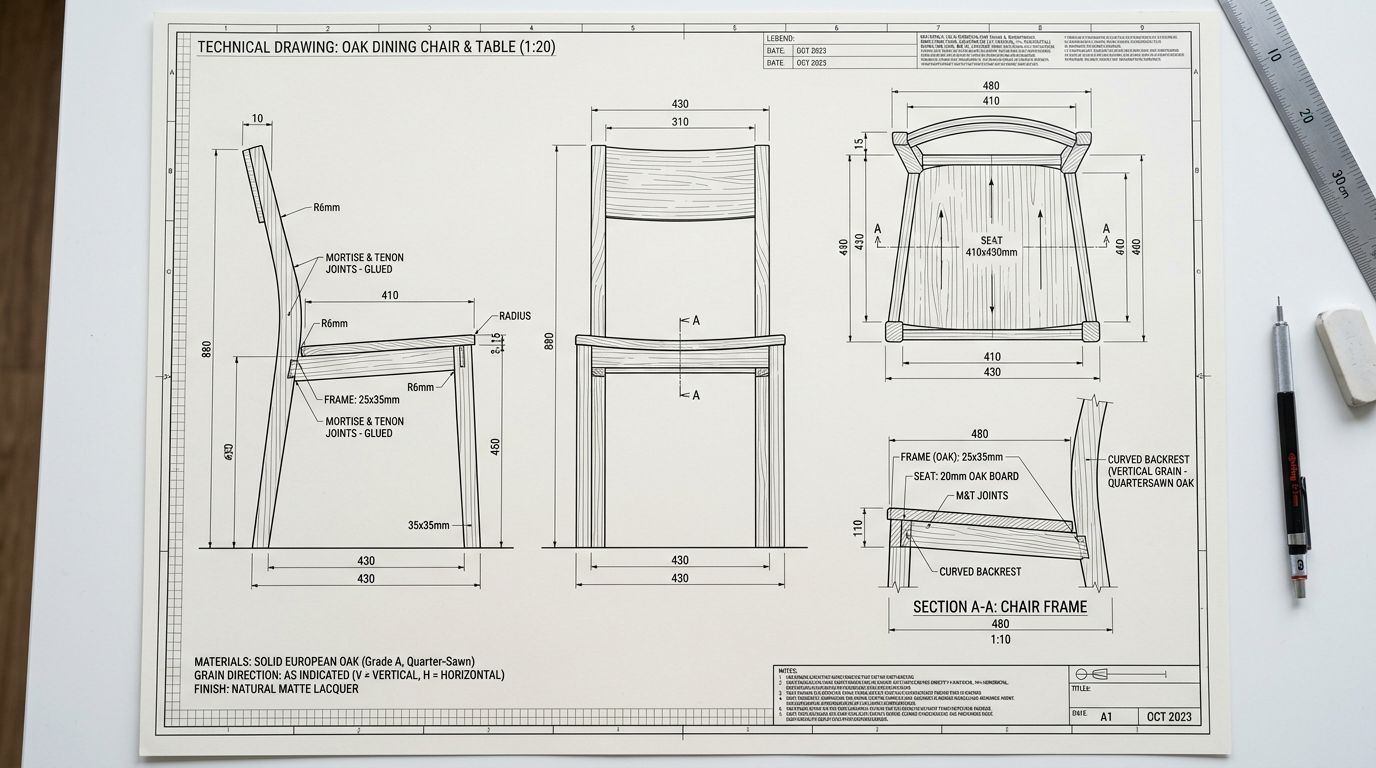
Before running the import, define the metafield schema in Shopify admin under Settings > Custom data > Products. Shopify's custom data documentation covers field types and namespace conventions. A functional made-to-order schema covers three areas:
Production timeline
custom.lead_time_weeks(number_integer): production lead time in weeks. 8 for dining tables, 4 for chairs, 6 for shelving. Drives collection rules and the delivery estimate component.custom.production_method(single_line_text_field): how the item is built. "Hand-jointed solid timber, mortise and tenon construction" for furniture, "CNC-cut and powder-coated" for metal shelving. Appears in descriptions to establish process credibility.custom.quote_required(boolean): true for high-ticket custom orders where the merchant needs to confirm specifications before processing payment. When true, the theme replaces Add to Cart with a Quote Request form.
Order configuration
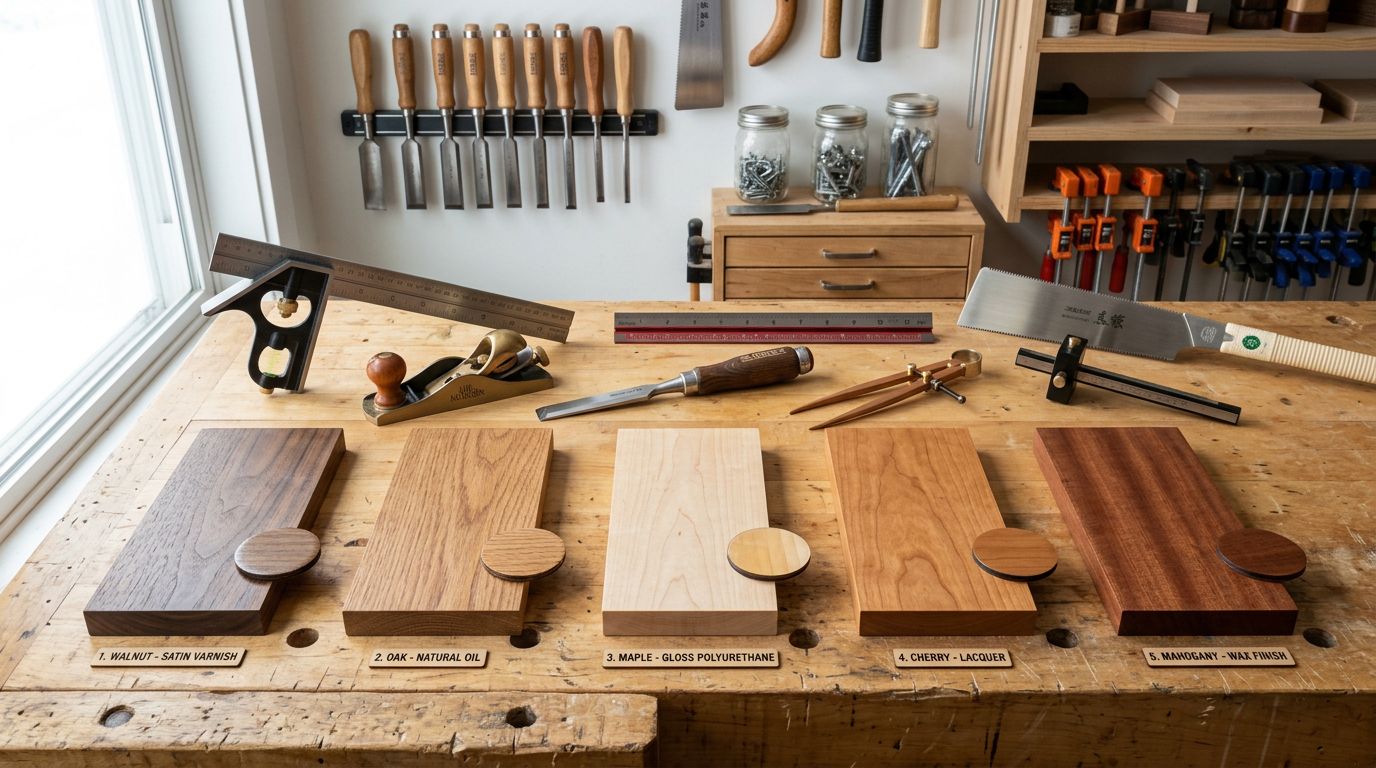
custom.min_order_qty(number_integer): minimum order quantity. Dining chairs require 2 (matching pair). A single-chair order creates a mismatched set. The metafield value drives cart validation logic.custom.available_materials(multi_line_text_field): material options for this product. "Solid oak | Solid walnut | Jarrah" (pipe-separated for theme rendering). Carries the full materials list when the variant structure handles only the 3 top-level configurations.custom.available_finishes(multi_line_text_field): finish options. "Natural oil | White lacquer | Dark stain | Raw timber". Feeds the configuration component on the product page.
Specification summary
custom.spec_summary(multi_line_text_field): key dimensions and specifications in one field. "W 180cm × D 90cm × H 75cm, solid timber top 40mm thick." Displays in the spec component below the Add to Cart area. For AI description generation, this field is the source data for the specifications section.
Building the Import File
Structuring the Made-to-Order Import File
The import file carries the standard product columns alongside the made-to-order metafield columns. For a custom furniture merchant, each product row includes:
| Column | Example value |
|---|---|
| Title | Solid Timber Dining Table 6-Person |
| Vendor | Brisbane Custom Furniture Co |
| custom.lead_time_weeks | 10 |
| custom.production_method | Hand-jointed solid timber, mortise and tenon construction |
| custom.quote_required | false |
| custom.min_order_qty | 1 |
| custom.available_materials | Solid oak | Solid walnut | Jarrah |
| custom.available_finishes | Natural oil | White lacquer | Dark stain | Raw timber |
| custom.spec_summary | W 180cm × D 90cm × H 75cm, solid timber top 40mm thick |
Dining chairs carry custom.min_order_qty of 2. When a buyer adds one chair to cart, the cart component enforces the pair minimum using the metafield value rather than requiring manual stock configuration per SKU.
For the variant structure: the Brisbane maker uses Shopify variants for the three highest-revenue configuration axes (timber species, finish, and size). Extension leaf options, leg profile, and edge profile are handled as custom.available_* metafields, resolved at order confirmation. This keeps the variant count manageable within Shopify's 100-variant-per-product limit while preserving the full configuration conversation in structured data rather than email.
Descriptions for Products Without Photos
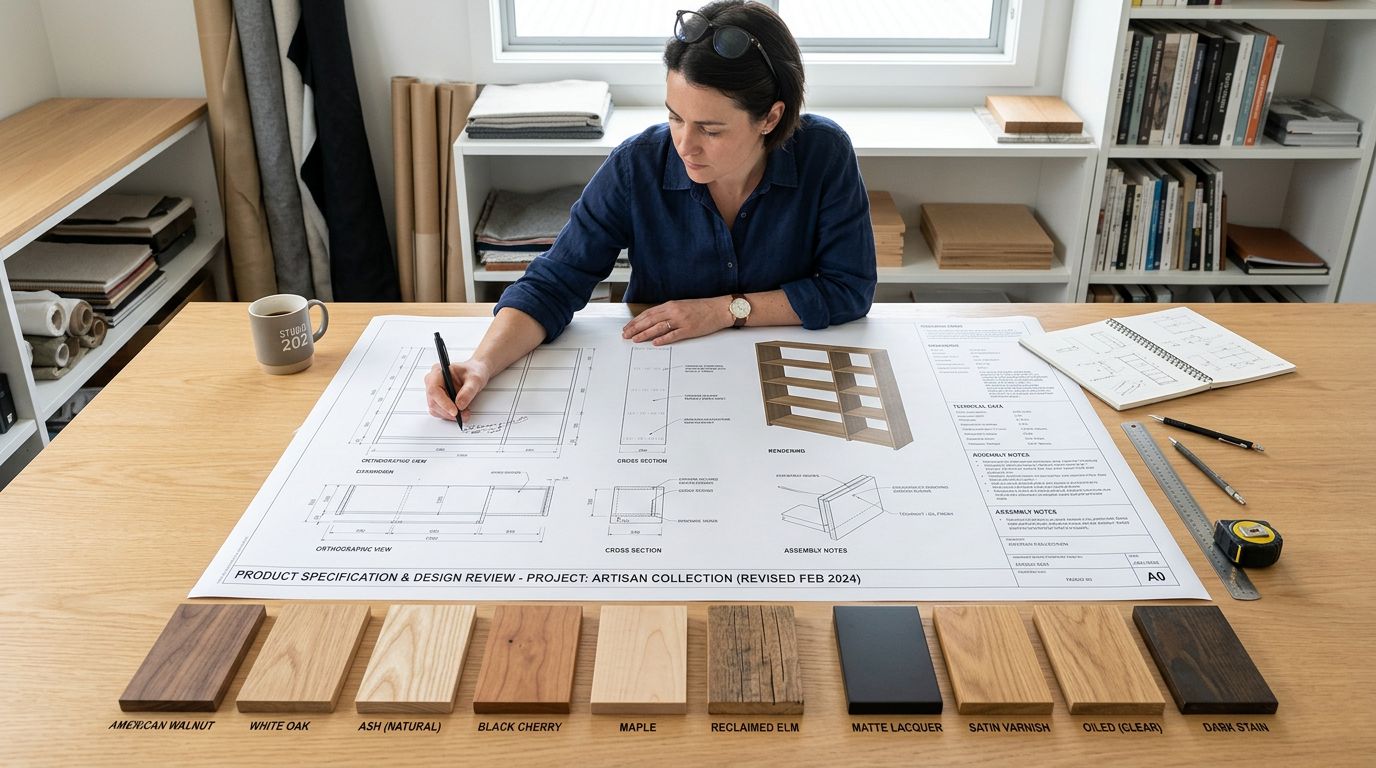
Standard import descriptions draw from photography: what the product looks like, how it feels, what the image shows. A made-to-order product is often represented by a render or a specification drawing. Descriptions must lead with specification and process, because the buyer's purchase decision turns on whether this product can be built to their requirement within their timeline.
AI descriptions generated from made-to-order metafields invert the standard sequence. The Technical Gadget description style with a Furniture and Woodworking persona generates descriptions that open with the production method and specification, then cover the outcome:
"Hand-jointed from solid oak using mortise and tenon construction, this 6-person dining table is built to a 10-week production schedule. Each table is produced from a single timber specification: oak, walnut, or jarrah, selected at order. Natural oil finish is the default; white lacquer, dark stain, or raw timber are available. Dimensions: W 180cm × D 90cm × H 75cm, 40mm solid top."
The custom.spec_summary field feeds the dimensions paragraph directly. The custom.production_method feeds the opening line. The custom.lead_time_weeks value appears as the production schedule, not as a disclaimer in a footer.
A made-to-order description that leads with the production timeline sets the buyer's expectation before the Add to Cart decision, not in the post-purchase email they read the next morning.
Collections and Lead Time Filtering
Lead Time Collections and MOQ Logic
With lead time as a typed metafield, collection automation runs from the import data rather than from manual curation.
Lead time tier collections
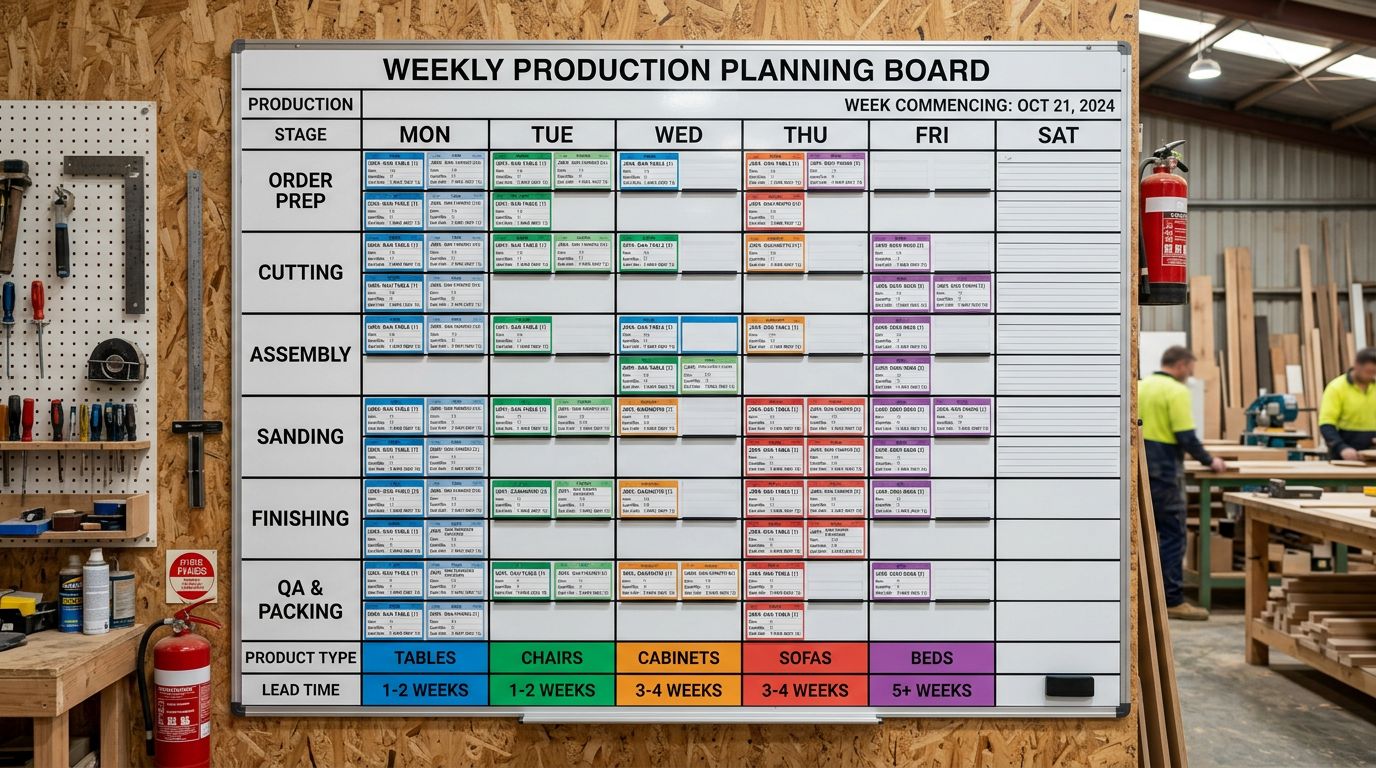
A collection "Ready in Under 6 Weeks" (custom.lead_time_weeks less than or equal to 6) automatically captures chairs, wall shelves, and side tables. "Ready in 8-12 Weeks" captures dining tables and storage units. Buyers who need delivery before Christmas can filter directly to the shorter-lead-time collection without reading every description.
For Christmas 2026, the Brisbane maker created a collection "Order by 3 October for Christmas Delivery" covering any product with custom.lead_time_weeks of 10 or less. They updated the threshold weekly: by 10 October, only products with lead_time_weeks of 9 or less remained eligible. No manual curation required; the metafield value drove collection membership as the deadline moved.
MOQ enforcement
Shopify's native inventory management has no minimum order quantity field. The custom.min_order_qty metafield carries this value for theme logic. When a buyer adds one dining chair (min_order_qty = 2), the cart component prompts: "Dining chairs are sold as matching pairs. Your cart has been updated to a quantity of 2." The enforcement happens before checkout, not after order confirmation.
Quote-required products
Products with custom.quote_required set to true receive a Quote Request template rather than a standard product template. No Add to Cart button appears. A spec-confirmation form captures the buyer's dimensions, material, and finish preferences before the merchant confirms scope. This requires nothing more than a metafield-driven template assignment at import time.
- 01Audit your product rangeidentify which products are made-to-order, their production lead times in weeks, minimum order quantities, and which items above a price threshold should use a Quote Request template instead of direct checkout
- 02Define the metafield schema in Shopify admin under Settings > Custom data > Productscreate custom.lead_time_weeks (number_integer), custom.production_method (single_line_text_field), custom.min_order_qty (number_integer), custom.available_materials (multi_line_text_field), custom.available_finishes (multi_line_text_field), custom.spec_summary (multi_line_text_field), and custom.quote_required (boolean)
- 03Build the import fileadd one column per metafield to your product spreadsheet; populate lead_time_weeks for every product; fill spec_summary from specification sheets or renders; use pipe-separated values for available_materials and available_finishes
- 04Configure AI description generationuse Technical Gadget or Custom style with a relevant industry persona; generate 3-5 sample descriptions across lead time tiers to confirm lead_time_weeks, production_method, and spec_summary appear in the output; adjust section order to lead specifications before outcomes
- 05Run the import on a 5-product test batchverify that metafields populated correctly in Shopify admin, that variant structure covers the 3 core configuration axes, and that descriptions lead with the production timeline
- 06Build lead time collectionsone collection per tier (under 6 weeks, 8-12 weeks), one for pair-sale products using min_order_qty greater than or equal to 2, and one dynamic seasonal delivery collection filtered by the current lead time threshold
The Brisbane Furniture Maker's Results
The Brisbane furniture maker ran the made-to-order import across all 45 products. Each received a production metafield set, a specification-led description, and a lead time collection assignment.
Metafields set:
custom.lead_time_weeks: 4 (chairs), 6 (shelving), 8 (stools and benches), 10 (dining tables), 12 (large storage units)custom.min_order_qty: 2 (dining chairs); 1 (all other products)custom.quote_required: true for 4 custom-dimension products above $6,000; false for all others
Christmas 2026 results compared with Christmas 2025 (before the import restructure):
- Cancellation rate: from 23% to 4%
- Average days from first site visit to order confirmation: from 4.1 days to 1.6 days, as buyers arrived at the product page already knowing the lead time and no longer needed a timeline email before committing
- The "Order by 3 October for Christmas Delivery" collection drove 38% of October revenue from 11% of the product catalogue
The 19-percentage-point cancellation reduction came from removing the post-purchase surprise. Buyers who placed October orders knew they were ordering a 10-week product. The expectation was set at the product page before the Add to Cart decision.

- Lead time buried in description text; unstructured, cannot drive collection rules, calendar filtering, or delivery estimate components
- MOQ communicated post-purchase by email; buyer orders 1 chair, receives a correction email, order is re-processed or cancelled at checkout
- All 45 products in a single All Products view; buyer cannot identify Christmas-deliverable items without reading every description
- Descriptions written as if products exist in stock; no production timeline, buyer expectations set by other stores' standard delivery windows
- Quote-required products mixed with standard products; buyer adds a high-ticket custom order to cart, encounters checkout friction when the merchant cancels and re-invoices
- custom.lead_time_weeks as a typed integer: drives a Ready in Under 6 Weeks collection, a Christmas cutoff collection, and the production schedule in the AI-generated description
- custom.min_order_qty = 2 for dining chairs: cart component enforces pair purchase at cart stage, no post-purchase correction emails or cancellations
- Lead time tier collections auto-populate from metafield rules; Christmas deadline collection updates weekly as the production window shortens
- Descriptions lead with production method and lead time from structured metafield values; buyer expectation set before the Add to Cart decision
- custom.quote_required = true assigns a Quote Request template at import time; high-ticket custom orders receive spec confirmation before payment, not after
For merchants who sell both made-to-order and in-stock products from the same Shopify store, the import file carries the made-to-order metafield columns for custom products and leaves them blank for in-stock items. Theme logic checks for the presence of custom.lead_time_weeks and displays the lead time component only when the field is populated. In-stock products show standard inventory status; made-to-order products show the production timeline.
The personalised product import guide covers the adjacent scenario: engraving and text personalisation where the base product exists and ships within a standard window. Made-to-order manufacturing and text personalisation share the same import pattern (metafield-driven configuration) but differ in their production reality: a personalised item ships in 3-5 days; a custom-manufactured piece ships in weeks.
For made-to-order products that include dimension specifications, the product weight and dimensions import guide covers importing packed carton dimensions alongside product dimensions so fulfilment operations receive correct specs at the point of Shopify creation rather than after the first shipment.
According to Shopify's theme Liquid documentation, metafields on products are accessible from Liquid templates, allowing lead time and MOQ values to drive cart validation and display logic without custom app development. The metafield values set at import time are the same values the theme reads at checkout.
Try Importier free at importier.app.
Set up your first import in under five minutes.
Importier brings products into Shopify with AI descriptions, category metafields, and data enrichment on every run.
Free for your first 10 products. No credit card needed.