Shopify Tools and Hardware Import: Part Numbers and Specs
On this page
A trade tools distributor imports 280 SKUs from a Bosch Professional trade catalogue. The CSV has columns for voltage, wattage, chuck size, no-load speed, torque, included accessories, compatible batteries, and part number. The import completes. The merchant opens Shopify admin and finds 280 products with clean titles and prices. Every other column is gone. Voltage is in the description as a sentence fragment. Compatible batteries are not recorded anywhere. Part numbers are missing. The shopify tools hardware import has flattened a structured technical catalogue into a text blob.
For a retail hardware store, losing specification data is an inconvenience. For a trade distributor serving electricians, builders, and maintenance contractors, it means buyers cannot filter by voltage platform, cannot search by part number, and cannot verify compatibility without calling the distributor directly. A 280-product catalogue with no filterable specifications is a catalogue that does not work for trade buyers.
Why Tools and Hardware Catalogues Fail Standard Shopify Imports
Standard retail products map to Shopify's core fields cleanly: title, vendor, price, SKU, variants, images. A trade-grade tools catalogue carries a second layer of structured data that has no place in those fields.
Part numbers (MPNs). A Manufacturer Part Number is the primary identifier for a professional tool. A contractor searching for a specific drill model searches by MPN, not by description. When MPN exists only in the product description as a string, it is invisible to search indexing and cannot be matched by procurement systems or B2B integrations.
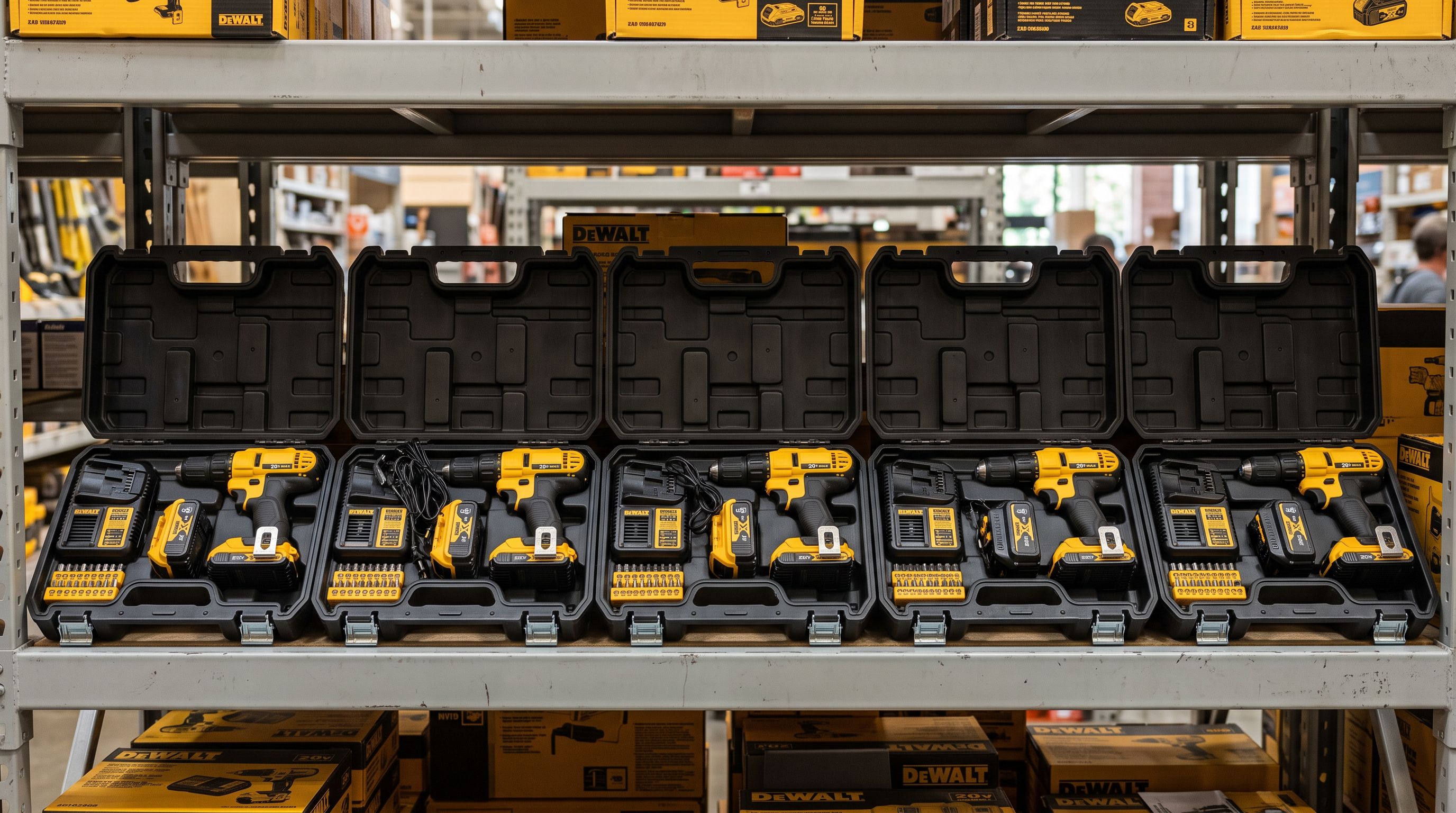
Voltage as a variant or attribute. Cordless power tools in a single product range often come in 18V, 20V MAX, 36V, and 54V configurations. These are not colour variants or size variants. They represent different battery platforms, different performance tiers, and sometimes different pricing structures. Voltage needs to be a structured attribute: either a Shopify variant option for products where buyers choose voltage, or a taxonomy metafield for products that exist in only one voltage.
Technical specifications as filterable data. A drill press with a 13mm chuck, 5-speed setting, and 580W motor serves a different customer than a drill press with a 16mm chuck, 12-speed setting, and 710W motor. When those specifications are sentences in a description, no smart collection can separate them. A customer searching for drills under 600W finds nothing useful.
Compatibility data. Trade tools catalogues routinely include a "Compatible with" column listing battery series, accessory systems, and adapter models. For a cordless tool ecosystem, this is purchase-critical information. Without it as a structured attribute, B2B buyers have to cross-reference a PDF catalogue to confirm compatibility.
The Tools and Hardware Industry Pack at Import Time
Importier's 22 Industry Packs are built directly on Shopify's Standard Product Taxonomy. The Tools and Hardware Industry Pack covers the attribute set for hardware, power tools, hand tools, and trade equipment.
At the category metafields step of the 14-step import wizard, the Industry Pack reads each product's available data and maps it to Shopify's approved taxonomy attributes. For a tools import, the pack populates:
- Power source (corded-electric, cordless battery, pneumatic, manual)
- Voltage (18V, 20V, 36V, 54V, drawn from the product data or enrichment context)
- Material (the housing or primary construction material from the taxonomy's approved vocabulary)
- Colour as a structured attribute rather than a free-text field
- Included components (bare tool, 1-battery kit, 2-battery kit, with charger, combo kit)
- Compatible accessories (battery platform, chuck size for drill accessories)
- Certification (CE, UL Listed, CSA) for products where safety certification is part of the trade buyer's purchase decision
The MPN (Manufacturer Part Number) is stored as a custom metafield, not a taxonomy attribute, because Shopify's taxonomy does not include MPN as a standard attribute. Using a custom text metafield ensures MPN is queryable by storefront search and accessible to B2B integrations pulling product data.
The result: every tool in the import arrives in Shopify with structured attribute pills in the two-column metafield layout, power source and voltage visible as filterable values, and MPN accessible as a structured field rather than a string in a paragraph.
A trade buyer searching for 18V cordless drills needs a filter, not a keyword search. If voltage exists only in product descriptions, the filter cannot be built and the buyer is left browsing 280 products manually.
Variant Detection for Power Tool Catalogues
Importier's 150+ variant detection patterns span 15+ industries, with Power as a named pattern category. For tools catalogues, variant detection handles several configurations that differ from standard retail.
Voltage variants. A single drill model available in 18V and 20V MAX may appear in a trade catalogue as two separate rows: "GSR 18V-60 Professional" and "GSR 20-2 Professional". Variant detection identifies these as variants of the same base product and groups them into a single Shopify product with a Voltage option. Buyers see one product listing with a voltage selector, not two separate product pages.
Kit configuration variants. The same cordless tool often ships in multiple kit configurations: bare tool only, with one battery, with two batteries, with charger and case, or as a combo kit with multiple tools. Trade catalogues list each configuration as a separate line item. Importier's variant detection patterns recognise configuration descriptors ("Bare Tool", "1x2.0Ah", "2x4.0Ah Kit", "Combi Kit") and group them as variants of the same product, with the kit configuration as a Shopify option.
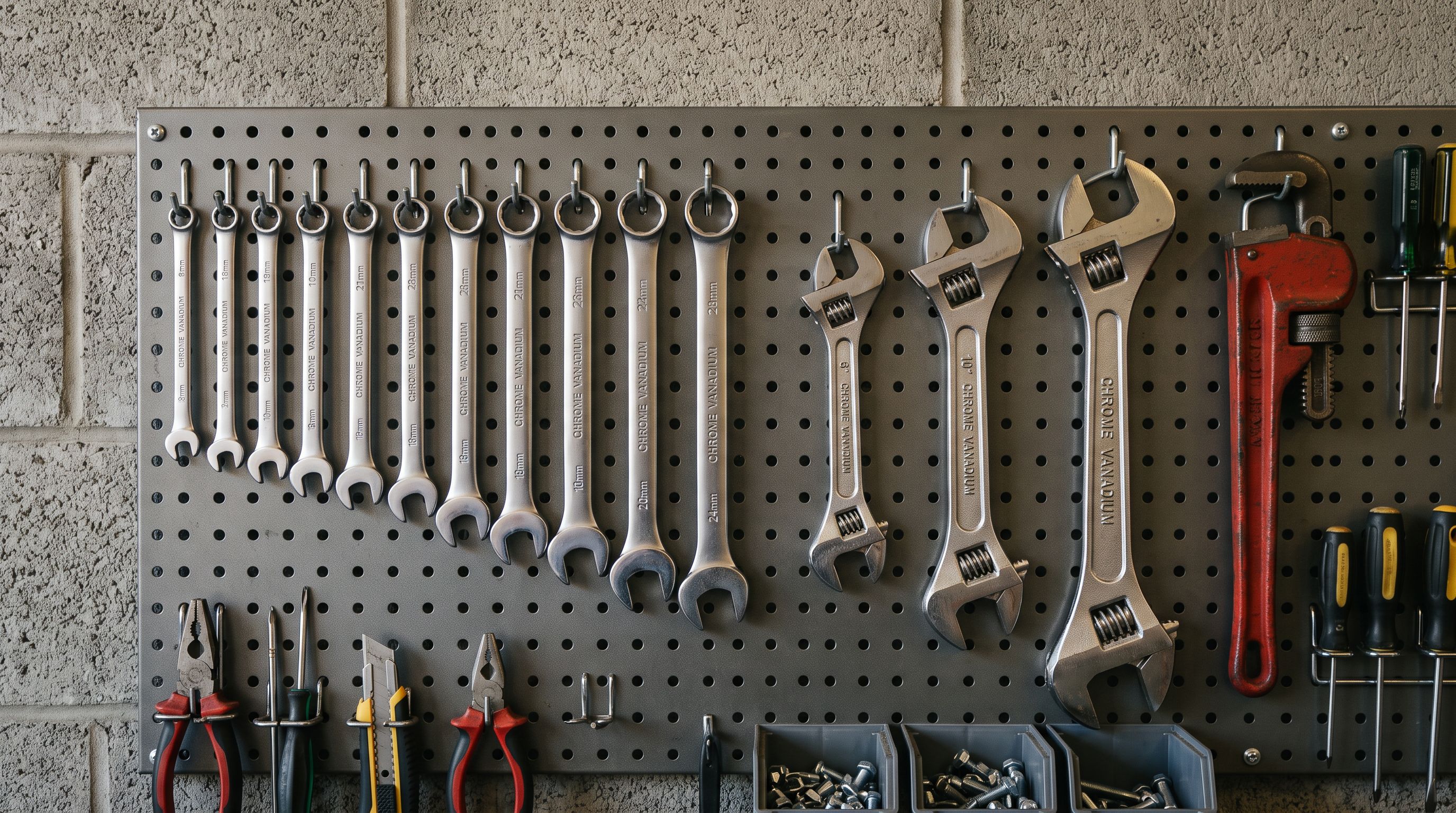
Set size and piece count variants. A socket set available in 40-piece, 72-piece, and 108-piece configurations needs piece count as a variant axis, not as separate products. The variant detection patterns for Pack Size and Dimensions handle these groupings.
- 01Step 1Prepare the import file with specification columns intact. Keep voltage, wattage, MPN, power source, and compatibility columns as named columns in the CSV or Excel file. Do not merge them into a single description column before import. The Industry Pack reads individual columns as enrichment context.
- 02Step 2Run the 14-step import wizard. At the description generation step, select Technical Gadget description style with the Tools and Hardware persona. Technical Gadget produces spec-led copy that lists performance parameters before narrative content, which matches how trade buyers evaluate tools.
- 03Step 3At the category metafields step, select the Tools and Hardware Industry Pack. The AI reads voltage, power source, and material from the available columns and maps them to the taxonomy vocabulary. Review the metafield output for a sample of 10-15 products across voltage tiers before pushing.
- 04Step 4Push to Shopify. Products arrive with structured metafields and correctly grouped variant options. Build Smart Collections conditioned on taxonomy attribute values: one collection for 18V cordless tools, one for corded-electric, one for hand tools with no power source attribute.
- 05Step 5Add MPN as a searchable product field. In Shopify admin, enable storefront search to index product metafields including MPN. Trade buyers searching by part number then find the correct product directly, without browsing.
Choosing the Right Description Style and Persona
Importier's 7 description styles produce different outputs for different audiences. The audience for a trade tools catalogue is not a consumer browsing a retail store. It is a builder, electrician, plumber, or facilities manager comparing specifications to a job requirement.
Technical Gadget style is the primary recommendation for professional tools, power tools, and trade equipment. It leads with technical specifications: chuck capacity, no-load speed, torque rating, battery compatibility, and weight. Features are listed as scannable bullets before narrative content. For a 2kg SDS-Plus rotary hammer with a 26mm drill diameter and 3-joule impact energy, Technical Gadget produces the kind of specification-first copy that appears in trade catalogues and procurement documents.
Benefits-First style works for consumer-facing hardware, DIY tools, and home improvement products sold to non-trade buyers. It leads with what the product achieves rather than the specifications: "drills through brick in under 10 seconds" rather than "impact energy: 3J, drill capacity in concrete: 26mm". For a hardware store selling to homeowners, Benefits-First produces more engaging retail copy.
Standard style sits between the two. It produces a clear, structured description covering what the product is, what it does, and its key specifications, without the specification-first ordering of Technical Gadget. For general hardware supplies (fastenings, fixings, safety equipment) where the buyer is not evaluating competing technical specifications, Standard provides clean, readable descriptions.
The Tools and Hardware specialist persona, one of 156 expert personas across 43 industries in Importier, writes with the vocabulary of a professional trade catalogue: tool capacity in material-specific terms, motor power in watts and amps, battery compatibility by platform name, and accessory fit by chuck size and shank type. The default persona writes for a consumer. The Tools and Hardware persona writes for a trade buyer.
- Voltage buried in description text as a sentence fragment
- Part number missing or in description only
- Kit configuration as a separate product
- Power source not recorded as filterable data
- Smart Collections cannot be built on voltage or power source
- B2B buyers cannot filter or search by specification
- Voltage as a structured taxonomy metafield or variant option
- MPN stored as a custom searchable metafield
- Kit configurations grouped as variants of one product
- Power source (cordless, corded, pneumatic) as a filterable attribute
- Smart Collections by voltage tier, power source, and tool category
- Trade buyers filter and search by specification directly
After Import: Building Trade-Ready Product Groupings
Once tools and hardware products arrive in Shopify with structured metafields, the catalogue supports the procurement workflows that trade buyers expect.
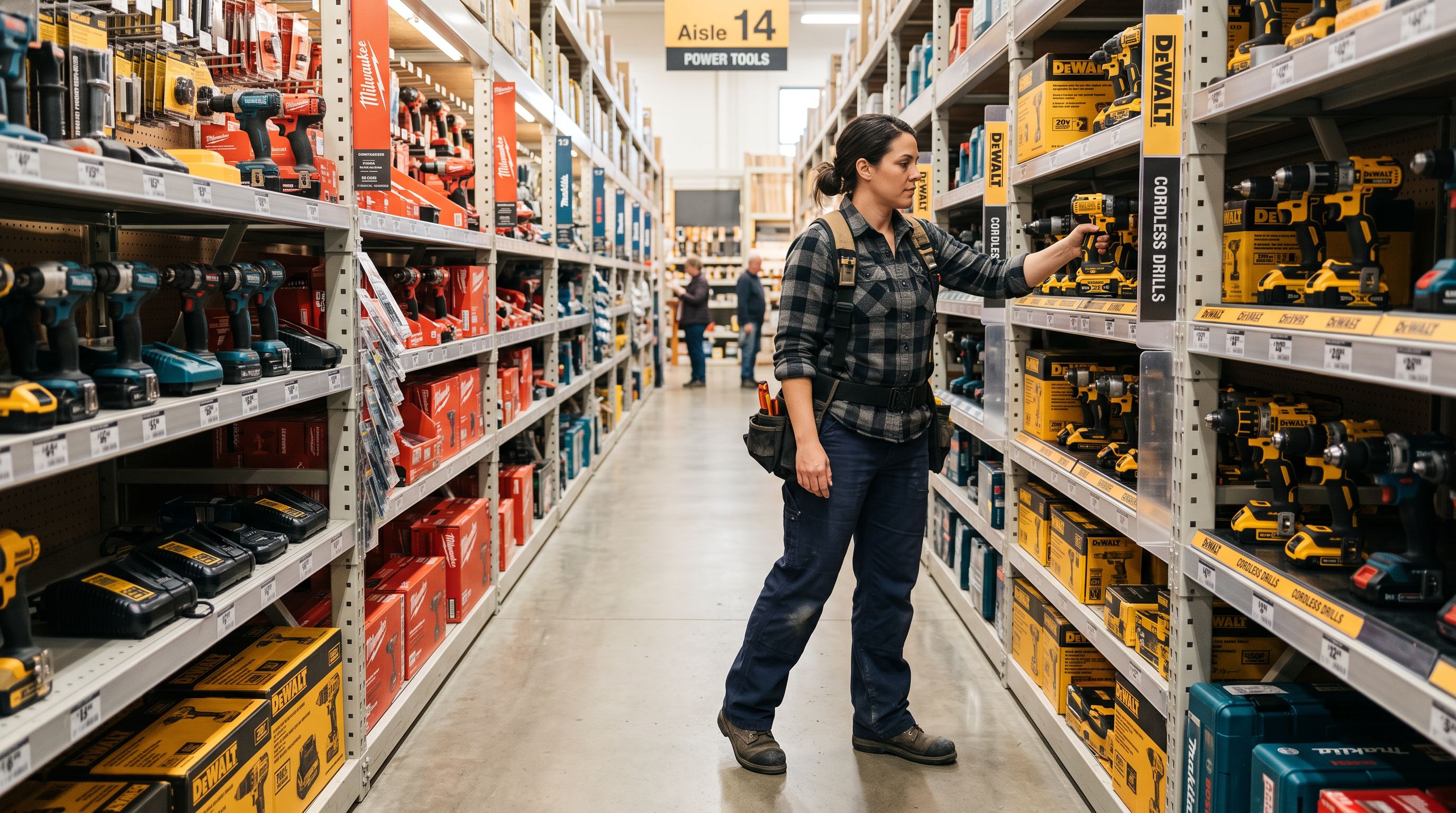
Voltage-platform collections. A contractor who uses Bosch 18V cordless tools needs to find every compatible accessory in the 18V system. A Smart Collection conditioned on voltage = 18V pulls all compatible tools automatically, including new tools added in future imports. The collection updates without manual curation.
Power source filtering. Trade customers buying for specific site conditions need to filter by power source. A construction site with no reliable power supply needs cordless-only tools. Storing power source as a taxonomy attribute means a storefront filter can surface cordless tools across all categories in one query.
MPN-based search. A facilities manager working from a maintenance asset register searches for replacement tools by MPN. When MPN is stored as a searchable metafield, that search returns the exact product without browsing. According to Shopify's documentation on product search and filtering, merchants can configure which metafields are included in storefront search results. For a trade or B2B store, MPN is one of the highest-value fields to index.
For a full trade distribution catalogue covering power tools, hand tools, accessories, and consumables, the combination of structured specification metafields, voltage variant grouping, and MPN-indexed search produces a store that works the way a printed trade catalogue works: buyers find what they need by specification, not by guessing which keyword appears in a description.

Shopify's open-source Standard Product Taxonomy on GitHub lists Hardware as a top-level category with subcategories covering fasteners, power tools, hand tools, and electrical supplies. Attributes defined at the subcategory level map to product metafields and feed Google Merchant Centre product data automatically when an Industry Pack populates them at import time.
Shopify Tools and Hardware Import: Key Takeaways
A shopify tools hardware import succeeds when technical specifications, part numbers, and variant configurations reach Shopify as structured data, not as text in a description.
- Trade tools catalogues carry specification columns (voltage, wattage, torque, power source, MPN, compatibility) that have no place in Shopify's standard product fields. Without structured metafields, this data disappears into descriptions or does not reach Shopify at all.
- Importier's Tools and Hardware Industry Pack, one of 22 Industry Packs built on Shopify's Standard Product Taxonomy, maps specification columns to taxonomy attributes at the category metafields step of the 14-step import wizard. Power source, voltage, material, and certification populate as filterable attribute pills.
- MPN (Manufacturer Part Number) is stored as a custom searchable metafield, enabling part-number-based search for B2B and trade buyers.
- Voltage and kit configuration variants are detected and grouped automatically using Importier's 150+ variant detection patterns. A drill available in 18V tool-only, 18V with one battery, and 18V with two batteries arrives as one product with variant options, not three separate products.
- Technical Gadget description style with the Tools and Hardware persona (one of 156 across 43 industries) produces spec-first copy appropriate for trade buyers comparing products to job requirements.
- After import, Shopify Smart Collections conditioned on taxonomy attribute values create voltage-platform collections, power-source-filtered views, and category-specific trade ranges without manual curation.
Import your trade tools and hardware catalogue at importier.app. Importier's 14-step import wizard handles specification mapping, variant grouping, and Technical Gadget descriptions in a single import run.
Set up your first import in under five minutes.
Importier brings products into Shopify with AI descriptions, category metafields, and data enrichment on every run.