How Shopify AI Shopping Agents Read Your Product Data
On this page
Take two product titles for the same item:
- "Blue Widget Model B"
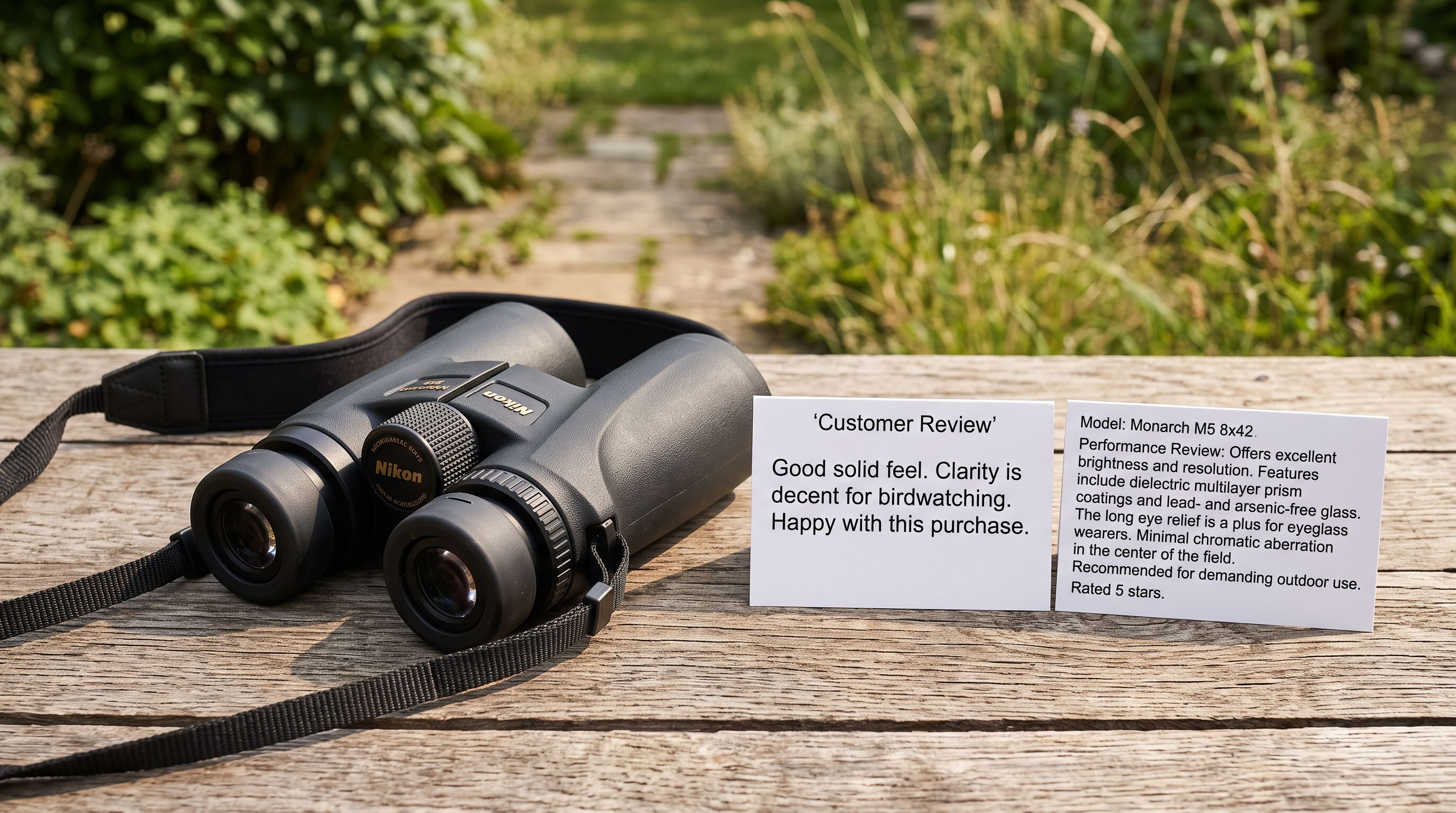
- "8x42 ED Waterproof Binocular, Nitrogen Purged, Fogproof, 393ft Field of View"
An AI shopping agent processes both titles in milliseconds. The first gives it almost nothing: a colour, a category guess, and a model code it cannot cross-reference. The second answers a precision buyer query before they finish typing.
This is the gap most Shopify merchants have not noticed, because keyword search masked it for years. Traditional search rewarded keyword density, not data completeness. AI agents work differently. They evaluate whether a product record is specific enough to be recommended with confidence.
Understanding what agentic shopping is and why it is changing product discoverability is the starting point. This article is the diagnostic layer: the five fields AI agents actually evaluate, what complete data looks like for each, and where most imported catalogues fall short.
Why AI shopping agents read Shopify product data differently
Search engine optimisation taught merchants to focus on keyword placement. Put the right words in titles, descriptions, and headings, and Google's crawler indexes the text against those terms.
AI shopping agents, including Google AI Mode, ChatGPT Shopping, Perplexity Commerce, and Amazon Rufus, do not work that way. They build a product representation from structured data fields and assess whether that representation is specific enough to answer the buyer's query.
A query like "compact binoculars for coastal birdwatching in low light" requires the agent to assess aperture, portability, and glass type simultaneously. If those fields are absent or thin, the agent cannot use the product as a qualified answer, regardless of how many times "birdwatching" appears in the description.
For a detailed look at how AI Shopping agents evaluate product data and the broader shift in Shopify commerce, Shopify's Q1 2026 data showed AI referral sessions converting at 13 times the rate of standard search traffic. The question for merchants is not whether to pay attention to this shift. It is which specific fields to address first.
The five fields AI agents evaluate
Field 1: Title precision
Title is the primary classification signal. AI agents parse it first to determine product type, key specifications, and buyer-fit potential.
The two binoculars titles from the opening illustrate the gap directly:
Thin: "Blue Widget Model B"
Good: "8x42 ED Waterproof Binocular, Nitrogen Purged, Fogproof, 393ft Field of View"
The thin title gives an agent a colour, a category guess, and an internal model number it cannot look up. The precise title gives the agent magnification power (8x), aperture (42mm), optical coating type (ED glass for reduced chromatic aberration), weatherproofing standard, and field of view data. A buyer asking "which binoculars work in coastal fog at 400 yards" gets a confident answer from the second title. The first is invisible to that query.
Most supplier CSVs ship with thin titles. ALL CAPS formatting, trailing SKU codes, HTML entities, and invisible non-printing characters are common in supplier files and degrade AI agent parsing. Importier's Bulk Title Editing tool in the import wizard handles those cleanup tasks before products reach Shopify. The Title Optimizer GMC preset handles post-import formatting: 150-character limit enforcement, keyword front-loading, and case normalisation.
Field 2: Category metafields and structured attributes
After title classification, AI agents query structured attributes to assess comparison signals. What category does this product belong to, and what are its defining characteristics relative to other products in the same class?
Thin: Product Type = "Binoculars", no category metafields assigned
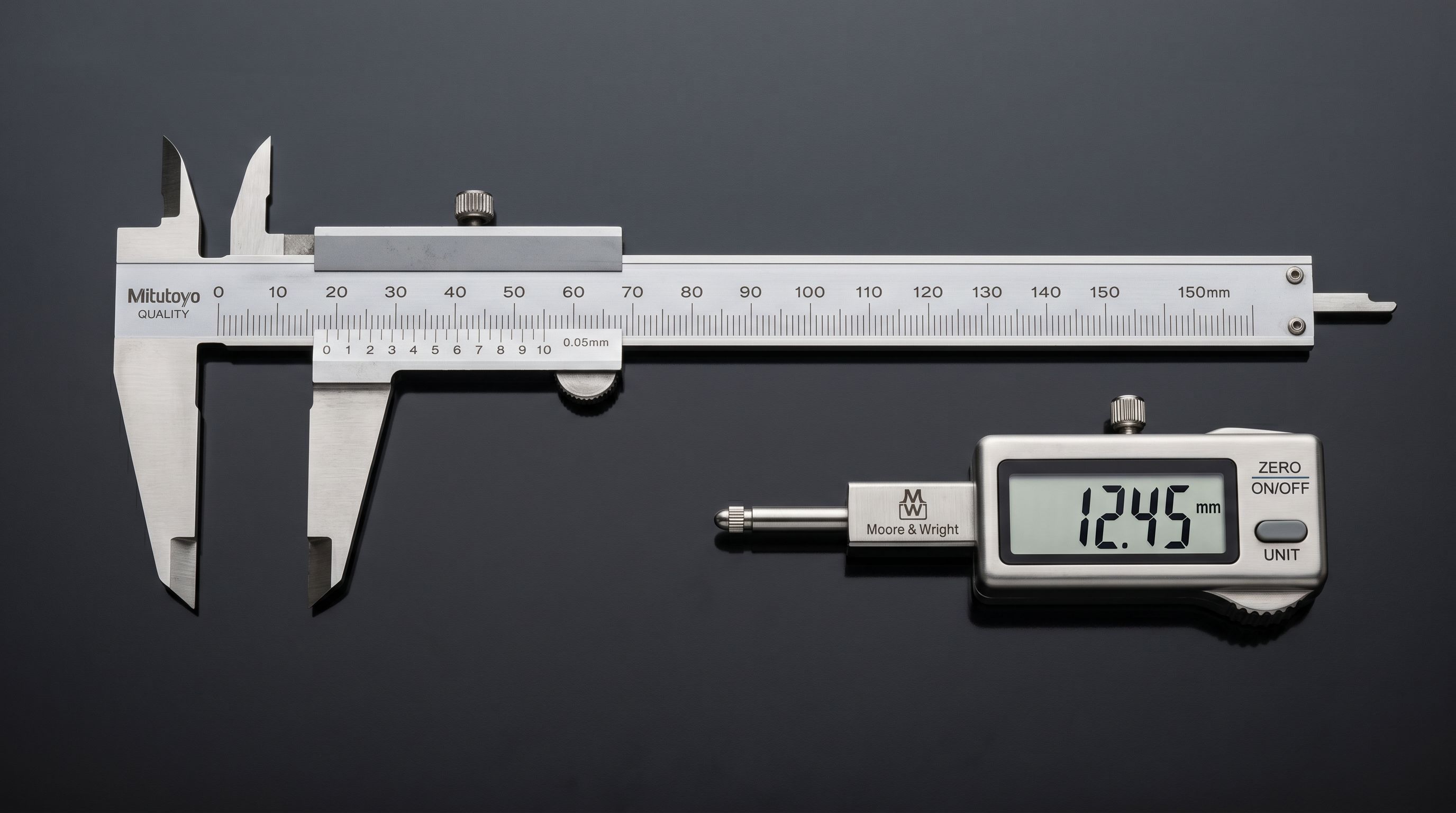
Good: Product Type = "Binoculars" with metafields showing Magnification = 8x, Objective Lens Diameter = 42mm, Prism Type = BaK-4 Porro, Weatherproofing = IPX7
Structured attributes allow AI agents to answer comparison queries that plain text descriptions cannot support. "Which binoculars have ED glass" requires a data field. "Best binoculars for low light" requires aperture data. Without those fields, the agent cannot place the product in a comparison shortlist and cannot return it as a qualified answer.
Shopify's Standard Product Taxonomy provides the structured attribute framework that both Shopify's native discovery features and Google Shopping surfaces rely on. Category metafields connect your product data to that taxonomy.
Importier's 22 industry packs cover category metafields across 3,758 attribute types aligned to Shopify's Standard Product Taxonomy. The AI matching phase assigns attributes from pre-defined taxonomy values only, so every assigned value is one that Shopify and Google already understand and can use for classification.

Field 3: Description specificity
Descriptions serve two purposes for AI agents. They confirm product type from the title, and they provide context for use-case matching that structured fields cannot capture alone.
Thin: "High-quality binoculars for birdwatching and outdoor use. Great for any adventure."
Good: "Designed for serious birdwatchers and coastal observers, these 8x42 binoculars use ED glass to eliminate the colour fringing at field edges that makes fine detail hard to read in bright conditions. Nitrogen purging prevents internal fogging when moving from a cold vehicle to humid coastal air, so you do not lose visibility mid-session."
The thin description confirms the product category and mentions a use case. The specific description explains the glass type's practical benefit for the stated use case and directly addresses the fogging concern a coastal birdwatcher actually has. AI agents use descriptions to match buyer intent that structured fields cannot express. "Binoculars that do not fog on a cold morning at the coast" requires description-level context to generate a confident recommendation.
AI agents cannot recommend a product they cannot characterise. The gap between a thin title and a complete product record is the gap between invisible and recommended.
Importier's AI description generator runs 25 AI models across four plan tiers, with 7 description styles and 156 expert personas across 43 industries. The Technical Gadget style produces the specification-forward, benefit-anchored descriptions that score well for technical product queries. The Ingredient Spotlight style works for products where material composition or component specifics define buyer choice.
Field 4: GTINs and product identifiers
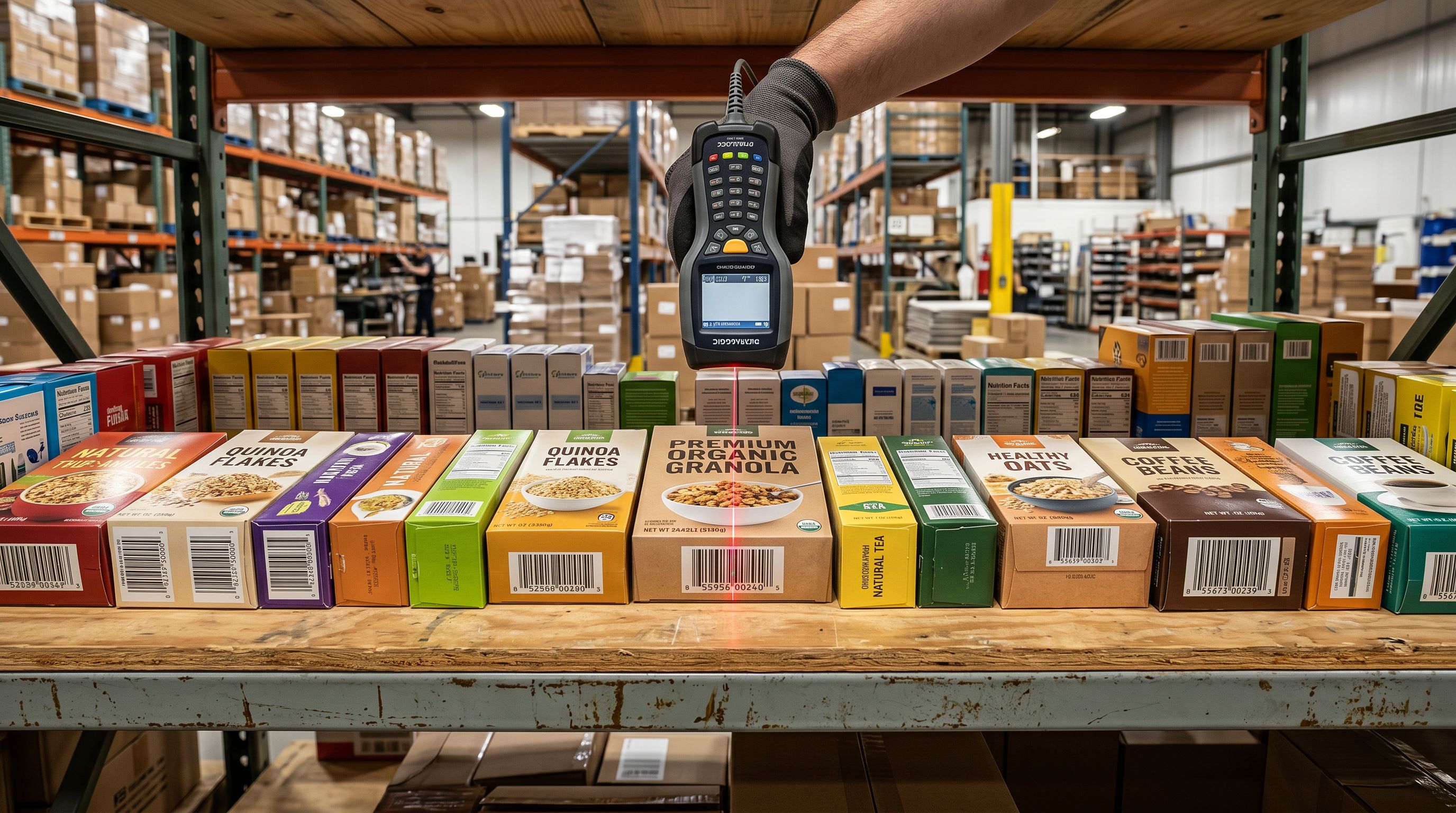
AI agents use GTINs to cross-reference product identity across sources. When a buyer asks an agent to compare a product across retailers, or to confirm a product against manufacturer specifications, the GTIN is the common identifier that makes cross-referencing possible.
Thin: Barcode field populated with supplier internal code "BIN-0042"
Good: Barcode field containing a valid EAN-13 or UPC-A code registered to the product
The internal code trap is the most common data quality failure on imported catalogues. Supplier stock codes populate the Barcode field without triggering any error in Shopify admin, but they fail GTIN validation in Google Merchant Centre and fail identity resolution for AI agents.
Google's structured data specification for Product markup lists GTINs as a required identifier for all products where a manufacturer-assigned code exists. Products missing valid GTINs receive limited visibility on Shopping and AI shopping surfaces.
Importier's data enrichment step looks up registered GTINs from product title, type, and vendor. Fields that contain unrecognised formats, including internal codes and placeholder values, are left blank rather than overwritten with incorrect data. Blank is safer than wrong: a blank barcode field signals a gap; an invalid code signals incorrect data to the systems that depend on it.
Field 5: Specifications, weight, and physical data
Weight, dimensions, materials, and compatibility attributes power the attribute-filtered queries that AI shopping agents handle every day.
Thin: Weight field missing or set to zero
Good: Weight = 890g, Dimensions = 15.2 x 5.6 x 18.3cm, Material = polycarbonate housing with rubber armour
An AI agent answering "lightweight binoculars for backpacking" needs the weight field. An agent answering "compact binoculars that fit in a jacket pocket" needs the dimensions. These are not edge cases. They are precisely the kind of natural-language, intent-driven queries that AI shopping agents are built to handle.
A note on zero weight: zero is worse than blank. Zero weight generates actively wrong carrier-calculated shipping rates at checkout. Blank triggers a flat-rate fallback. Importier's enrichment step fills weight from product title and type, defaulting to blank when it cannot find a reliable value, which preserves the flat-rate fallback rather than injecting a wrong rate.
What catalogue completeness means now
The shift in how completeness is measured
- All products imported
- Images uploaded
- Prices set
- Keyword-dense descriptions
- Precise, attribute-rich titles
- Category metafields assigned
- Specification-specific descriptions
- Valid GTINs
- Weight and dimensions filled
The old definition of catalogue completeness was practical: all products imported, images uploaded, prices set. The new definition is functional: every product has enough structured, specific data for an AI agent to use it as a confident answer to a buyer query.
This shift changes the calculation on catalogue size. A catalogue of 200 products with complete titles, category metafields, specific descriptions, valid GTINs, and weight data outperforms a catalogue of 10,000 products where the majority have thin titles, no metafields, and duplicate supplier boilerplate descriptions.
Catalogue completeness is now a discoverability metric, not an administrative task.
Why keyword-optimised stores are still at risk
Many merchants who have put effort into SEO are better positioned for traditional Shopping results but poorly positioned for AI shopping recommendations. Their descriptions are keyword-rich but not agent-readable. A description containing "binoculars waterproof outdoor birdwatching fog" ranks for those terms in keyword search. It does not help an AI agent answer "binoculars that stay clear in cold coastal fog" because the relevant detail, nitrogen purging, is absent from the description.
The fix is the same for both SEO-optimised stores and stores with raw supplier data: structured specificity beats keyword density for AI evaluation.
Running your Shopify product data diagnosis
- 01Export the SEO Audit presetOpen Importier and run the SEO Audit export preset. It maps title length, description length, and missing meta fields across your entire catalogue in under two minutes.
- 02Flag thin titlesSort by title length and flag everything under 50 characters. Short titles are almost always under-specified for AI agent parsing.
- 03Identify invalid barcodesFilter for Barcode fields with non-numeric content or patterns like BIN-, SKU-, or REF- that indicate supplier internal codes rather than registered GTINs.
- 04Check category metafieldsRun the Metafields export preset and identify products with no category metafields assigned.
- 05Review ten descriptionsRead ten randomly selected descriptions and count how many use specific attributes versus generic benefit claims. This sample gives a reliable indicator of catalogue-wide description quality.
The five checks above take ten to fifteen minutes across a typical catalogue. The gaps they surface are fixable in a single Importier session: Title Optimizer for precision formatting, AI description generation for specificity, 22 industry packs for structured attributes, and data enrichment for missing GTINs, weight, and specifications.
The next article in the Agentic Shopping Series covers how to prepare your Shopify catalogue at scale for the agentic era, including the full correction workflow from audit to completion.
Try Importier free at importier.app
Set up your first import in under five minutes.
Importier brings products into Shopify with AI descriptions, category metafields, and data enrichment on every run.