Shopify Limited Edition Import: Drop Launch and Metafields
On this page
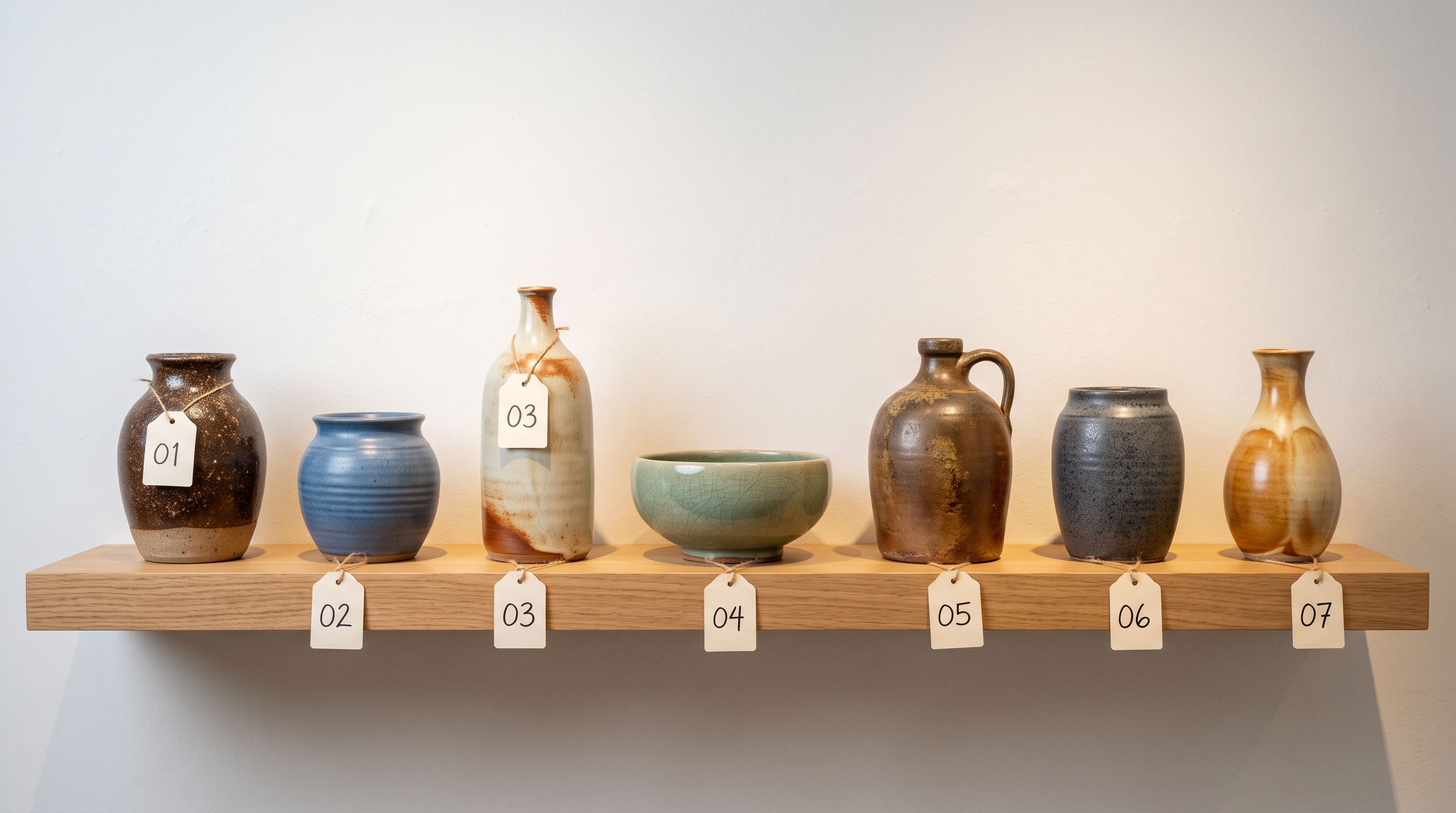
A ceramics studio in Auckland releases four limited edition collections per year. Each collection has between 12 and 20 individual pieces. Every piece is hand-thrown, individually glazed, and numbered within the run. The gallery that handles their sales sends a spreadsheet three weeks before each drop: piece name, edition number (e.g., 3/16), glaze colourway, dimensions in centimetres, weight in grams, and the release price.
The gallery needs every piece available to browse in the online store before the drop date, so that search engines index the pages and email subscribers can preview what is coming. On the morning of the drop, everything goes live for purchase simultaneously. After the drop closes, sold pieces should be marked rather than removed, so buyers can reference their specific numbered piece.
This is a Shopify limited edition product import with three distinct phases: pre-launch catalogue setup, drop activation, and post-drop provenance management. Each phase has a structural requirement that a standard product import does not account for.
Why Limited Edition Imports Are Structurally Different
Most product imports describe one product with a finite set of variants. A t-shirt comes in five colours and three sizes. The supplier file has rows for each variant. The import creates one product with fifteen variants.
A limited edition product drop breaks this model in two ways.
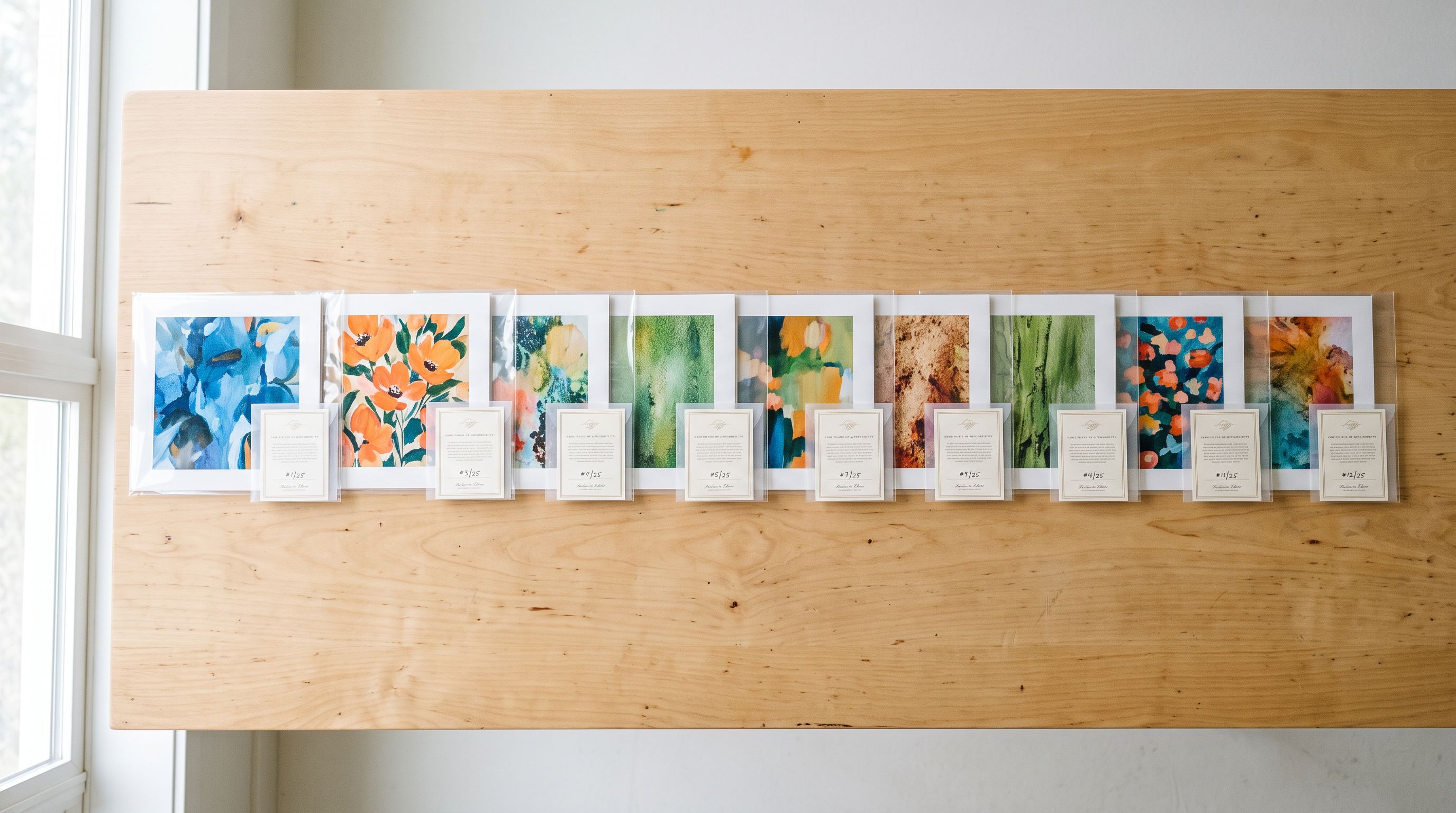
Each numbered piece is a distinct product, not a variant. A signed art print with an edition of 50 means 50 individual objects exist, each with its own provenance. Piece 1/50 and piece 43/50 are not the same product in two sizes. Treating them as variants of one product means a buyer "purchases" a variant of a generic product, not a specific numbered piece. Provenance tracking, certificate-of-authenticity generation, and resale market verification all depend on each piece having its own product record. A variant-based structure breaks all three.
The product must exist before it is purchasable. A standard import creates a product that goes on sale immediately. A drop product needs to be live for indexing and preview while remaining closed to purchase until the drop moment. This requires a specific import configuration: active status for storefront visibility, but controlled inventory or pricing that prevents checkout until the drop activates.
Edition Number as Metafield, Not Variant
The most common structural error in limited edition imports is mapping the edition number (e.g., 1/50, 2/50) as a variant option named "Edition Number". The dropdown on the product page then shows 50 options, and whichever the buyer selects becomes their purchase. This approach has three compounding problems.
First, buyers can select any available edition number, which is not how limited edition sales work. Pieces are typically sold in order of availability or at random during the drop. A buyer choosing "I want piece 23/50 specifically" from a dropdown defeats the drop mechanic and creates fulfilment complexity.
Second, when a piece sells, it needs to be marked as sold with its provenance intact. With a variant structure, marking piece 23 as sold requires setting variant inventory to zero. The variant still exists on the product. Next year, if the artist reissues the edition, the old sold variants conflict with the new ones.
Third, certificate-of-authenticity metafields, artist-signature metafields, and exhibition-history metafields attach to the product, not the variant. A per-variant certificate structure is not supported in standard Shopify theme contexts.
The correct mapping for a limited edition import:
- Each numbered piece imports as its own product, with the edition number mapped to a
edition_numbermetafield (e.g.,3/16) - All pieces in the same edition share a product type or tag that drives their collection membership (e.g., type:
Blue Horizon Collection) - The collection shows all 16 pieces as browsable products
- When a piece sells, its product status changes to reflect sold status, preserving the URL and product record
According to Shopify's metafields documentation, product metafields store additional information about a product that does not fit the standard product fields. Edition number, run size, release date, and artist signature status are all candidates for product metafields rather than product options.
In Importier's field mapper, an "Edition Number" column from a supplier spreadsheet maps to a product metafield under a custom namespace (edition.number). Importier creates the metafield on each product during import. No post-import manual data entry is needed across 16 products.

Building the Pre-Launch Collection
A pre-launch collection allows search engines to index product pages and subscribers to preview the drop before purchase opens. The structure requires products to be live (status: active) but not purchasable until the drop moment.
Two approaches work in Shopify:
Price-gated pre-launch: Import all products with a price of $0 and inventory_policy: deny. Zero-price products cannot be added to cart in most themes (they display a "Sold Out" or "Notify Me" button instead). At drop time, a second import pass updates prices to the real values and sets inventory quantities. The pre-launch pages are indexed and live; the cart is effectively blocked.
Inventory-gated pre-launch: Import with real prices and zero inventory, with inventory_policy: deny. Products show as unavailable. At drop time, update inventory quantities to 1 per product. This approach works for drops where all pieces sell in one session and inventory restocking is never expected.
- 01Import the full limited edition product set three to four weeks before the drop date. Map the edition_number, run_size, release_date, and collaboration_artist columns to product metafields. Apply the collection tag for this edition as a batch default so all pieces join the same Smart Collection automatically. Set inventory to 0 and inventory_policy to deny for pre-launch.
- 02Build the pre-launch collection in Shopify using the edition tag as the Smart Collection rule. Add the collection to your navigation, email campaign, and any pre-launch landing page. Buyers can browse and bookmark pieces. Search engines can index individual piece pages.
- 03On the morning of the drop, run a second import pass with a minimal CSVHandle (to match existing products), Price (the real price), and Quantity (1 per piece). This single pass activates all pieces simultaneously.
- 04After the drop closes, run a final import pass to archive sold piecesupdate their status to indicate sold status. The product URL and metafield data remain intact for provenance verification.
Metafields for Drop Products
Limited edition products carry data that standard Shopify product fields cannot hold. Importier maps these to product metafields at import time, so the data exists in Shopify's product record from day one rather than being added manually piece by piece.
Metafields relevant for drop and limited edition imports:
edition.number: the piece's position the piece's position in the run (e.g., "3/16")edition.run_size: total pieces in the run (e.g., "16")edition.release_date: the ISO date of the drop (e.g., "2027-03-15")edition.collaboration_artist: artist name for collaboration productsedition.certificate_included: Boolean (true/false) for whether a physical certificate ships with the pieceedition.medium: for art or craft products: glaze type, print medium, material composition

These metafields display in the product page's additional information section when the theme supports metafield display (most modern Shopify themes do via the theme editor's product template blocks).
Writing descriptions for limited edition and drop products
AI Descriptions for Drop Products
Limited edition product descriptions face a specific challenge: the piece is scarce by definition, but descriptions that lead with scarcity read as manufactured urgency rather than authentic statement of fact.
A ceramics piece described as "Only 1 remaining, get it before it's gone!" is not describing the piece. It is applying sales pressure. A buyer who already wants the piece does not need this framing. A buyer who is undecided is not converted by urgency claims; they are put off by them.
- RARE: Hand-thrown ceramic vase, LIMITED EDITION, only 1 remaining! This exclusive piece won't last. Order now before it sells out permanently!
- Don't miss out on this one-of-a-kind collector's piece. Extremely limited availability. Act fast.
- Piece 3 of 16. Hand-thrown in Auckland, glazed with a blue-to-green gradient specific to this firing batch. The glaze behaviour at this thickness does not reproduce exactly. Each piece in the run fired at a slightly different temperature arc.
- An edition of 16 means 16 exist, each one numbered and signed. This is piece 9. The dimensions are 22cm tall, 14cm at the widest point. It holds water. It will outlast its owner.
Importier's Artisan Craft Specialist persona (one of the 156 expert personas) generates descriptions that lead with craft context, material behaviour, and the specifics of the making process. For limited edition drops, this approach produces descriptions that acknowledge scarcity through factual statement ("an edition of 16 means 16 exist") rather than urgency language.
Scarcity is a fact about the object, not a sales technique. A description that states the edition number and explains why the run is limited says everything an informed buyer needs to know.
Post-Drop Management and Provenance
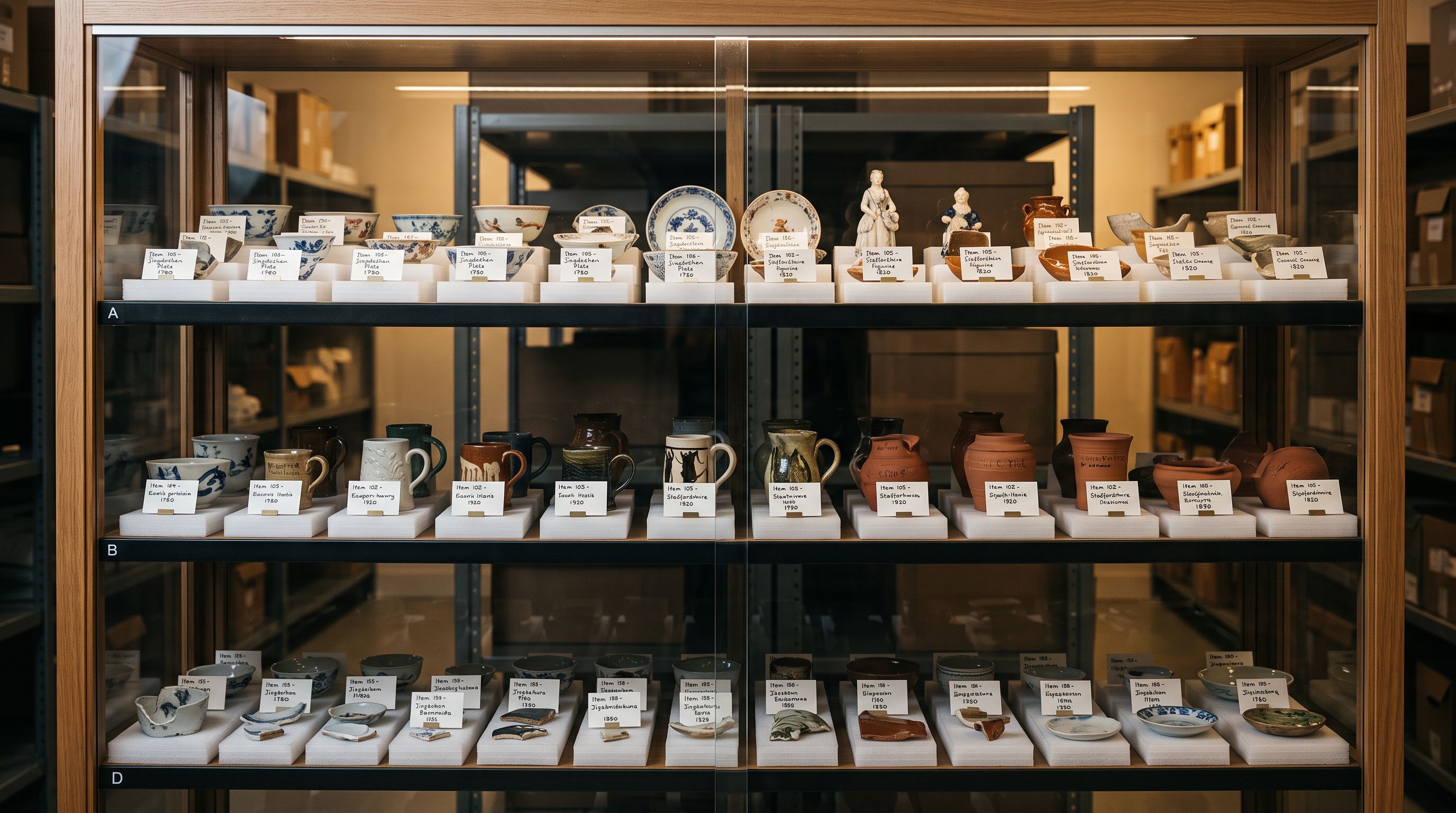
After a drop closes, sold pieces need to be marked as unavailable without losing their product record. Deleting a sold limited edition piece removes the URL, the metafield data, and the connection between the order and the product. Future buyers who want to verify their piece's authenticity have no product page to reference.
The correct post-drop workflow:
- Update each sold piece's inventory to 0 and inventory_policy to deny (if not already done)
- Add a
soldtag to each sold piece. A "Sold Works" Smart Collection usingtag contains soldassembles all sold pieces in one browsable archive - Leave the product active and publicly visible. The product page becomes a provenance record: the buyer can share the URL, the edition metafields confirm the specific piece, and the description explains the edition context
The seasonal catalogue management guide covers the archive and restore workflow for seasonal products. For limited edition drops, the post-drop management is similar in structure but different in intent: rather than archiving to restore next season, the sold piece remains permanently visible as a provenance record.
The shopify-import-product-variants guide covers how Shopify's variant matching works for more standard import cases. For limited edition imports, the choice to use separate products rather than variants is a deliberate structural decision driven by provenance requirements, not a default import behaviour.
According to Shopify's inventory management documentation, inventory quantities are tracked at the variant level for each location. For single-piece limited edition products (no variants, each product is one piece), inventory is straightforward: 1 available before sale, 0 after. The product record stays live. The provenance chain is unbroken.
Key Takeaways
-
Each numbered piece in a limited edition run should import as its own product, not as a variant. Variant-based edition numbering breaks provenance tracking, limits per-piece metafield data, and creates the wrong purchase record.
-
Map edition number, run size, release date, and artist name to product metafields. Importier maps these from your supplier spreadsheet at import time. Shopify's product metafields store this data permanently on the product record.
-
Pre-launch structure keeps products live for indexing before the drop activates. Import with zero inventory and
inventory_policy: deny, then run a second import pass on drop day to update quantities. Pre-launch product pages index in search and serve as preview pages for subscribers. -
AI descriptions for limited edition products should lead with craft context, not urgency. The Artisan Craft Specialist persona generates descriptions that describe the making process and state scarcity as fact rather than applying sales pressure.
-
Sold pieces should be archived, not deleted. A
soldtag drives a permanent "Sold Works" collection. The product URL remains live as a provenance record. Future buyers can verify their specific numbered piece against the product page. -
The drop activation is a second import pass, not a manual update. A minimal CSV (Handle, Price, Quantity) updates all pieces simultaneously at the drop moment without touching descriptions, metafields, or images.
Set up your limited edition drop import at importier.app and have every numbered piece live with metafields before the launch date.
Set up your first import in under five minutes.
Importier brings products into Shopify with AI descriptions, category metafields, and data enrichment on every run.