Shopify Product Data for ChatGPT Shopping: What the AI Evaluates

On this page
Shopify Product Data for ChatGPT Shopping: What the AI Evaluates
ChatGPT Shopping is not a search engine. It does not rank products by keyword frequency, domain authority, or backlink count. When a buyer asks ChatGPT to help them find a product, the model reads structured product data (titles, descriptions, category attributes, and identifiers) and evaluates which products most closely match the buyer's specific request in context.
This is a materially different evaluation model from Google Shopping or Amazon search. Merchants who optimise their Shopify product data for keyword matching will find that approach produces limited results in ChatGPT Shopping contexts. What produces results is description specificity, complete attribute data, and accurate product classification.
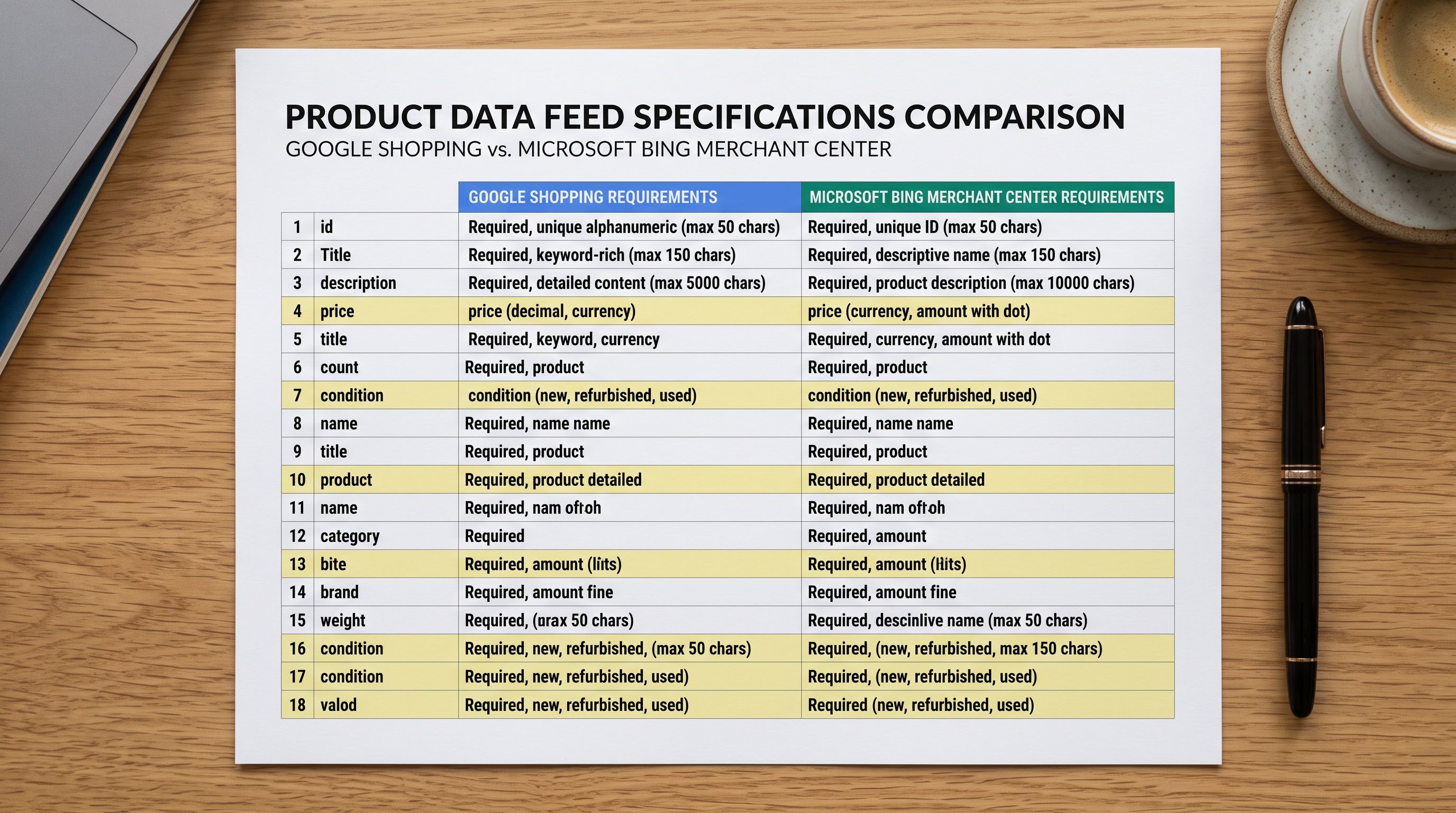
The fields that matter are the same fields that matter for Google AI Mode and other AI shopping surfaces. The Shopify AI shopping guide established the data quality baseline for AI shopping surfaces generally. This article covers ChatGPT Shopping specifically, including where its evaluation priorities differ from Google's.
How ChatGPT Shopping Works
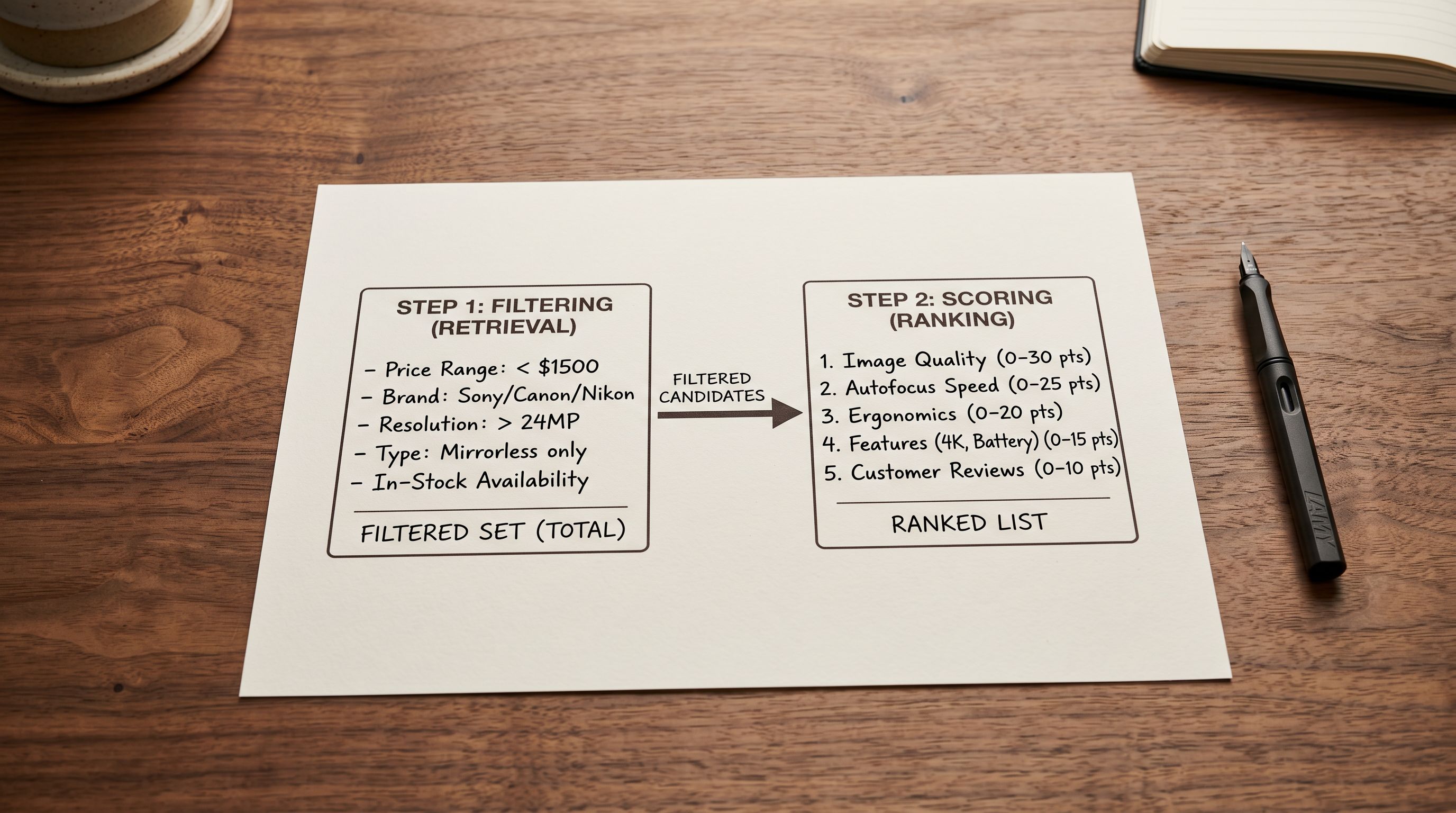
ChatGPT Shopping connects to product catalogues via the OpenAI plugin and API layer. When a buyer asks ChatGPT for product recommendations, the model queries connected catalogues for products that match the request. It evaluates candidates against the buyer's stated requirements and returns a ranked shortlist with reasoning.
The evaluation happens in two stages. First, the retrieval stage: products are filtered to a candidate set based on category, basic attributes, and price range. Products without complete category classification or with missing price data may not surface in the candidate set at all. Second, the ranking stage: the model scores each candidate against the specific buyer request. A buyer who says "I need a lightweight rain jacket for a week-long hiking trip with a hood and packable design" is presenting a multi-criteria evaluation. Products with descriptions that address those specific criteria (weight, packability, hood, hiking context) score higher than products with generic "waterproof jacket" descriptions.
The practical consequence is that product data serves two distinct jobs in ChatGPT Shopping: getting into the candidate set (retrieval) and scoring well in context (ranking). Optimising for one without the other limits performance.
Title Specificity: The Retrieval Signal
The product title is the primary retrieval signal in ChatGPT Shopping. Titles that describe the product precisely (including the key differentiating attributes) appear in more candidate sets than titles that are generic or keyword-dense.
The distinction matters because ChatGPT Shopping retrieval does not treat keywords as synonyms. A query for "packable down jacket under 500 grams" retrieves products whose titles and descriptions contain those specific concepts. A generic title like "Men's Winter Jacket in Navy Blue" does not signal packability, fill type, or weight, so it is not retrieved for that query even if the product matches perfectly.
Effective ChatGPT Shopping titles have three characteristics.
They name the specific product type. Not "jacket" but "down jacket". Not "bottle" but "insulated stainless steel water bottle". The more specific the product type, the more queries it surfaces for.
They include the primary differentiating attribute. The one characteristic that most distinguishes this product from others in its category. For a rain jacket, that might be weight (packable, ultralight). For a water bottle, capacity and insulation type. For a kitchen knife, blade material and intended use.
They are short enough to be readable. Unlike Amazon, where long keyword-stuffed titles serve the A9 algorithm, ChatGPT Shopping reads titles for semantic content. A 12-word title that clearly describes the product outperforms a 25-word title that strings together search terms.
Importier's Title Optimizer generates concise, specific titles from the product data in the source file. For a catalogue imported from a supplier whose titles are generic or keyword-dense, running the Title Optimizer as part of the import produces titles calibrated for AI shopping retrieval rather than keyword matching.
Description Specificity: The Ranking Signal
If the title gets a product into the candidate set, the description determines its ranking position. ChatGPT Shopping uses the description to evaluate how well the product answers the buyer's specific question.
Generic benefit language ("high quality", "premium materials", "versatile design") contributes almost nothing to this evaluation. The model cannot use vague claims to assess whether the product matches a specific buyer need. Specific, extractable information is what the evaluation model uses.
Three types of specific information that consistently produce higher ranking positions.
Measurable claims. Weight in grams, dimensions in centimetres, capacity in litres, temperature range in degrees. A buyer asking for a packable jacket under 400g can only be matched to a product whose description or attributes state the weight explicitly. A buyer asking for a cooler that keeps ice for 48 hours can only be matched if the description makes that claim explicitly.
Use-case context. The buyer's intended use is often stated in the query. A product description that establishes a clear use-case context (designed for multi-day alpine camping, for instance) matches directly to buyers who state that context. Generic descriptions that list features without use-case context match to fewer queries.
Material and construction specifics. Fabric composition (200-weight merino wool), hardware specifications (YKK zip), sole construction (Vibram rubber). Buyers who care enough to ask ChatGPT for recommendations often care about these specifics and include them in their queries.
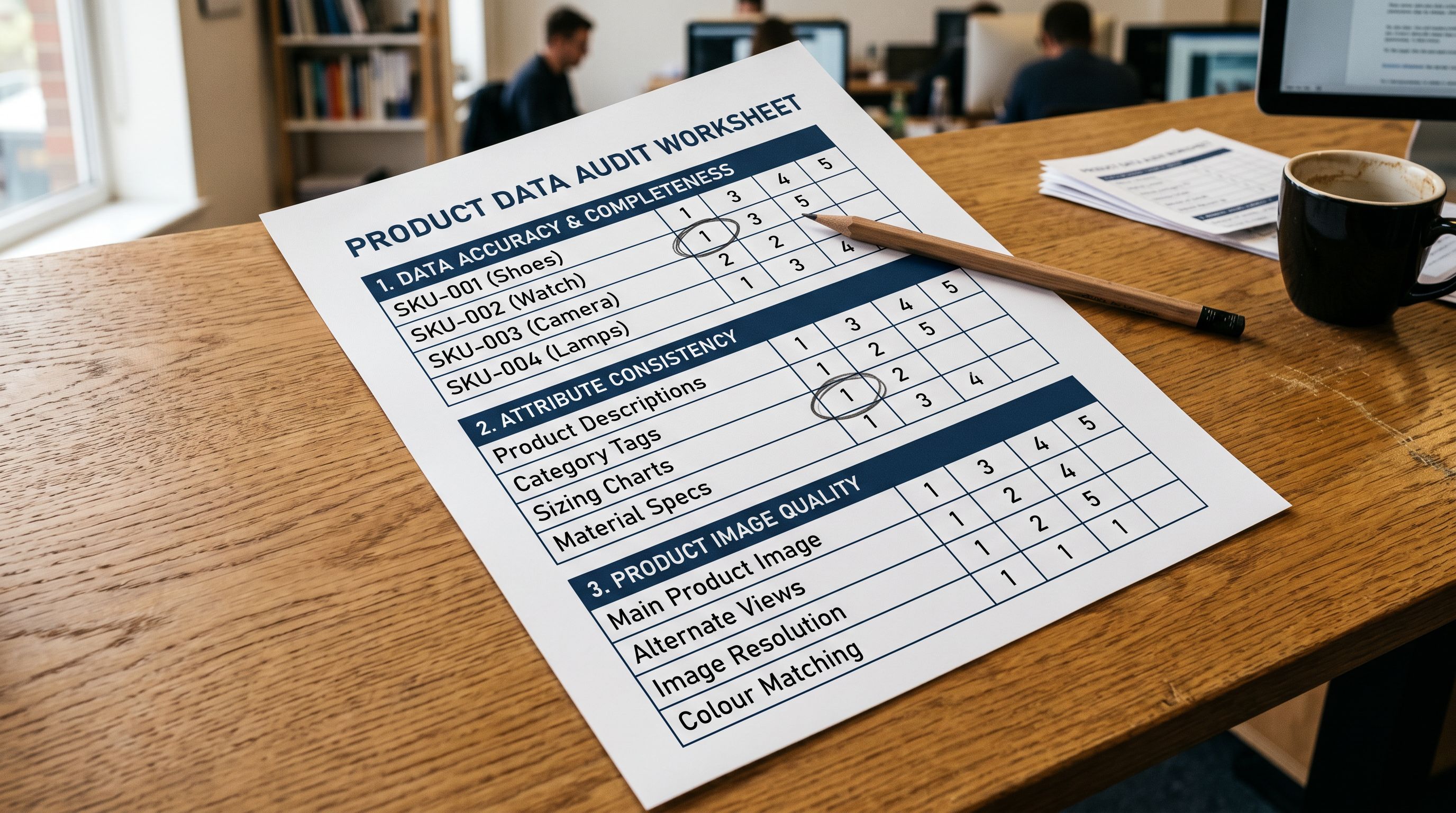
- 01Audit your current product descriptions for extractable specifics. Open a sample of 20 products across your catalogue and assess whether each description contains at least one measurable claim (a number), one use-case context statement, and one material or construction specific. Products missing all three are poor candidates for ChatGPT Shopping placement.
- 02Export the underperforming products to a narrow CSV (Handle, title, existing description). This is the input file for the AI description regeneration pass.
- 03Upload to Importier. In the description generation step, select the Technical or Narrative style. Technical produces structured descriptions with explicit specs; Narrative establishes use-case context. Both outperform the Benefits-First style for AI shopping contexts because they contain the extractable specifics the evaluation model uses.
- 04Choose a persona that matches the product category. A persona oriented toward a specific activity or use context (trail running, professional cooking, home renovation) produces descriptions with the specific vocabulary and use-case language that AI shopping models use for query matching.
- 05Review 10 generated descriptions from the batch before confirming. Verify that each contains at least one measurable claim, one use-case context statement, and one material or construction specific. If the review sample is passing, the full batch will be consistent.
- 06Reimport the updated descriptions using a narrow two-column file (Handle + Body HTML) to update only the description field without touching pricing, variant, or image data.

Category Attributes: The Completeness Gate
ChatGPT Shopping's retrieval stage uses category attributes to filter products into candidate sets. A clothing product without colour, size range, gender, and material attributes cannot be retrieved for queries that specify those criteria, regardless of how well the description would rank.
This is the completeness gate: incomplete category attributes exclude products from candidate sets before any ranking happens. Completing the attributes is a prerequisite for retrieval, not an optimisation.
The attributes that matter most vary by product category, but several apply broadly.
For all product categories:
- Product type (at the specific level, not "Clothing" but "Women's Down Jacket")
- Brand
- Condition (new/refurbished/used)
- GTIN (covered in the next section)
For clothing and accessories:
- Colour (primary and secondary)
- Size range and size system
- Gender or age group
- Material composition
- Occasion or intended use
For consumer electronics:
- Connectivity (Bluetooth, WiFi, wired)
- Compatibility (operating system, device type)
- Power source
- Key specifications (resolution, storage capacity, processor)
For home and garden:
- Dimensions (height, width, depth)
- Material
- Finish or colour
- Room application
Importier's category metafield assignment step in the import workflow assigns products to the correct Shopify Standard Product Taxonomy category and populates the relevant attribute fields from the source data. Products arrive in Shopify with attribute metafields populated, not in a holding state waiting for manual taxonomy work.
For the complete walkthrough of category metafield assignment including the attribute mapping for specific product categories, the agentic shopping catalogue guide covers the attribute requirements for AI shopping surfaces in detail, with specific attention to the attribute fields that agentic shoppers use for candidate filtering.
Shopify's standard product taxonomy documentation covers the full taxonomy tree used to classify products in Shopify, including the specific attribute fields associated with each taxonomy node, which are the same fields that AI shopping surfaces use for category-level filtering.
- Generic product type ('Jacket') blocks category-specific retrieval
- Missing size and colour attributes exclude from size- and colour-specific queries
- No material data means no retrieval for material-specific queries
- Low catalogue health score penalises discovery frequency
- Only retrieved for the broadest, least-specific queries
- Specific product type ('Women's Down Jacket') enables category-specific retrieval
- Size range, colour, and gender attributes enable filtered queries
- Material composition enables material-specific matching
- Complete attribute set satisfies catalogue health requirements
- Retrieved across a broad range of specific buyer queries
GTINs: The Identifier Layer
A GTIN (Global Trade Item Number, covering EANs, UPCs, and ISBNs) is the universal product identifier that connects a Shopify product listing to verified product data from authoritative sources. For ChatGPT Shopping, GTINs serve two functions.
First, GTINs allow the shopping engine to match your listing to trusted product databases. When ChatGPT Shopping retrieves a product with a verified GTIN, it can cross-reference specifications, pricing, and product data from authoritative sources. This cross-referencing increases confidence in the product match and can improve ranking position for buyers who ask for products meeting specific technical requirements.
Second, GTINs reduce retrieval friction for branded products. A buyer asking for a specific branded product by name or model number is likely to retrieve listings with matching GTINs over listings without them, because the GTIN provides the unambiguous link between the listing and the specific product the buyer is looking for.
GS1's GTIN documentation covers what GTINs are, the difference between EAN-13, UPC-A, and ISBN formats, and how to look up or apply for a GTIN for products that do not yet have one. This is the authoritative source for merchants whose supplier files arrive without barcode data.
For a catalogue where GTINs are present in the supplier file, the GTIN column maps to the Shopify Barcode field in Importier's column mapping step. For a catalogue where GTINs are missing, the supplier or manufacturer is the correct source. Importier's barcode lookup identifies available GTINs from public product databases for a portion of catalogue items, but for products without a publicly registered GTIN, the supplier is authoritative.
The agentic shopping product data guide covers the full structured data requirements for AI shopping surfaces including GTIN completion, attribute mapping, and the data fields that agentic shopping agents prioritise when evaluating product candidates.
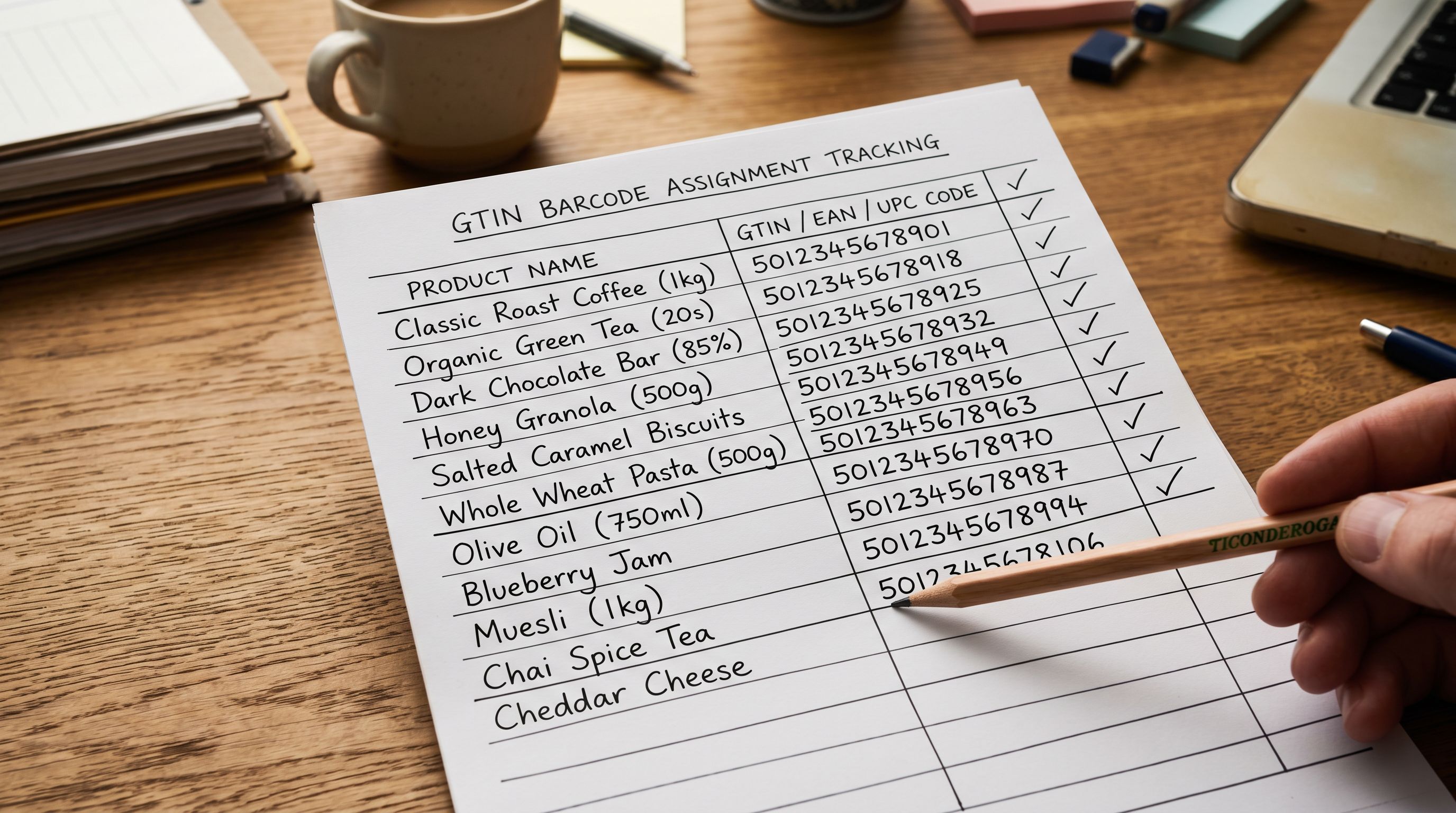
A GTIN is not just a barcode. For AI shopping engines, it is the link between your listing and the verified product record that the model uses to cross-reference specifications and confirm product identity for buyers asking for specific items.
Shared Ground with Google AI Mode
How ChatGPT Shopping and Google AI Mode Align
ChatGPT Shopping and Google AI Mode read the same underlying Shopify product data. The evaluation priorities they apply to that data are more similar than different: both systems prioritise description specificity over keyword density, both use category attributes for candidate filtering, both treat GTINs as identifier signals, and both produce better results for products with complete, structured data than for products with sparse or vague listings.
This alignment means that product data improvements made for one surface carry over directly to the other. Rewriting descriptions with measurable claims and use-case context improves ChatGPT Shopping ranking and Google AI Mode extraction simultaneously. Completing category attributes satisfies ChatGPT Shopping's retrieval filter and Google Shopping's attribute completeness requirements in the same pass. Adding GTINs enables ChatGPT's cross-referencing and Google's exact-match retrieval at the same time.
The practical implication is that there is no separate "optimise for ChatGPT" project distinct from "optimise for AI shopping". The same data quality work serves every AI shopping surface that reads Shopify product data.
The agentic shopping guide for Shopify merchants covers the broader landscape of AI-powered shopping surfaces that read Shopify product data, including how buyer agents that browse and purchase on behalf of buyers evaluate product candidates. The evaluation criteria established there apply equally to ChatGPT Shopping.
What ChatGPT Shopping Does Not Use
Understanding what ChatGPT Shopping does not evaluate is as useful as understanding what it does.
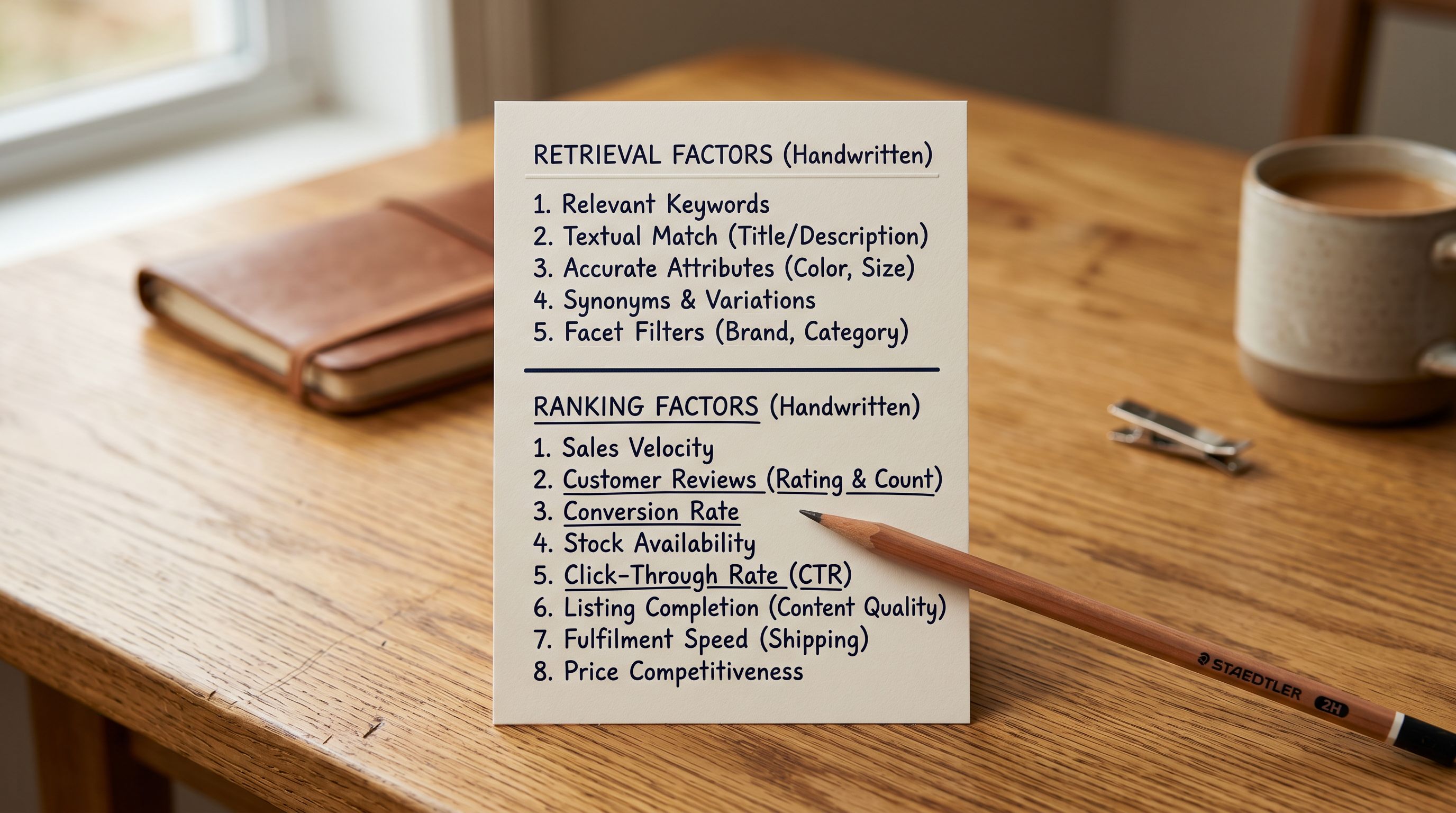
Keyword density. The number of times a keyword appears in the product title or description does not improve retrieval or ranking in ChatGPT Shopping. Keyword repetition that would help in traditional search engine ranking is irrelevant in a contextual AI evaluation.
Meta titles and meta descriptions. The SEO metadata fields (page title tag, meta description) that influence Google search snippet display are not read by ChatGPT Shopping. What matters is the product body text, the structured attribute fields, and the product title.
Review count and rating aggregates. Unlike some marketplace surfaces, ChatGPT Shopping does not incorporate Shopify review data into its evaluation. A product with 500 reviews does not rank above a product with zero reviews on the basis of review count.
Image alt text. ChatGPT Shopping retrieval and ranking do not incorporate image alt text signals. Image quality remains important for conversion after a buyer clicks through, but it does not influence ChatGPT's evaluation of the product listing.
Store domain authority. ChatGPT Shopping does not apply domain authority or store age as a ranking factor. A new store with complete, specific product data competes on equal footing with an established store that has sparse product data.
A Concrete Example
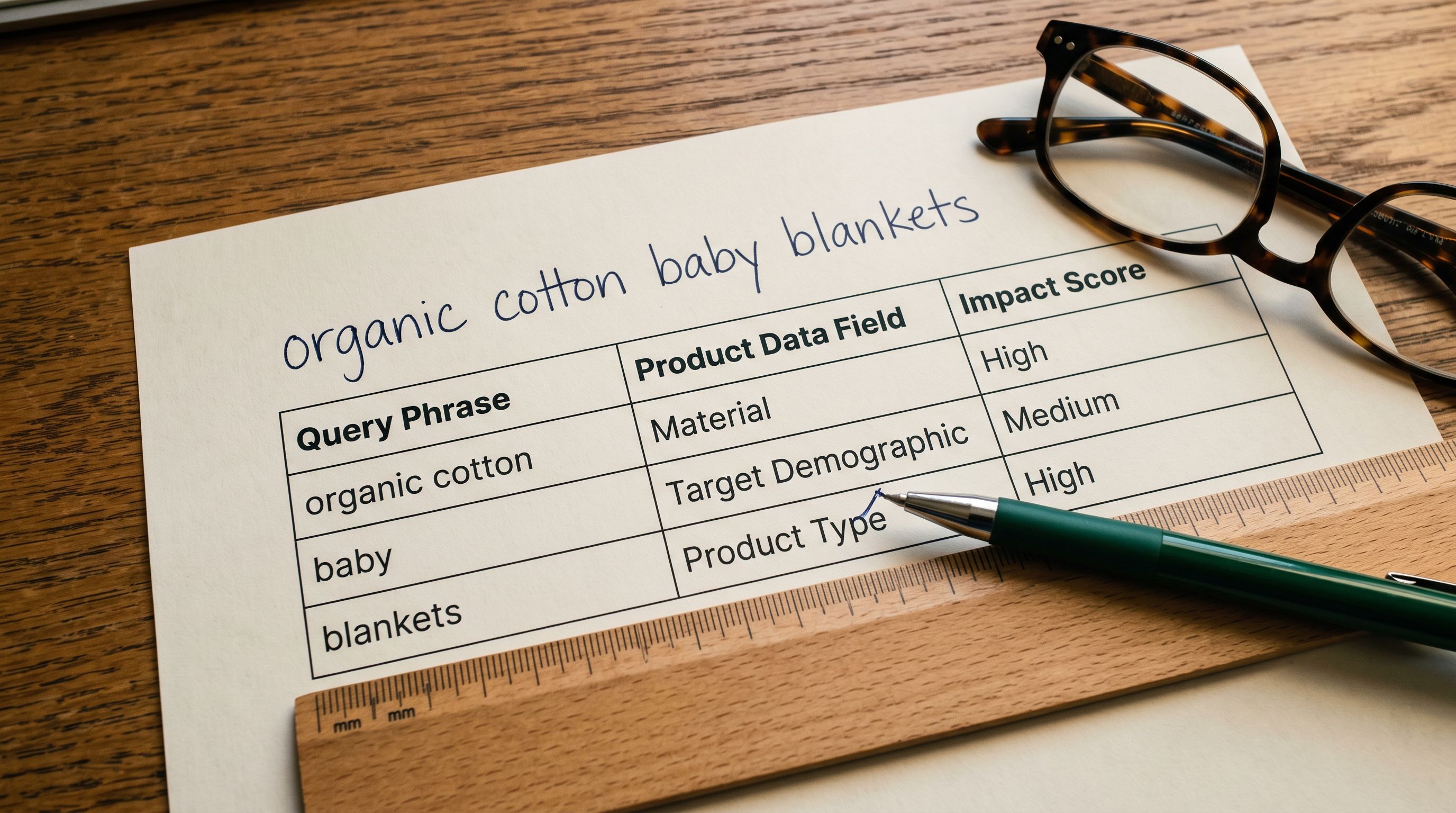
A buyer asks ChatGPT: "I'm looking for a women's merino wool base layer for ski touring, mid-weight, in earthy colours, under $120."
The retrieval stage filters to products categorised as Women's Clothing > Activewear > Base Layers, with material attribute containing merino wool, with price below $120. Products missing the material attribute, the product type, or the price data are excluded before ranking.
The ranking stage scores the remaining candidates against the buyer's specific criteria: ski touring context, mid-weight, earthy colours. A product whose description says "200-weight merino wool base layer, designed for high-output alpine activities where temperature regulation matters; available in Moss, Ochre, and Slate" scores higher than a product whose description says "warm, soft merino top in natural colours, great for outdoor activities". Both describe the same category of product. Only one answers the buyer's specific question.
That is the practical difference that description specificity makes in ChatGPT Shopping evaluation. The data is the product's case for selection; the buyer's query is the criteria. How well the data answers the criteria determines the outcome.
Try Importier free at importier.app
Set up your first import in under five minutes.
Importier brings products into Shopify with AI descriptions, category metafields, and data enrichment on every run.