Shopify CBD Hemp Product Import: Compliance and Descriptions
On this page
A CBD wellness brand has 60 products from a new contract manufacturer: tinctures, softgels, and topicals. The supplier CSV descriptions read well. "Reduces inflammation", "relieves anxiety", "promotes restful sleep"; every claim is backed by the manufacturer's research. The brand imports the catalogue and publishes. Within 48 hours, Google Shopping disapproves all product listings. Meta rejects the ad creative. The descriptions contain outcome health claims that violate FDA draft guidance and every major advertising platform's CBD content policy.
The problem was not the import. The product data was wrong before the import ran, and importing it at scale made it wrong at scale.
The Compliance Environment for CBD and Hemp on Shopify
Shopify permits CBD and hemp product sales for merchants who complete a separate approval process and sign Shopify's CBD merchant agreement. This is a prerequisite that affects every aspect of a CBD merchant's Shopify setup, including how product data must be structured for the platform's payment processing requirements.
Beyond Shopify's own requirements, CBD merchants operate under a layered compliance environment. In the United States, the FDA considers CBD a drug ingredient when sold with disease or health claims, and its guidance on CBD products prohibits outcome-based health claims for products sold as foods, supplements, or topicals over the counter. The FTC, which governs advertising claims, applies the same scrutiny to marketing copy. Google Shopping and Meta prohibit CBD advertising in most markets regardless of claim type; the product category itself is restricted at the platform level.
What this means for product data: the description field that drives both the Shopify product page and any downstream channel is the highest-risk field in the catalogue. Every word in that field is evaluated for compliance by at least three different rule sets.

What Product Data CBD Merchants Must Import Correctly
CBD product compliance data belongs in metafields, not in description prose. The reason is structural: a description field is a single block of text that platforms, search engines, and integrations cannot parse for specific values. A metafield is a structured key-value pair that downstream systems can read, filter, and act on.
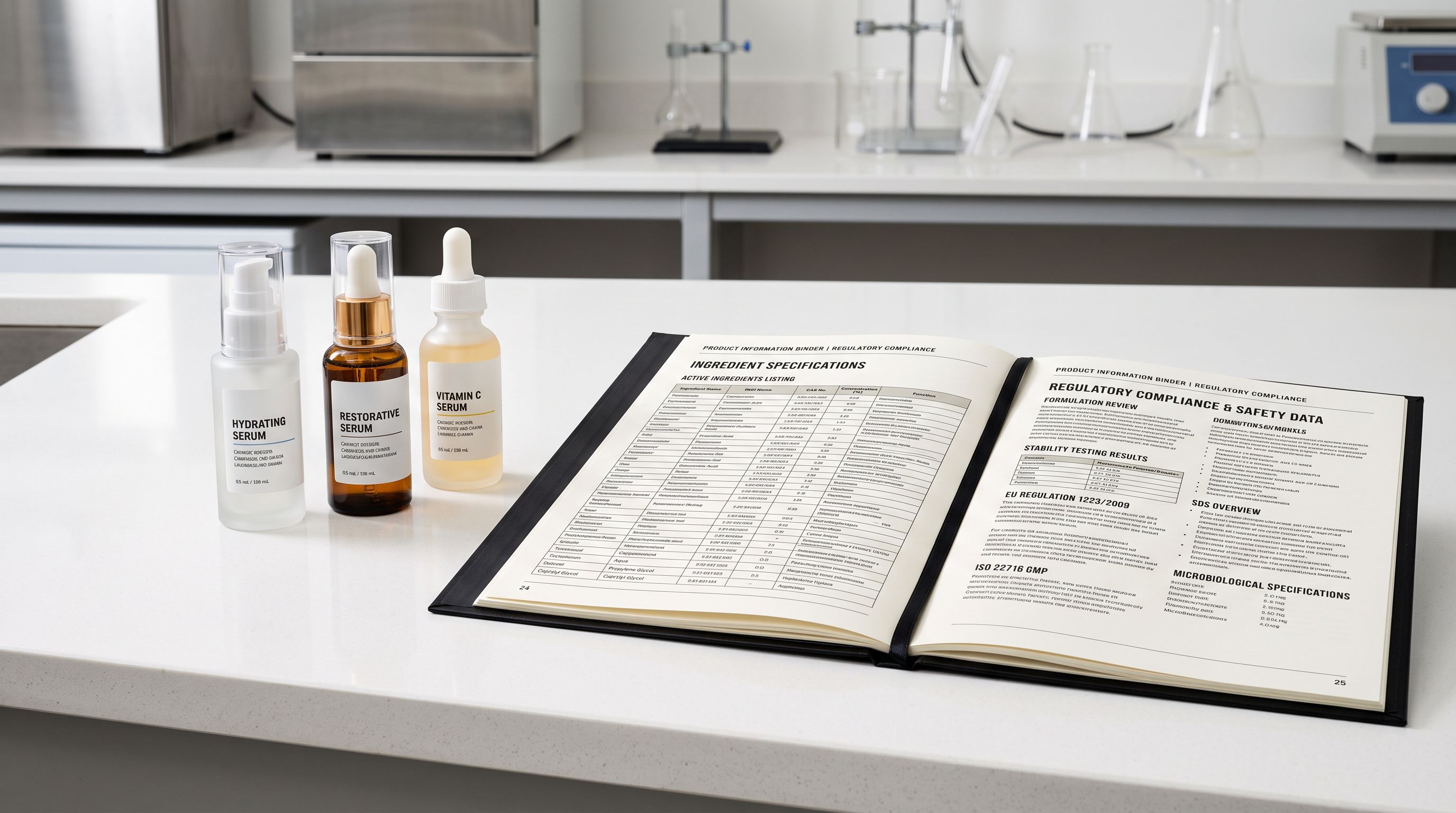
Importier's Health and Wellness Industry Pack (one of 22 Industry Packs covering Shopify's Standard Product Taxonomy, with 3,758 attribute types) includes CBD-specific taxonomy attributes designed for exactly this requirement. The attributes available for hemp-derived CBD products include:
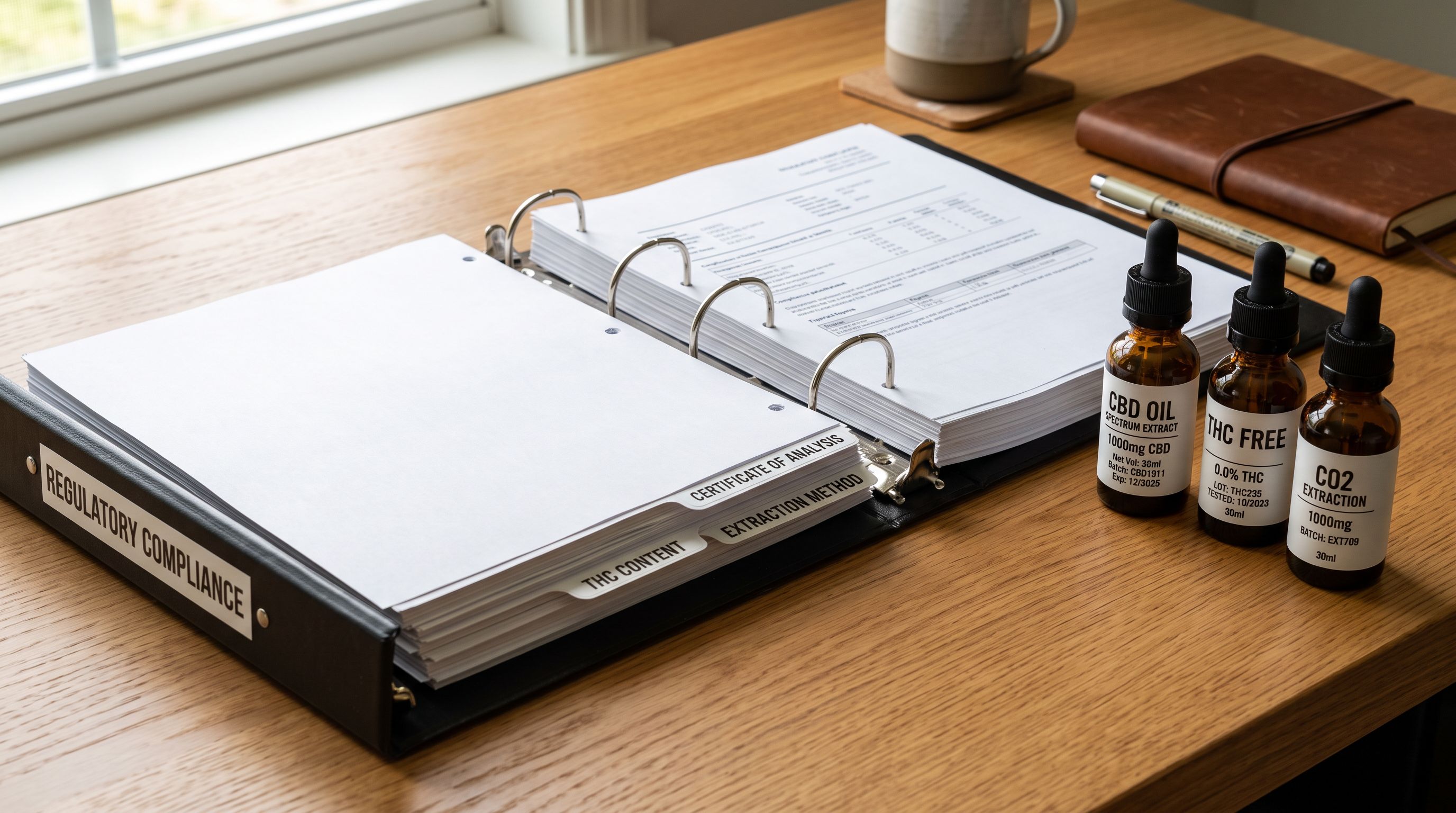
- CBD concentration in milligrams per serving and per container
- THC content as a percentage of dry weight (required for hemp compliance: below 0.3% for US federal hemp classification)
- Extraction method (full-spectrum, broad-spectrum, or isolate)
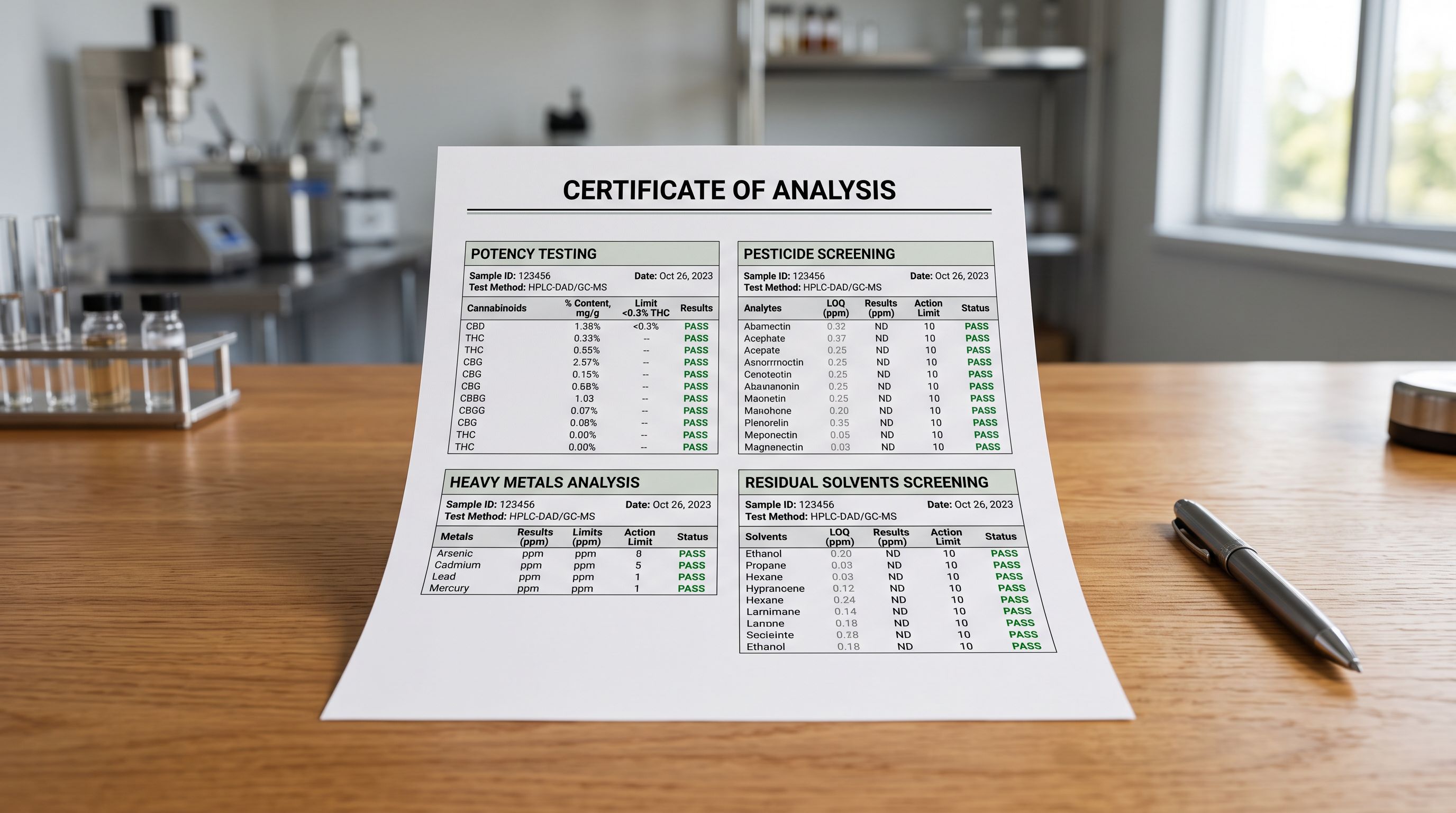
- Third-party lab tested (boolean attribute)
- Certificate of Analysis URL (file reference pointing to the batch-specific lab document)
- Hemp source region and certification status (USDA Organic, non-GMO)
- Terpene profile (for full-spectrum and broad-spectrum products)
- Batch number (traceable to the specific CoA)
Each of these attributes maps to a Shopify taxonomy metafield when the Health and Wellness Industry Pack is applied at import. A product's THC percentage becomes a queryable metafield value rather than a phrase buried in paragraph five of a 300-word description. A Certificate of Analysis becomes a file reference that can be rendered as a downloadable badge on the product page rather than a link embedded in prose.
The Certificate of Analysis is the document your customers need to trust your product. Storing it as a file metafield makes it surfaceable in every downstream system. Embedding a link in the description prose makes it invisible to structured data, compliance integrations, and storefront filter navigation.
Lab Test Data as Metafields in the Import File
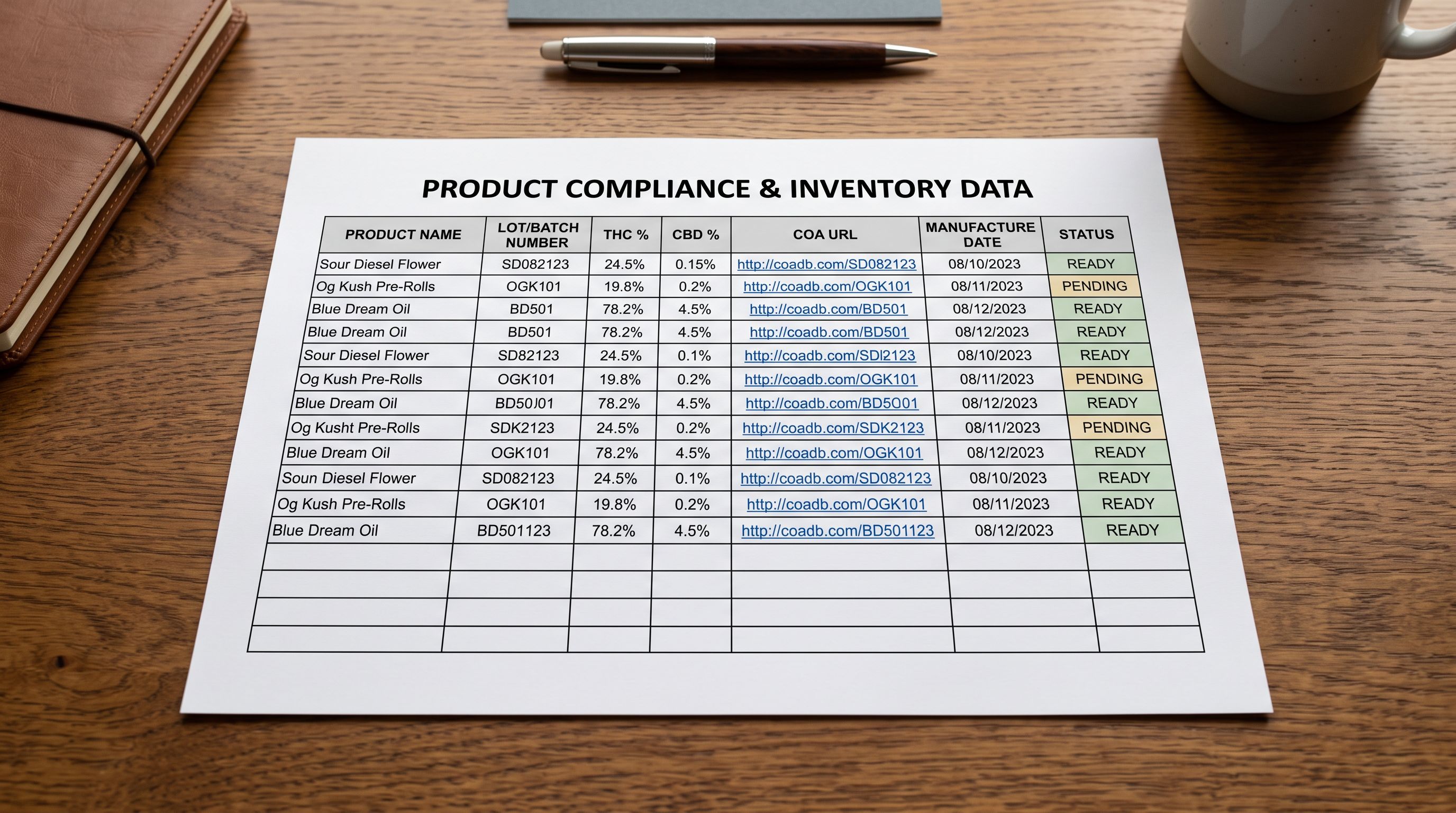
Supplier CSVs for CBD products rarely include structured lab test data columns. The Certificate of Analysis document URL, THC percentage, and batch number typically appear as footnotes or embedded references in a description column, or are sent as separate PDFs alongside the product data.
During an import, these values need column mapping before any data touches Shopify. The practical approach:
- Add dedicated columns to the supplier CSV before importing:
ThC_Percentage,CBD_Concentration_mg,CoA_URL,Batch_Number,Extraction_Method. - Populate each row with the values from the manufacturer's CoA documentation for that batch.
- In Importier's column mapping step, map each of these columns to the corresponding Health and Wellness Industry Pack taxonomy attribute.
The CoA URL column requires that the Certificate of Analysis document is hosted at a stable, accessible URL before the import runs. Most contract manufacturers provide batch-specific CoA documents on their compliance portals. Hosting each document in a Shopify Files upload or a dedicated document storage service and using that URL in the import file is the reliable approach.
Once mapped, these values are committed as structured metafields at the point the import pushes to Shopify. Updating lab data for a new batch means updating the CoA URL, THC percentage, and batch number columns in the source file and running the import again using Importier's update mode, which overwrites only the changed fields.
Writing CBD Descriptions That Are Compliant and Still Convert
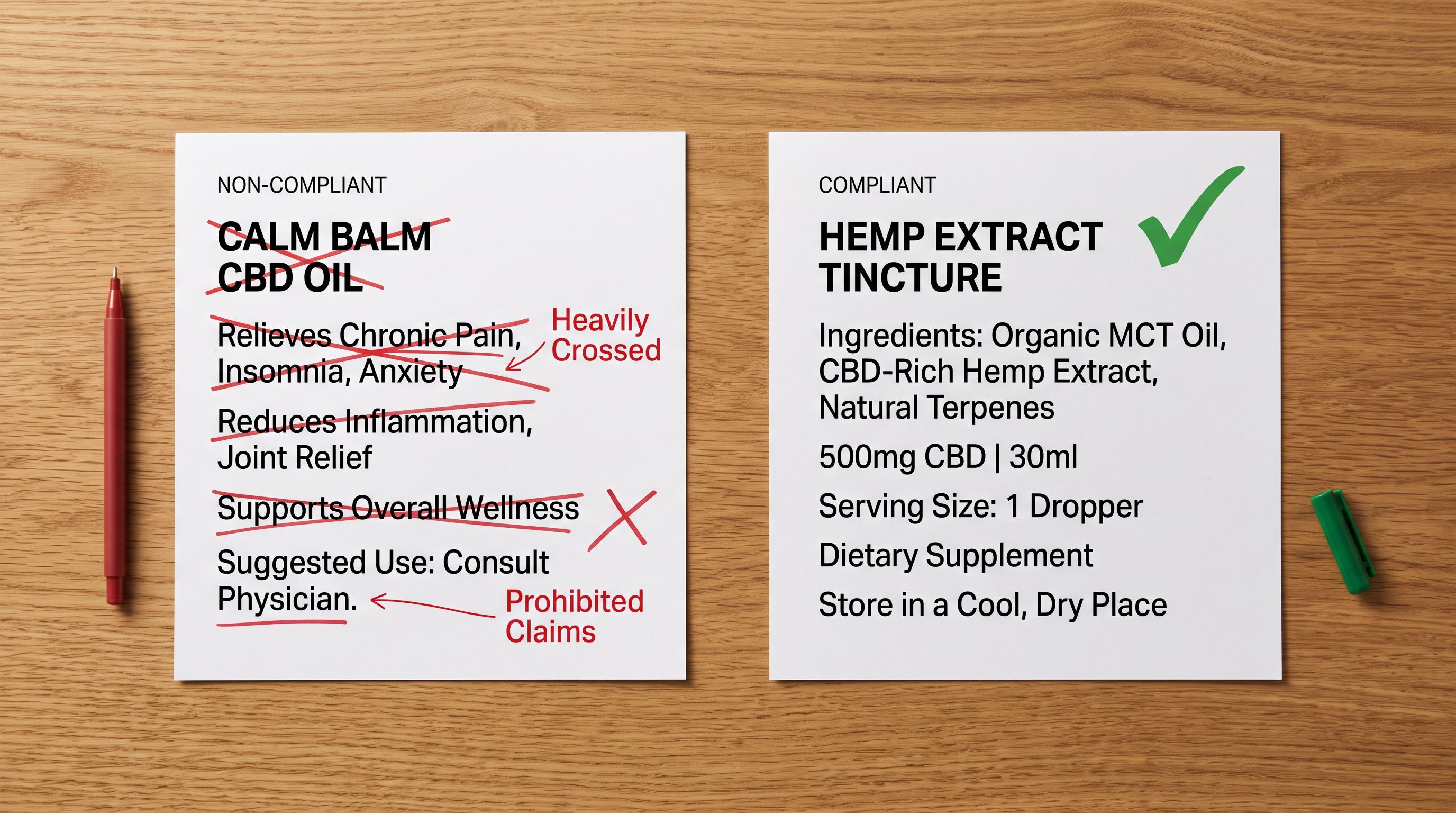
The description field is where most CBD merchants face the sharpest constraint. Outcome health claims ("reduces inflammation", "relieves chronic pain", "treats anxiety disorders") are prohibited. But a description that reads only as an ingredient list is not a description that converts.
The distinction that experienced natural products copywriters use is ingredient and process language versus outcome language. Factual claims about what the product contains and how it was made are generally permissible. Claims about what the product does to the body are the restricted territory.
Permitted framing tends to look like this:
- "500mg broad-spectrum CBD extracted from organically grown hemp via supercritical CO2 extraction, containing naturally occurring terpenes and cannabinoids below the 0.3% THC threshold for federal hemp compliance."
- "Third-party laboratory tested for potency, pesticides, heavy metals, and residual solvents. Certificate of Analysis available for each batch."
- "Formulated with 25mg CBD per softgel alongside MCT oil and natural peppermint flavouring."
Restricted framing tends to look like this:
- "Our CBD tincture relieves stress and helps you achieve calm." (outcome claim)
- "Clinically shown to reduce inflammation." (disease claim)
- "Helps treat sleep disorders naturally." (therapeutic claim)
The line is not always clear, and the regulatory guidance has evolved significantly since 2018. Outcome language that was common in early CBD marketing has become progressively higher-risk as the FTC and FDA have issued warning letters. The safest position is to treat the description as a specification document: what is in the product, where it came from, how it was processed, and what certifications it holds.
- 'Relieves anxiety and promotes a calm state of mind' (outcome claim prohibited by FTC and FDA guidance)
- 'Clinically proven to reduce inflammation' (disease claim triggering platform disapproval)
- 'Promotes restful sleep naturally' (therapeutic outcome claim)
- No structured compliance data: THC percentage and CoA buried in paragraph text
- Google Shopping disapproves product listing within 48 hours
- No queryable metafields for compliance integrations or filter navigation
- '500mg broad-spectrum CBD extracted from USDA Organic hemp via CO2 extraction, third-party tested for potency and contaminants'
- 'Contains naturally occurring terpenes and cannabinoids. THC content below 0.3% per dry weight.'
- 'Certificate of Analysis available for each batch': factual, verifiable, no outcome claim
- THC percentage, CoA URL, and batch number mapped to structured taxonomy metafields at import
- Product listing approved on Shopify storefront: description passes platform review
- Metafields surfaceable in filter navigation, compliance integrations, and storefront badges
Using AI personas for compliant CBD copy at scale
Importier's Expert Personas for Compliant CBD Descriptions
Writing 60 compliant product descriptions manually is feasible. Writing 600, or maintaining a catalogue where every batch update requires a description refresh, is not. Importier's AI description generation includes expert personas tuned for natural products and health and wellness verticals, which are the personas relevant to CBD catalogues.
The Health and Wellness persona writes with the vocabulary of a functional medicine practitioner or natural products formulator: bioavailability, extraction method, entourage effect, third-party verification, standardised potency. This vocabulary naturally skews toward process and ingredient language rather than outcome language, because it describes how products work, not what they cure.
The Ingredient Spotlight description style, which leads with the active ingredient stack before any contextual information, is well-suited to CBD products. For a 1,000mg full-spectrum tincture, an Ingredient Spotlight description leads with "1,000mg full-spectrum CBD per 30ml bottle (33mg per 1ml dropper), extracted from USDA Certified Organic hemp via ethanol extraction, third-party tested for potency and contaminants." This is informative, differentiating, and stays in specification territory.
The practical import workflow for CBD descriptions:
- Strip any outcome health claims from the supplier's description column before importing.
- Add the structured compliance attributes as separate columns (THC percentage, CoA URL, extraction method).
- In the import wizard, select the Health and Wellness Industry Pack and the Ingredient Spotlight description style with a natural products or health and wellness persona.
- Let Importier generate descriptions from the structured attribute data: concentration, extraction method, certification status, terpene profile where applicable.
- Review the generated descriptions for any outcome language before pushing to Shopify.
Generated descriptions built from structured attributes are inherently more compliant than descriptions built from supplier marketing prose, because the AI is drawing on factual product specifications rather than on benefit claims.
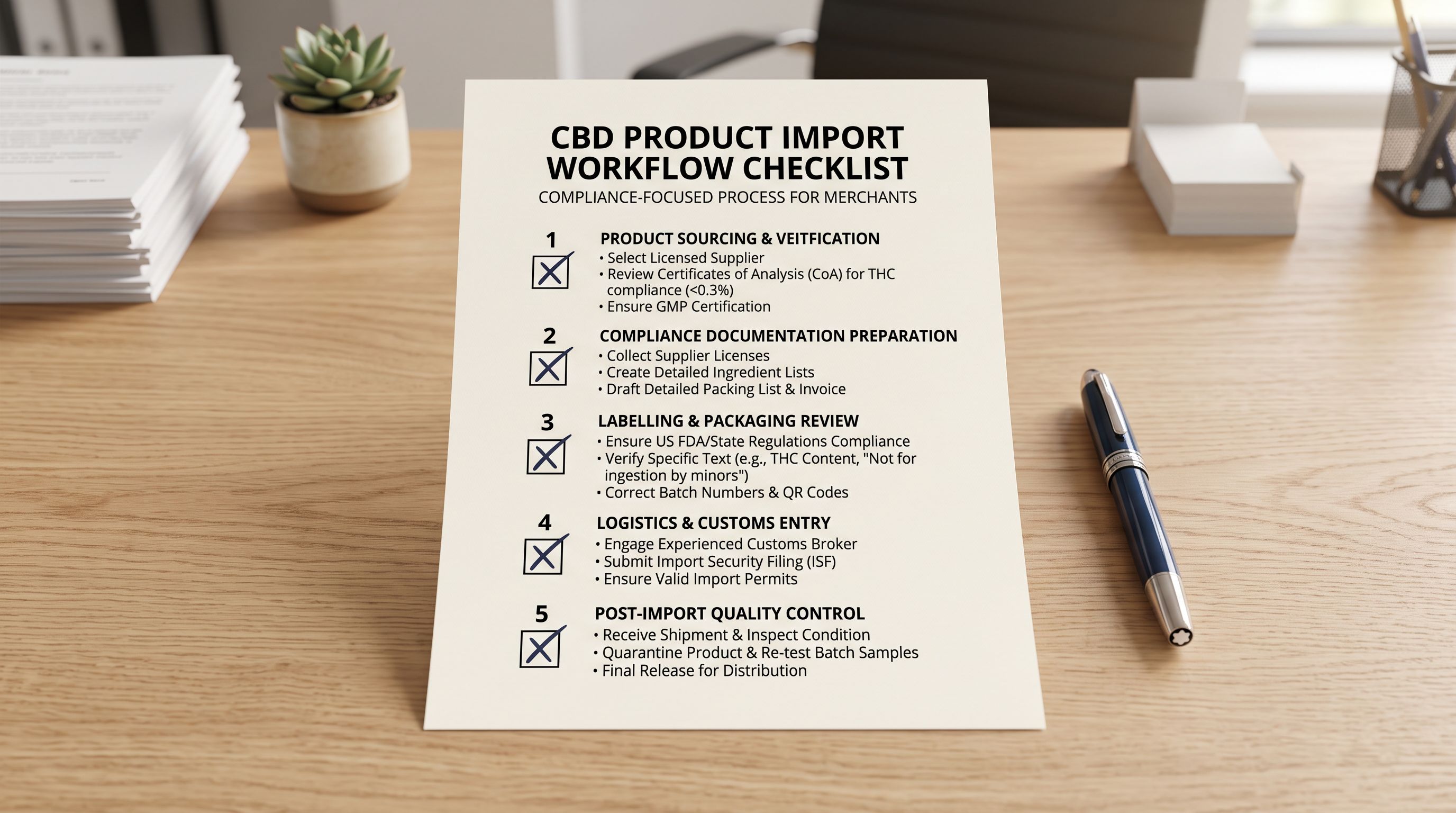
- 01Step 1Complete Shopify's CBD merchant agreement before building your catalogue. The product data requirements are secondary to the platform approval. Run the import after approval is confirmed, not before.
- 02Step 2Prepare the supplier CSV with dedicated compliance columns: THC percentage, CBD concentration per serving, extraction method, batch number, and Certificate of Analysis URL for each product. Populate these from the manufacturer's CoA documents before importing.
- 03Step 3Remove outcome health claims from the description column in the source file. Replace them with process and ingredient language: what the product contains, how it was made, and what third-party verifications it holds.
- 04Step 4In Importier's column mapping step, map compliance columns to Health and Wellness Industry Pack taxonomy attributes. Map the CoA URL to the Certificate of Analysis file metafield. These values become queryable metafields on each product, not buried text.
- 05Step 5Select the Ingredient Spotlight description style with a Health and Wellness persona. Importier generates descriptions from the structured attribute data, which keeps the language in specification territory rather than outcome-claim territory. Review for compliance before pushing.
Key Takeaways
Shopify CBD hemp product import compliance is not primarily a Shopify problem. It is a product data problem that Shopify surfaces. The import is the point where that data becomes structured at scale.
- CBD and hemp product data has two distinct compliance requirements: regulatory compliance (FDA, FTC: outcome health claims prohibited) and platform compliance (Google Shopping, Meta: CBD advertising restricted regardless of description accuracy). Compliant descriptions satisfy the first. They do not unlock the second.
- Lab test data belongs in taxonomy metafields, not in description prose. THC percentage, CBD concentration, Certificate of Analysis URL, and batch number are structured data that compliance integrations, storefront badges, and filter navigation need in queryable form. Buried in a description paragraph, they serve none of those purposes.
- Importier's Health and Wellness Industry Pack creates the correct taxonomy metafields at import for CBD-specific attributes: concentration, extraction method, third-party lab tested, CoA URL, batch number, terpene profile.
- The permitted description territory for CBD is ingredient and process language: what the product contains, how it was made, what certifications it holds. The restricted territory is outcome language: what the product does to the body, what conditions it treats.
- AI-generated descriptions built from structured product attributes (concentration, extraction method, certification status) are inherently closer to compliant than descriptions built from supplier marketing prose. The Ingredient Spotlight style with a Health and Wellness persona produces specification-led copy that stays in permitted territory.
- Shopify's CBD merchant agreement is a prerequisite. Build and review the catalogue before applying, but do not publish until the agreement is signed and approved.
Import your CBD catalogue with the compliance columns mapped correctly at importier.app. The column mapping step makes every attribute a structured metafield at Shopify, not text buried in a description.
Set up your first import in under five minutes.
Importier brings products into Shopify with AI descriptions, category metafields, and data enrichment on every run.