Shopify Products in Google AI Overviews: Inclusion Signals

On this page
A merchant searches for "waterproof running jacket under $150" on Google and sees an AI Overview block with three specific product recommendations: each with a price, a star rating, and a two-sentence summary pulled from the product description. Shopify products appear in Google AI Overviews like this when their structured data and description quality meet the model's inclusion criteria. Their waterproof running jacket retails at $139, has a 4.7-star rating, and feeds correctly through Google Merchant Centre. It is not in that block.
The product meets every surface criterion. The problem is in what Google AI Overviews read when deciding which products to recommend, and those signals differ from what traditional Google Shopping optimises for.
This guide covers what drives inclusion of shopify products google ai overviews product recommendation blocks, which gaps most commonly exclude products, and how to audit your catalogue against each signal.
What Google AI Overviews Are and How They Differ from Google Shopping
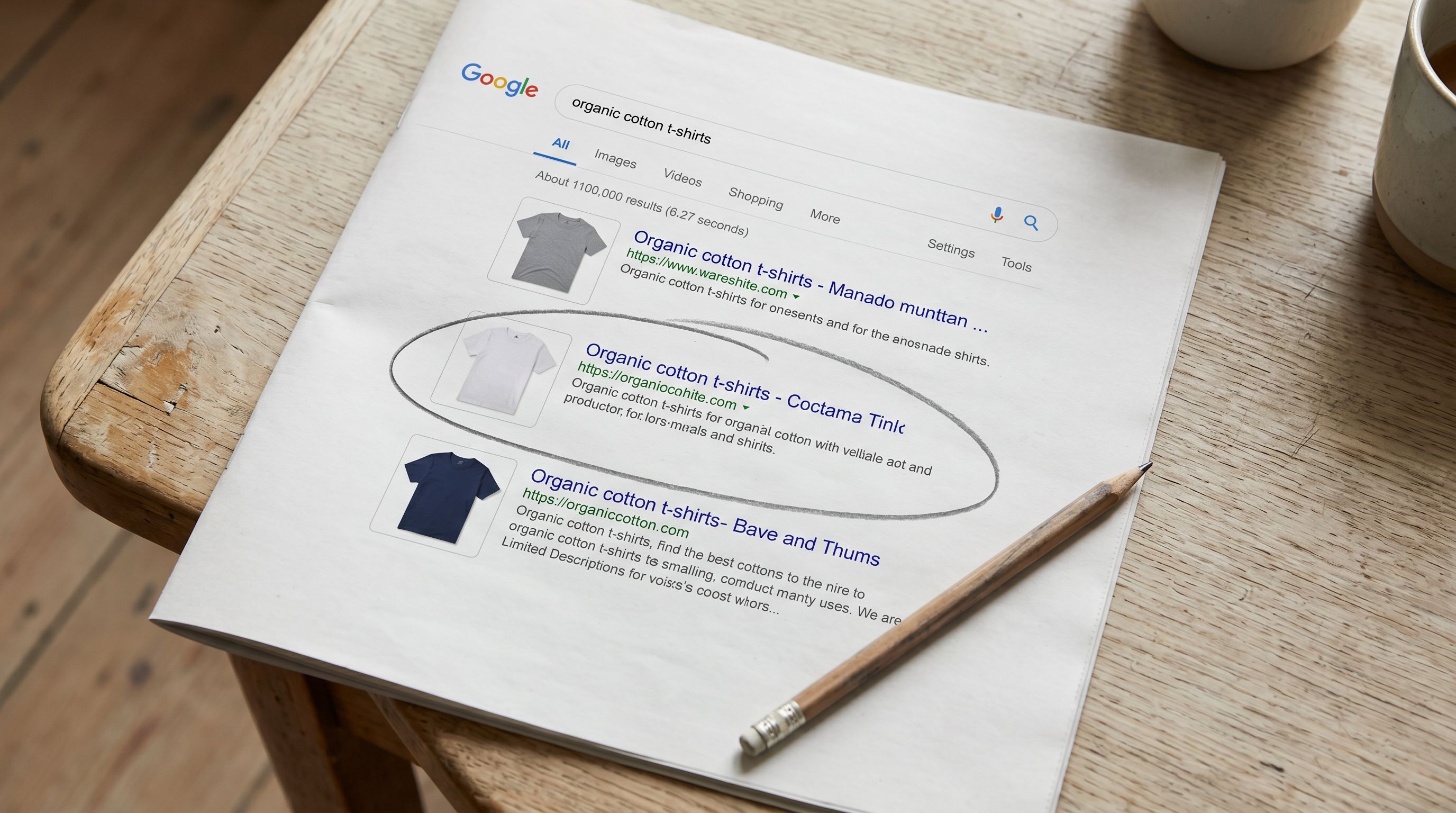
Google's documentation on AI search features describes AI Overviews as summaries generated by a language model to help users get quick answers to their questions. For commercial queries, AI Overviews increasingly include product recommendation blocks: a set of 3-5 specific products with price, image, review rating, and a short description drawn from the product page.
Standard Google Shopping ads are auction-driven. A merchant with sufficient budget and a well-optimised feed can appear for relevant queries regardless of product content quality. AI Overview product recommendations are not auction-driven. There is no bid. The model selects products based on how well the product page data matches the intent behind the query.
The products that appear in AI Overview blocks are drawn from Google's product knowledge graph, populated by schema.org Product markup that Shopify auto-generates from your product data fields. A well-structured Shopify product page with complete data produces richer markup. A sparse product page produces sparse markup. Sparse markup produces lower recommendation confidence.
The Signal That Determines Product Selection in AI Overviews
The most consequential signal is description specificity relative to the search query's implied question.
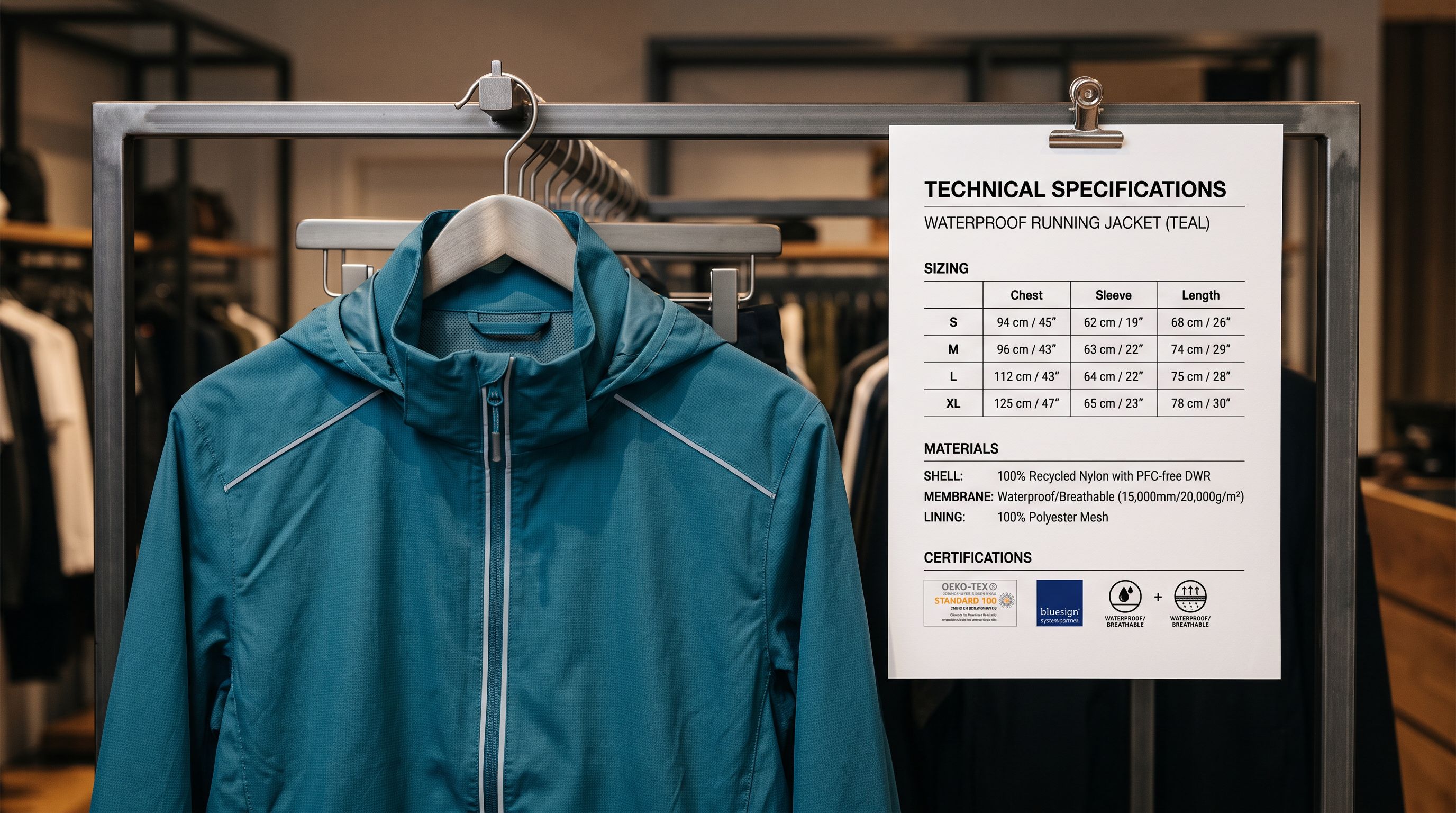
When a user searches "waterproof running jacket under $150", the model reads that as a question with several implied requirements: waterproof to a specific standard, designed for running, under $150. It then reads product descriptions as candidate answers.
A description that says "premium quality outdoor jacket with weather protection and reflective details" gives the model nothing concrete to match against those requirements. A description that says "10K/10K waterproof-breathable membrane, mesh-lined for running ventilation, weighs 220g, heat-sealed seams, reflective trim front and rear" gives the model four specific attributes it can evaluate against the query.
The merchant with the specific description gets recommended. The merchant with the adjective-filled description does not. There is no bidding mechanism between them.
This is the same mechanism that governs Perplexity Shopping and Amazon Rufus: AI surfaces reward descriptions that resolve queries with concrete answers over descriptions that use marketing language. The difference with AI Overviews is that the surface has a much broader reach than either; it is the top of the Google search results page for commercial queries that trigger the feature.
Importier's AI description generation produces descriptions structured around attribute specificity: materials, dimensions, certifications, temperature ratings, compatibility statements, and use-case framing. These are the attributes a query-matching model uses when deciding whether a product page answers the search.
shopify products google ai overviews: GTIN Completeness and Entity Verification
Google uses GTINs to verify that a product listing corresponds to a known manufacturer product. A GTIN (barcode, UPC, or EAN) maps a listing to the GS1 database record for that product, which Google cross-references against review aggregators, price comparison databases, and official product specifications.
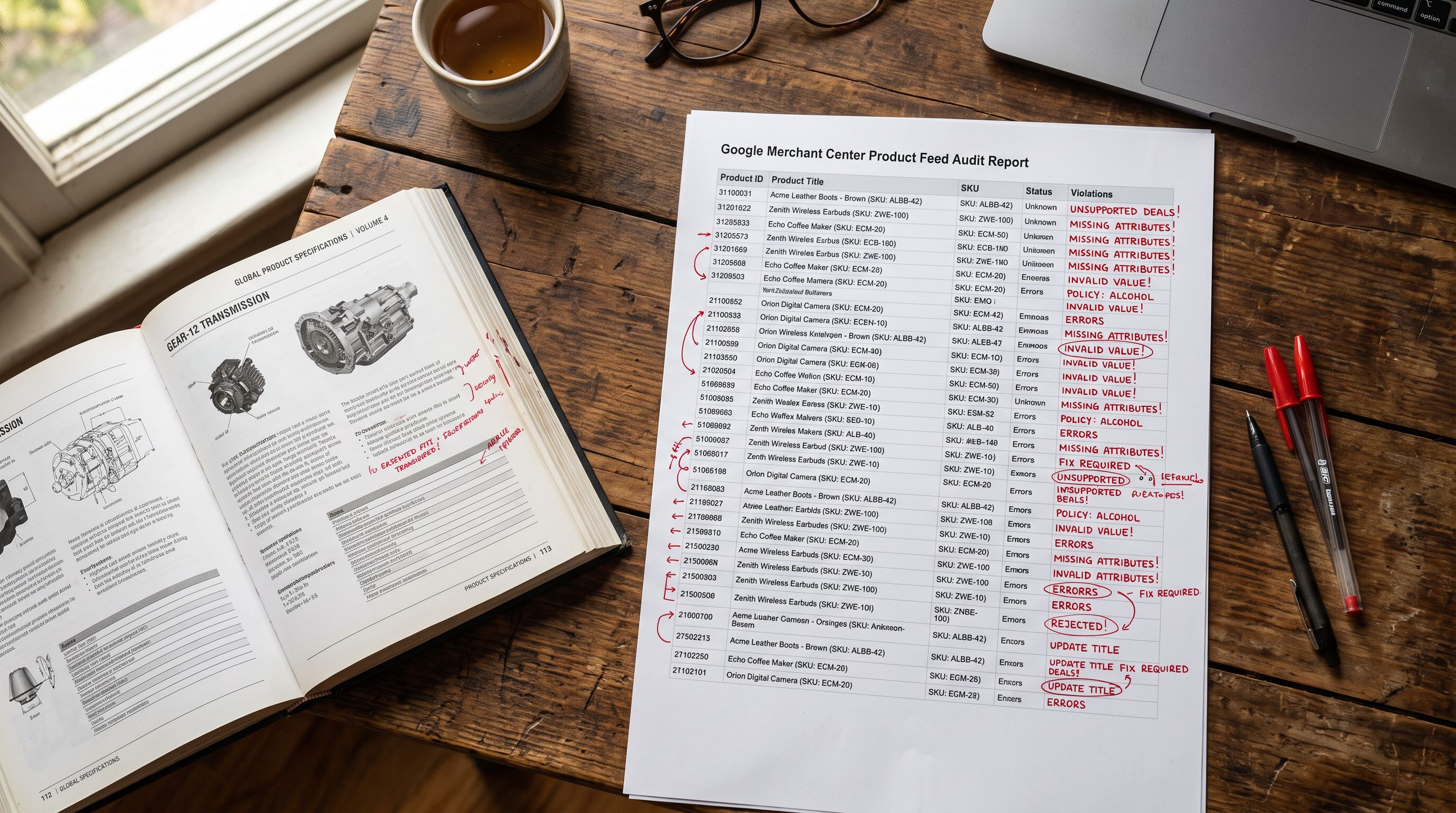
A product without a GTIN cannot be entity-verified. It is treated as an unverified listing with lower recommendation confidence. For merchants with large catalogues, this gap is common: supplier CSVs frequently omit barcodes, marketplace imports may not include them, and manually sourced products often have no barcode on record.
- No entity verification: listing treated as unknown product
- Cannot cross-reference manufacturer spec sheets
- Lower recommendation confidence in AI Overview product blocks
- Higher Merchant Centre disapproval risk
- Excluded from price comparison on verified product identity
- Entity verified against GS1 database
- Google can pull additional spec data from manufacturer record
- Higher recommendation confidence for AI Overview inclusion
- Lower disapproval risk for Shopping features
- Eligible for price comparison across verified product identity

Importier's barcode lookup populates GTINs during import for products where barcodes were not included in the source file. For an existing catalogue with missing GTINs, the Store Scanner can identify those products and trigger a barcode lookup pass across the affected SKUs.
The guide to Shopify product data quality covers GTIN completion alongside other data gaps that affect search and shopping performance.
How google ai overviews shopify Products Use Structured Data
Shopify automatically generates schema.org Product markup from your product data fields. The AI Overview model reads this structured data when evaluating a product for recommendation. Google's product structured data documentation defines the full property set.
The fields that matter most for AI Overview product blocks:
description: The body HTML of the Shopify product description becomes the description property in schema.org markup. This is the primary source the model uses to match product content against query intent. Thin descriptions produce thin structured data; AI-generated attribute-dense descriptions give the model rich source text to evaluate.
gtin / gtin13: Populated from the Shopify product's barcode field. This is the entity verification signal covered above.
brand / name: Shopify maps the vendor field to the brand property. Merchants who leave vendor set to their store name rather than the product's manufacturer prevent brand entity resolution. A jacket listed as vendor "My Store" cannot be matched to the manufacturer's product entity.
aggregateRating: Shopify does not generate review markup natively. A review app that outputs schema.org aggregateRating is required. Products without review markup appear in AI Overview blocks without a rating indicator, which affects recommendation confidence in categories where ratings drive purchase decisions.
additionalProperty: Category metafields from Importier's Industry Packs appear as additionalProperty items in schema.org markup. These provide structured attribute values (materials, dimensions, certifications, compatibility ratings) that AI systems use for multi-requirement queries: "jacket with waterproof rating AND mesh lining AND under 300g."
The full field-by-field schema.org mapping for Shopify products covers how each native Shopify field maps to a schema.org property and what each property's absence costs in structured data completeness.

How to prepare your catalogue
Auditing Your Shopify Catalogue for AI Overview Readiness
- 01Step 1Description specificity check. Open your top 20 products by Google Search Console impressions. Read each description and count specific attributes: materials named, dimensions stated, certifications listed, use cases described. A description with fewer than three specific attributes is unlikely to match a conversational product query in AI Overviews. Rewrite low-specificity descriptions using Importier's AI description generation with a category persona: the persona generates attribute-dense language suited to that product type.
- 02Step 2GTIN audit. Export your Shopify product list and filter for products where the barcode field is empty. Run a barcode lookup via Importier's import flow or Store Scanner for products with GTINs missing. Prioritise products in your most-searched categories. A merchant with 1,200 products and 400 missing GTINs has 400 products with reduced AI Overview recommendation confidence, regardless of how good their descriptions are.
- 03Step 3Vendor field review. In Shopify admin, filter products where the vendor field is blank or set to your store name. Update vendor to the manufacturer or brand name. The schema.org brand property enables brand entity resolution: products without a manufacturer vendor cannot be matched to a known product entity in Google's knowledge graph.
- 04Step 4Review markup verification. Confirm your active review app outputs schema.org aggregateRating markup. Use Google's Rich Results Test on a product URL to verify the aggregateRating property appears in the structured data output. If reviews are present in Shopify but absent from the Rich Results output, the review app's schema.org output setting may need to be enabled.
- 05Step 5Category metafields. For categories where faceted attributes matter (outdoor equipment, electronics, tools, sporting goods), apply an Importier Industry Pack that matches the Shopify Standard Product Taxonomy for those product types. The additionalProperty values the pack generates give the AI model structured attributes for multi-requirement queries.
The Relationship to Google Shopping and AI Shopping Broadly
Google AI Overview product recommendations draw on the same data signals as Google Shopping campaigns: the Merchant Centre feed, schema.org Product markup, GTIN completeness, and description quality. An investment in any of these signals improves performance across both surfaces simultaneously.
The AI shopping landscape for Shopify merchants covers Google AI Mode, ChatGPT Shopping, Perplexity Commerce, and Amazon Rufus alongside AI Overviews. The underlying requirement is consistent: attribute-complete product data that resolves buyer queries with specificity. These surfaces do not reward keyword density; they reward descriptions that read like answers.
For merchants who have already run Importier's import flow with AI description generation, the descriptions produced already carry the attribute specificity AI Overviews reward. The remaining gaps are typically GTIN completeness, vendor field accuracy, and review markup: data corrections, not content rewrites.
Key Takeaways
The shopify products google ai overviews inclusion mechanism selects products by matching product page data against the implied requirements of the search query. The decision is not auction-driven and cannot be influenced by ad spend.

Key points:
- Google AI Overview product blocks are not paid placements. The model selects products based on how well the product page data matches the query's intent. Description specificity is the primary signal.
- A description that contains specific attributes (materials, dimensions, certifications, use cases) gives the model concrete data to match against buyer queries. Adjective-filled marketing language does not.
- GTIN presence enables entity verification. Products without GTINs cannot be cross-referenced against manufacturer records, reducing recommendation confidence in AI Overview product blocks.
- Shopify auto-generates schema.org Product markup from product data fields. The quality of that markup is a direct function of the completeness of the product data: a thin product page produces thin structured data.
- Category metafields from Importier's Industry Packs appear as additionalProperty in schema.org markup, providing structured attributes AI systems use for multi-requirement faceted queries.
- Review markup (aggregateRating) requires a review app that outputs schema.org markup. Products without review structured data appear without a rating indicator in AI Overview product blocks.
Prepare your product catalogue for Google AI Overviews at importier.app. AI description generation, barcode lookup, and Industry Pack metafields are available on the Growth plan and above.
Set up your first import in under five minutes.
Importier brings products into Shopify with AI descriptions, category metafields, and data enrichment on every run.