# Shopify UK VAT Product Import: Tax Class and Rate Guide
> UK VAT has three rates, and the rules for zero-rated goods are specific and non-obvious. Configure tax class at Shopify UK VAT product import time.
- Published: 2026-08-07
- Author: Importier Team
- Category: Store Management / SEO & Discoverability
- Canonical: https://www.importier.app/blog/shopify-uk-vat-product-import
---
A children's clothing merchant in Manchester runs a Shopify UK VAT product import from a supplier CSV. The import completes cleanly and all 300 garments show as active in Shopify admin. Six months later, reviewing their VAT return with their accountant, they find that every garment sized for children under 14 has been charged at the standard 20% VAT rate. Children's clothing in that size range is zero-rated under UK VAT law. The merchant has over-collected VAT from every UK customer and must file a corrective VAT return.
The cause is the same default that catches Australian merchants on GST: a Shopify UK VAT product import without explicit tax class configuration sets every product to the standard rate. For a product catalogue where a significant portion of items qualify as zero-rated or reduced-rate, that default creates compliance risk at scale.
UK VAT is more complex than Australian GST because it has three rates, not two. Understanding which rate applies to each product category, and how to configure that in a Shopify bulk import, prevents over-collection from customers and incorrect VAT returns.
## The UK VAT Three-Rate System
[UK VAT](https://www.gov.uk/guidance/vat-rates-on-different-goods-and-services) applies to most goods and services sold to UK customers. Merchants must [register for VAT](https://www.gov.uk/register-for-vat) once taxable turnover exceeds £90,000 in a rolling 12-month period. From that point, VAT-registered businesses must charge VAT, collect it, and remit it to HMRC through their VAT returns.
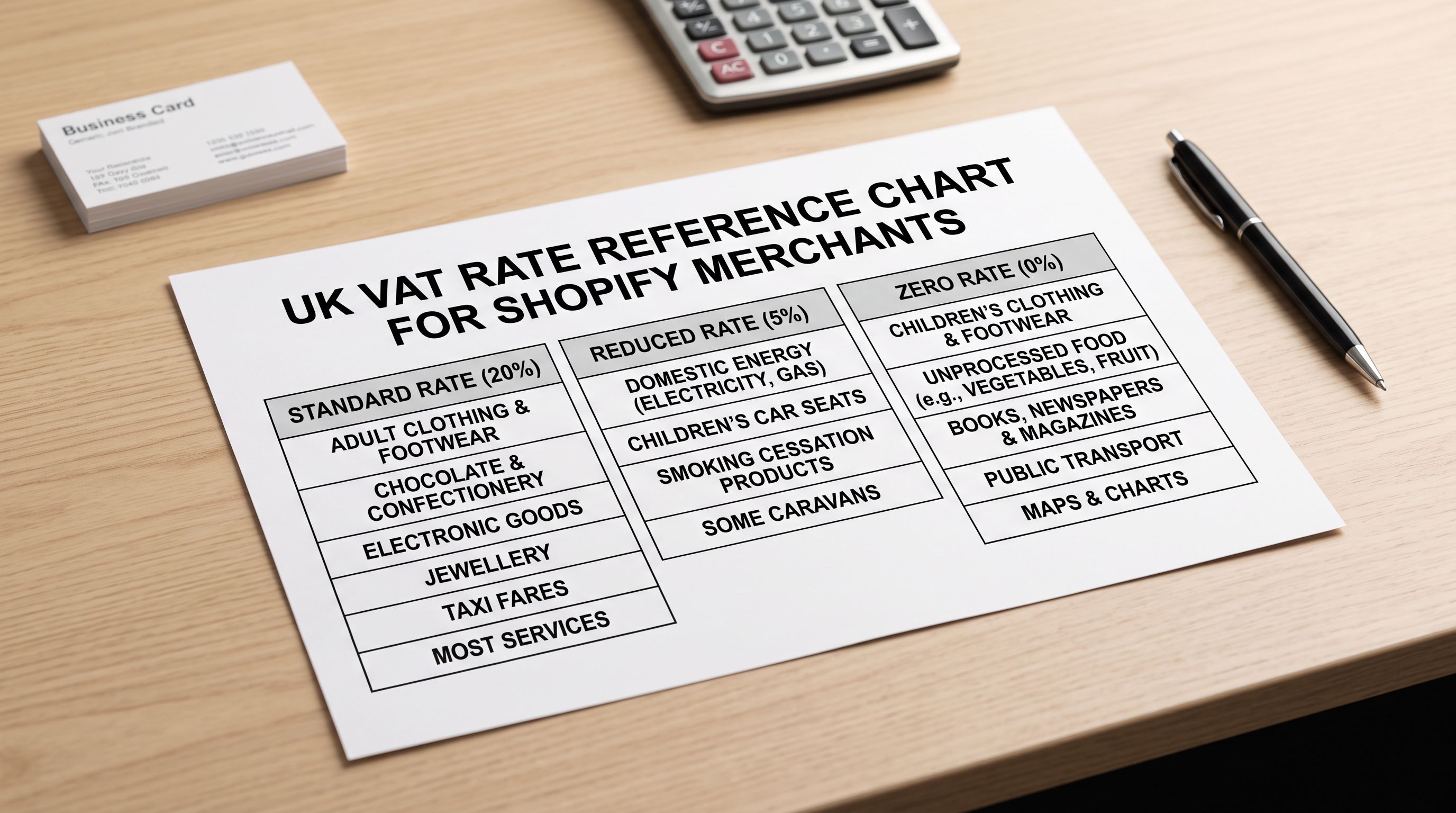
The three rates are:
**Standard rate: 20%.** The default rate for most goods and services. Electronics, clothing for adults, homeware, toys, games, cosmetics, and most non-food items fall here. When Shopify imports a product without an explicit tax class, it defaults to the standard rate for UK customers.
**Reduced rate: 5%.** A smaller category of specific goods and services. The main product categories in this rate are domestic fuel and power (gas, electricity, heating oil for residential use), children's car seats, and some mobility aids. Several years ago, nicotine replacement therapy products (patches, gum, sprays) moved to the reduced rate to support smoking cessation.
**Zero rate: 0%.** A broad category that includes most basic food, children's clothing and footwear, printed books and newspapers, prescription medications, and public transport. Zero-rated goods are taxable supplies; a VAT-registered business still claims input tax credits on them, but the VAT charged to the customer is 0%.
Zero-rated goods are taxable at 0%: VAT-registered businesses still include these sales in their VAT return and claim input tax credits on the costs. Exempt supplies (financial services, insurance, most education) are outside the VAT system entirely; no VAT is charged and no input tax credits are claimed. For Shopify product merchants, the relevant distinction is almost always between standard-rated, reduced-rated, and zero-rated, not exempt.
## How Shopify Handles UK VAT Rates at the Product Level
Shopify's UK tax configuration works through a combination of store-level settings and product-level tax overrides.
At the store level, a UK Shopify store is configured with the applicable UK VAT rates and the merchant's VAT registration number. Shopify displays VAT-inclusive prices for UK customers and generates VAT-compliant receipts. This store-level setup is done once during store configuration.
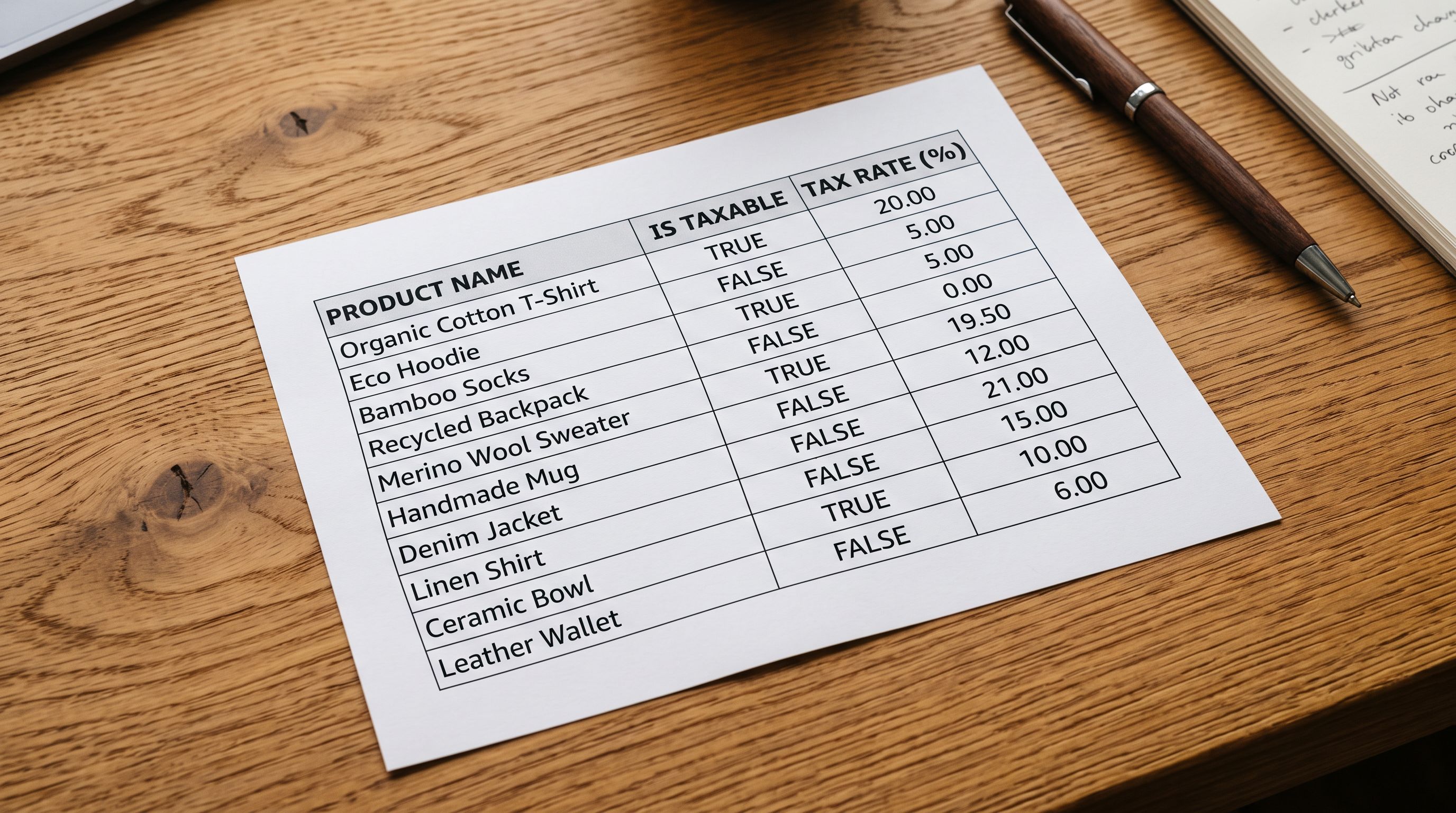
At the product level, Shopify uses the `taxable` boolean field to determine whether VAT applies at all. For most UK products, `taxable` is `true` and the standard 20% rate applies. For zero-rated products, the merchant must either set `taxable` to `false` (which removes VAT entirely from the product for all customers, including non-UK) or use Shopify's tax overrides feature to apply a specific rate by market.
For a Shopify store selling to both UK and international customers, the cleanest configuration is Shopify Markets with per-market tax overrides: the UK market applies the correct rate for each product category while other markets apply their local rules. For simpler stores selling primarily to UK customers, setting `taxable: false` on zero-rated products is a workable approach.
The core issue for bulk importers: supplier CSV files contain no tax class data. Every product arrives in Shopify as taxable at the standard rate unless the import file overrides it.
## Zero-Rated Products That Catch UK Shopify Merchants
The zero-rated category is where most UK VAT misclassifications occur. The rules are specific and not always intuitive.
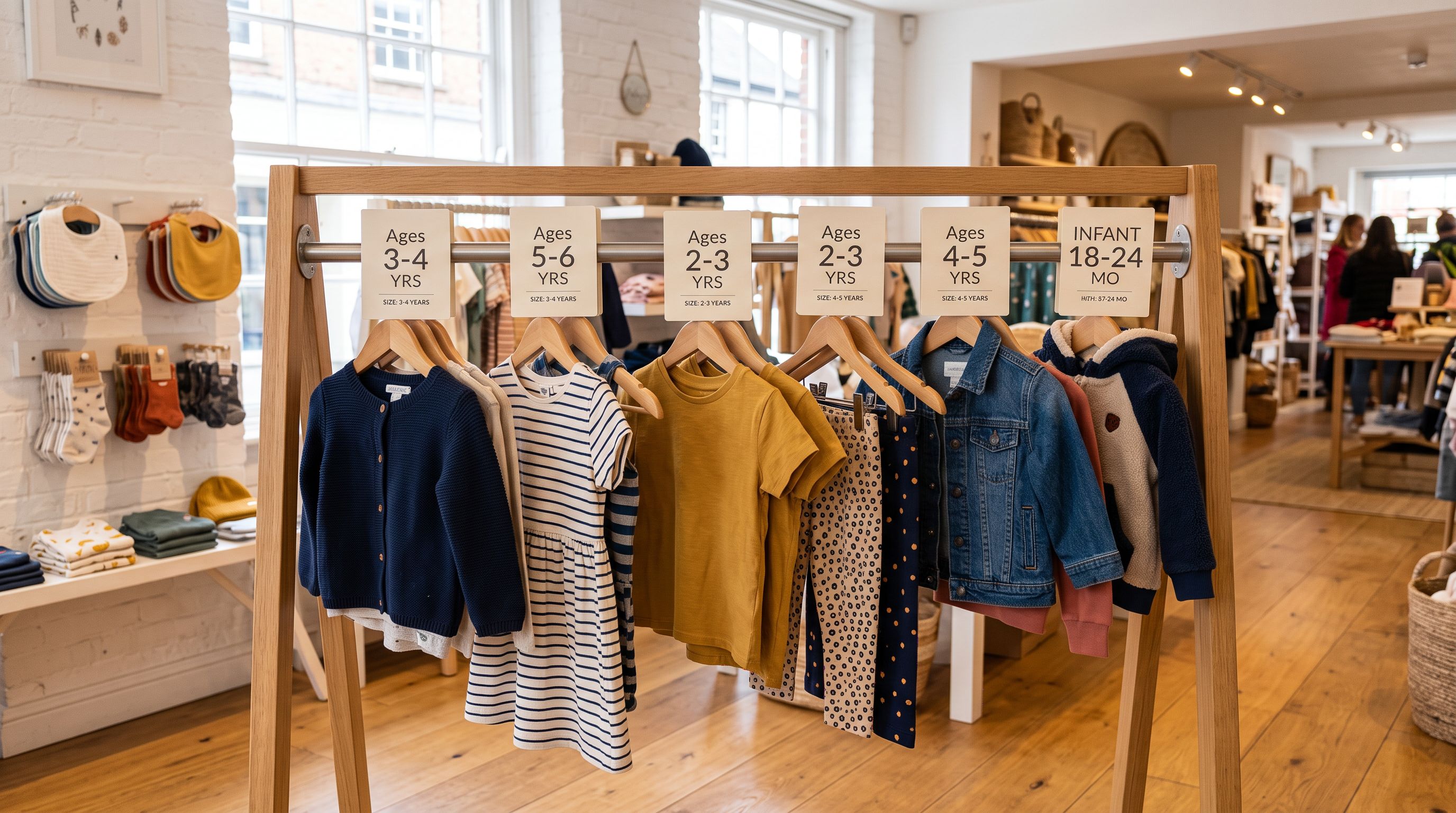
**Children's clothing and footwear.** This is the most common misclassification for fashion and apparel merchants. Garments and footwear designed for children aged 14 and under are zero-rated. The key word is "designed for": HMRC interprets this as sized to fit a child of that age, not labelled as children's clothing. A "junior" garment with measurements that extend into the adult chest/waist range may not qualify as zero-rated regardless of the label. For children's clothing merchants doing bulk imports, the VAT rate depends on whether the actual sizing is appropriate for a child under 14, which requires checking the size chart, not just the product description.
**Printed books, newspapers, and periodicals.** Physical printed books, newspapers, and maps are zero-rated. Digital equivalents (ebooks, online newspaper subscriptions, digital maps) are standard-rated at 20%. A merchant selling both physical and digital books in the same Shopify catalogue needs separate tax configurations for each format.
**Food.** Most food for human consumption is zero-rated: bread, meat, fish, vegetables, dairy, breakfast cereals. Standard-rated food exceptions include confectionery (chocolate, sweets, ice cream), crisps and savoury snacks, alcoholic beverages, soft drinks, and any food sold hot (takeaways, bakery items sold warm). For food merchants importing via Shopify, each product category needs its correct rate applied at import.
**Prescription medicines.** Medicines dispensed on a NHS prescription are zero-rated. Over-the-counter medicines (paracetamol, ibuprofen, cold remedies, allergy tablets) are standard-rated. A pharmacy-adjacent Shopify store selling both OTC and prescription products needs the taxable setting applied per product, not per store.
**Seeds and plants for food production.** Seeds, plants, and animals supplied for food production are zero-rated. Decorative plants, seeds for ornamental flowers, and live animals not for food production are standard-rated.
Children's clothing zero-rating depends on the measurements that a garment is sized to fit, not the word "children's" on the label. A junior-labelled garment sized for a 14-year-old with adult chest measurements may be standard-rated. This distinction cannot be resolved at import time without the size chart data.
## Reduced Rate (5%) Products to Configure at Import
The reduced rate is a smaller category but worth configuring correctly for merchants selling in those niches.
**Domestic energy.** Gas, electricity, heating oil, and similar products supplied for domestic residential use. If a Shopify store sells energy products, these need the 5% rate configured.
**Children's car seats and booster cushions.** A specific category under the reduced rate. Note that baby products in general are not reduced-rated; only car safety seats qualify.
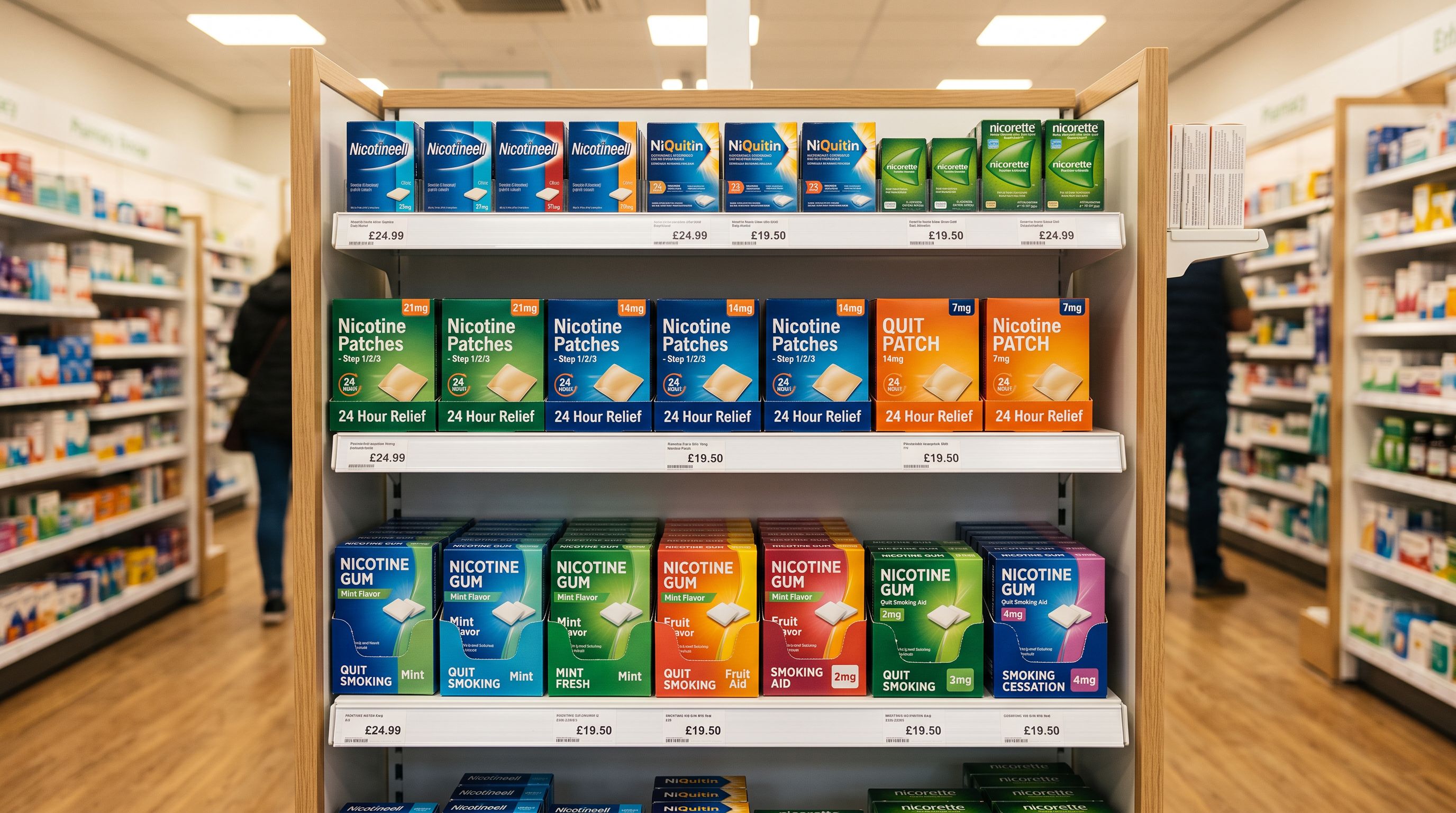
**Smoking cessation products.** Nicotine patches, nicotine gum, and nicotine nasal sprays are 5% for products licenced as medicines. This applies to branded NRT products with a medicine licence number.
**Some mobility aids.** Specific mobility products for elderly or disabled people qualify for the reduced rate. The rules are narrow and depend on the product specification and how it is marketed.
For most Shopify merchants, the reduced rate affects a small number of product lines. The standard and zero-rated configurations are far more commonly needed at import time.
## Configuring UK VAT at Import Time with Importier
## Auditing Existing Products for VAT Misclassification
For merchants who have already imported products without configuring VAT rates, the Importier SEO Audit export is the fastest starting point. The export includes the product's `taxable` status alongside product type, vendor, tags, and product handle.
Filter the export for:
- Products where `taxable = true` AND product type includes children's clothing, food, books, or printed materials
- Products where the product title or tags suggest a zero-rated category (terms like "kids", "children's", "printed", "book", "food")
This filtered list is the candidate set for VAT review. Cross-reference against HMRC's VAT rates guidance and the specific product sizing or category data to confirm the correct rate. Products confirmed as zero-rated need a corrective update: either via a CSV re-import with `Taxable = FALSE` for those product handles, or via a bulk edit in Shopify admin.
The [international tax compliance workflow](https://importier.app/blog/shopify-international-tax-compliance) in Importier (which covers IOSS, VOEC, and GST registration numbers alongside UK VAT) handles the display of VAT registration numbers in AI-generated product descriptions and the compliance reminders that surface during the 14-step import wizard. That configuration is separate from the product-level taxable setting but works alongside it.
## Key Takeaways
UK VAT has three rates, and the rules for which products qualify for zero or reduced rating are specific. Shopify defaults every bulk import to the standard 20% rate unless the import file says otherwise.

- **Zero-rating is the most impactful configuration.** Products that are zero-rated at 20% over-charge UK customers by the full tax amount. Children's clothing, printed books, and most basic food are the categories where zero-rating most commonly applies for Shopify merchants.
- **Children's clothing zero-rating depends on sizing, not labelling.** Garments sized for children under 14 are zero-rated; the rule is the actual measurements, not the marketing copy. Merchants importing children's clothing ranges need to verify sizing data before applying the zero rate.
- **Reduced rate (5%) is configured differently from zero rate.** Zero-rated products use `taxable: false` in the import file. Reduced-rate products use `taxable: true` but require a UK market tax override in Shopify Markets to set the 5% rate. These are two separate configuration steps.
- **The Importier column mapping step applies the Taxable setting at import.** Adding a Taxable column to the supplier file and mapping it in Importier's wizard sets the rate correctly before products reach Shopify, without a corrective re-import.
- **The SEO Audit export reveals taxable status per product.** For existing catalogues with suspected misclassifications, filtering the export by product type and taxable status identifies which products to review against HMRC's [VAT rates guidance](https://www.gov.uk/guidance/vat-rates-on-different-goods-and-services).
- **The Australian GST equivalent of this workflow** follows the [same taxable field approach for Shopify Australia GST product imports](https://importier.app/blog/shopify-australia-gst-product-import): the mechanism is identical, but the product category rules differ.
Configure UK VAT rates correctly at import at [importier.app](https://importier.app).