# Shopify Sporting Goods Import: Specs, Variants, and Scale
> Sporting goods catalogues have size-specific specs and certifications that standard Shopify imports miss. Here is how to import them correctly at scale.
- Published: 2026-07-15
- Author: Importier Team
- Category: Industry Guides
- Canonical: https://www.importier.app/blog/shopify-sporting-goods-import
---
A trail running shoe supplier provides a CSV for a Shopify sporting goods import: 120 SKUs. The spreadsheet has columns for size, colour, and gender, plus a "specs" column that contains a jumble of stack height, heel drop, lug depth, and outsole material, all in one cell, formatted inconsistently across rows. Some rows say "8mm drop / 28mm stack / Vibram XS Trek outsole". Others say "drop: 6, stack 30mm, rubber". The shoe in size 8 has different stack height from size 12 in the same model. The supplier knows this but did not separate it.
Standard Shopify import treats this as one text column. It goes into a description field and stays there as unstructured noise. Buyers cannot filter by drop. AI Shopping agents cannot parse the certification. The product cannot surface in a "low drop trail shoe" search.
Shopify sporting goods import at scale is a specification problem as much as a catalogue problem. The data exists; the challenge is getting it into the right Shopify fields.
## Why sporting goods catalogues are specification-heavy
Sport and fitness products carry more mandatory specification fields than most other categories. Buyers making purchase decisions on equipment use specifications the way apparel buyers use images: as the primary differentiator.
A climbing harness buyer needs to know the maximum load rating, the number of gear loops, and the CE/EN certification standard. A tennis racket buyer needs head size, string pattern, swing weight, and grip size. A cycling helmet buyer needs certification standard (CPSC, EN 1078, ASTM F1447), internal ventilation channel count, and retention system type.
A specification buried in a product description is invisible to Shopify's filter system, Google's AI Shopping agents, and any comparison tool. The same specification stored as a category metafield (via Shopify's Standard Product Taxonomy) is filterable, comparable, and parseable by AI systems that read structured data. For sporting goods, this distinction determines whether a buyer can find the product or has to read through every listing manually.
Supplier CSV files for sporting goods frequently contain this data, but rarely in a usable form. Specifications are packed into single cells, use inconsistent notation, mix units (kg and lbs in the same column), and omit values for products where the spec is unknown. The import workflow has to parse, normalise, and route this data to the right destination.
## Smart Variant Detection for multi-dimension sporting goods
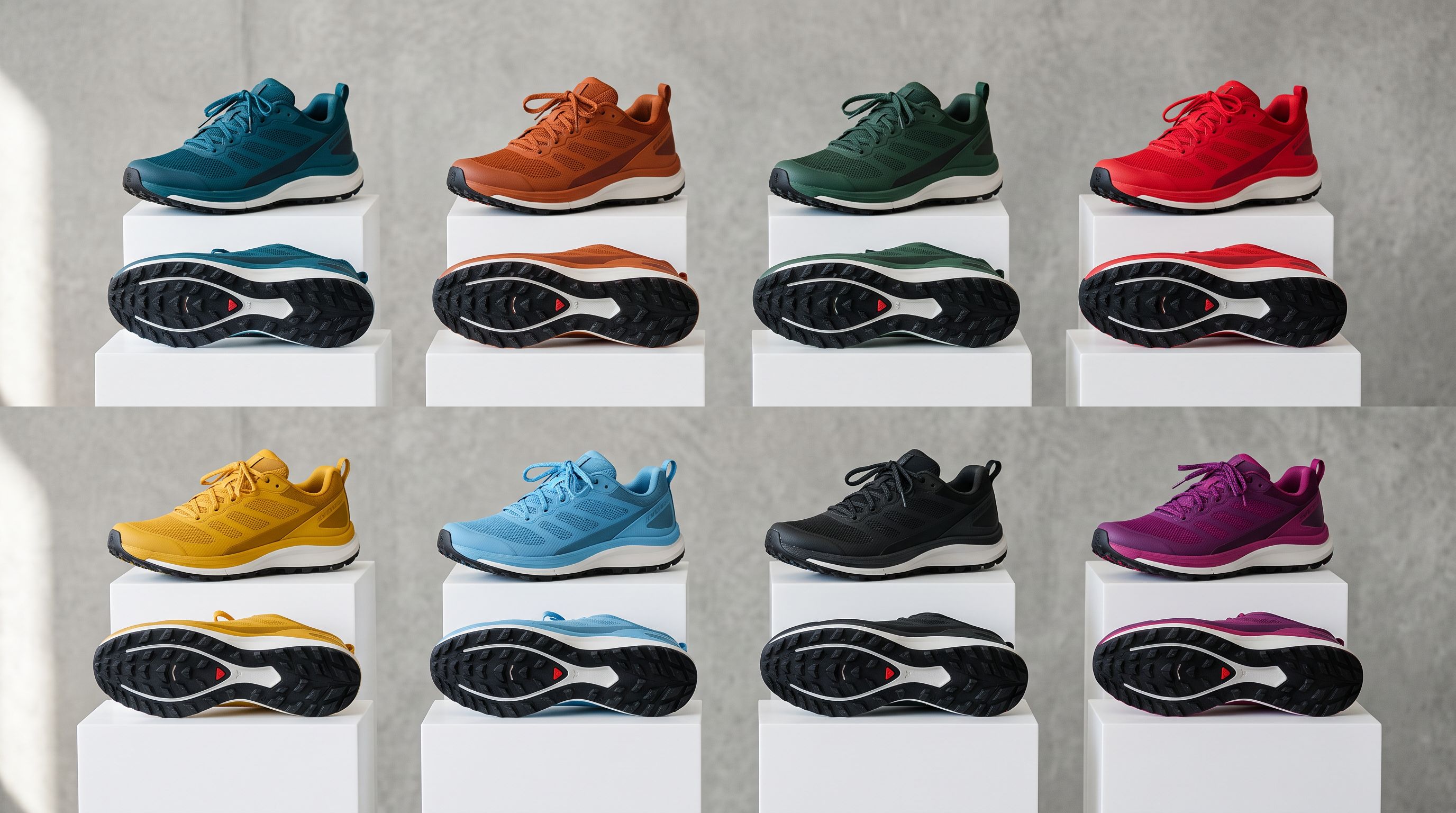
Sporting goods have some of the most complex variant structures in retail. A single trail shoe model may have:
- Sizes: 6 through 14 in US men's, with half sizes
- Widths: standard and wide
- Colours: six colourways per season
- Gender fit: men's and women's cuts with different last shapes
That is potentially hundreds of variants for a single shoe model, each with size-specific weight, stack height, and fit notes. Standard CSV import needs these pre-grouped by variant. Supplier exports often do not group them: each row is a separate SKU, and the grouping logic is implied by the product name.
Importier's [Smart Variant Detection](https://importier.app/blog/shopify-import-product-variants) identifies grouping patterns across rows and consolidates SKUs into Shopify products with correct variant structure. For the trail shoe catalogue, it recognises that rows sharing the same model name but differing in size, width, and colour belong together as variants of the same product.
The 150+ variant detection patterns across 15+ industries include patterns specific to sports and fitness: size-specific patterns for footwear (US, UK, EU, and Japanese sizing conventions), equipment sizing (S/M/L/XL plus numeric sizing for helmets and harnesses), and colour-and-sport-specific variants (a tennis racket in three grip sizes and four string tensions).
## Routing specification data to the Sports and Fitness Industry Pack
After variant structure is resolved, the specification data needs to go somewhere useful. For sporting goods, "somewhere useful" means Shopify's category metafields, which are surfaced in storefront filters and readable by external systems including Google Merchant Centre.
Importier's Sports and Fitness Industry Pack is part of the 22 Industry Packs covering Shopify's Standard Product Taxonomy. The pack includes category attribute types for the specification fields that appear across the major sporting goods subcategories.
For size-specific specifications, Importier stores them as variant-level metafields. A size 8 trail shoe with a 28mm stack height and size 12 with 30mm stack height carries those values as separate metafield entries on their respective variants, not averaged or summarised at the product level.
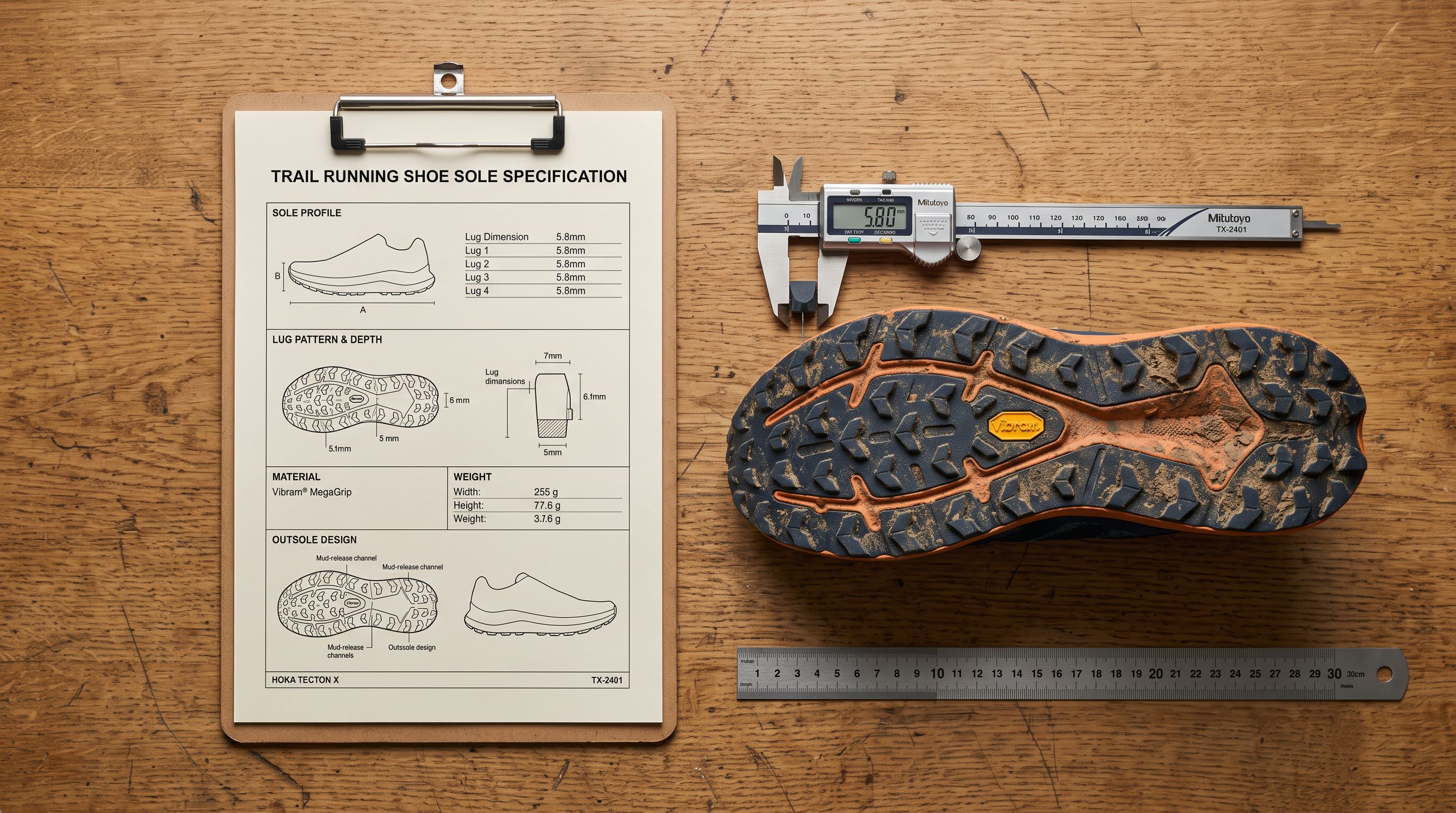
This is the non-commodity detail the brief reference mentions: a trail shoe in size 8 and size 12 of the same model can have measurably different stack heights, drops, and lug patterns. Storing this at the variant level rather than the product level makes the product page accurate to buyers who read spec sheets, and makes the data parseable by AI Shopping agents that compare specifications across products.
## AI descriptions using the sports retail persona
Specification accuracy and engaging copy are separate problems that need separate solutions. A product page that shows correct metafield data but has a generic supplier description does not convert well, and does not perform in AI Shopping results that read description content.
Importier's [AI description generation](https://importier.app/blog/shopify-ai-product-descriptions) includes 156 expert personas across 43 industry categories. The sports retail persona writes from a perspective that understands sports-specific terminology, knows which specifications matter to buyers in each subcategory, and leads descriptions with the performance claim the target buyer cares about.
A trail running shoe description written by a sports retail persona leads with the stack height and outsole compound, then explains why those numbers matter to a buyer choosing between cushioned trail and minimalist trail. A generic description lists the same facts in no particular order.
For the trail shoe catalogue, the sports retail persona produces descriptions that open with the use case ("built for technical terrain where foot feel matters more than cushioning"), move through the specification details that justify that claim (drop, stack, outsole), and close with a practical recommendation (best for experienced trail runners comfortable with ground feel). This structure performs in AI Overviews and Google AI Shopping, which favour descriptions that answer the buyer's implicit question rather than list features.
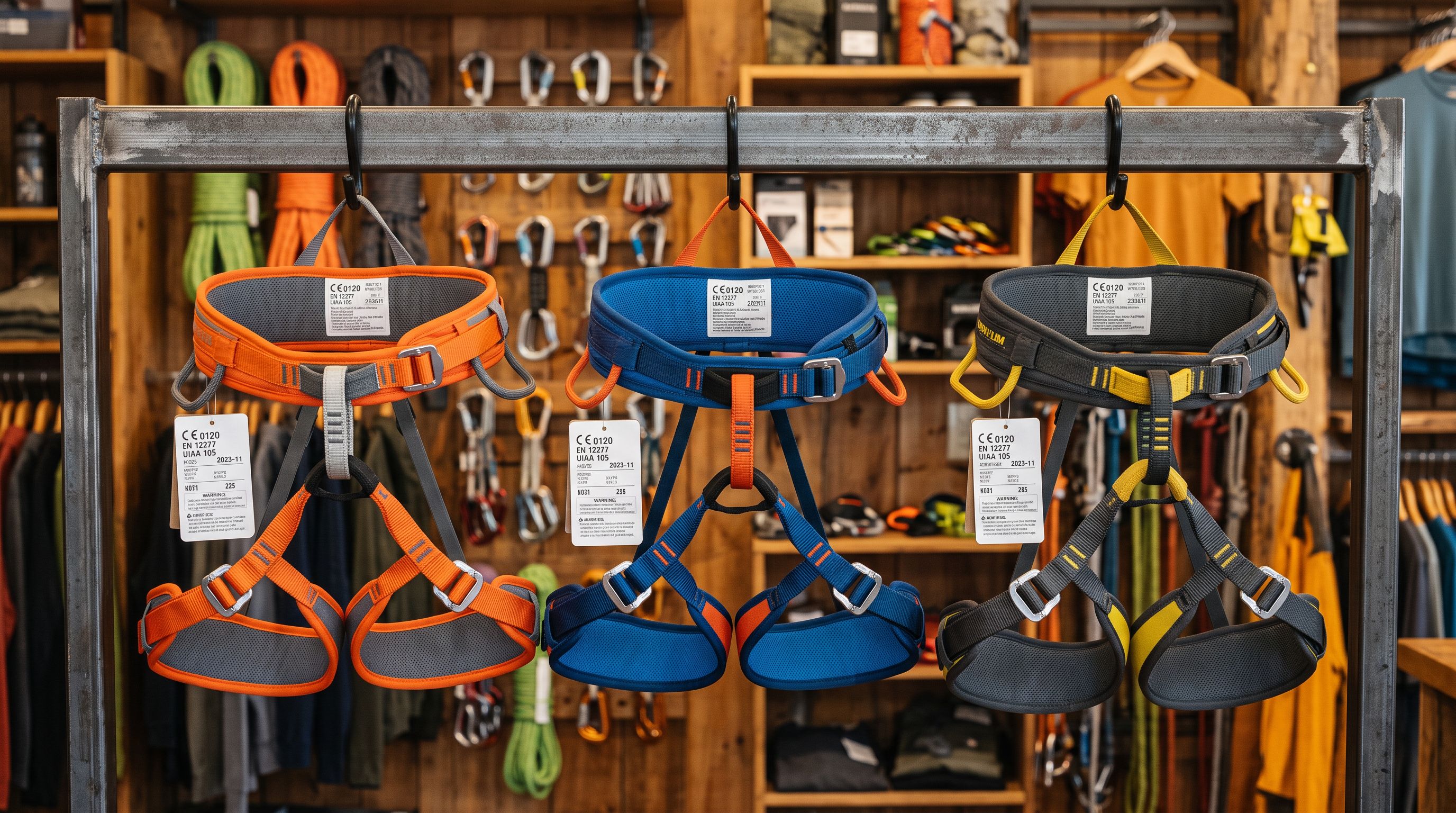
The 7 description styles include Technical Gadget style, which is appropriate for specification-heavy sporting goods like electronics (heart rate monitors, GPS watches, power meters) and equipment with complex spec sheets (climbing gear, cycling components). For apparel and footwear, Benefits-First or Sensory-Rich styles work better. Importier applies the style at the store level, so a retailer carrying both technical equipment and apparel can use different styles for different product types by running separate import sessions.
## How metafields affect Google Merchant Centre and AI Shopping
Google Merchant Centre reads Shopify metafields for [structured product data](https://importier.app/blog/shopify-category-metafields-guide) when products are submitted via the Google channel. For sporting goods, this includes certification fields (safety standards), material fields, and size-specific technical attributes.
A climbing harness with its CE/EN 12277 certification stored as a metafield rather than buried in the description can surface in filtered product searches for "CE certified climbing harness". The certification attribute is readable by GMC's product data specification parser; the same text in a description field is not.
For sporting goods retailers using Google Shopping, GMC's [product type attribute](https://support.google.com/merchants/answer/6324469) helps classify products into the correct Shopping subcategory. The [product specifications](https://importier.app/blog/shopify-product-specifications-auto-fill) populated during import directly affect how completely GMC can index and classify the product. Incomplete specification data means incomplete GMC product records, which means fewer impressions on specification-filtered searches.
Google's [structured data guidelines for products](https://developers.google.com/search/docs/appearance/structured-data/product) specify that product pages with complete structured data (including price, availability, and product identifiers) are eligible for richer presentation in both standard Search and AI Overviews. Sporting goods with GTIN/barcode data, category metafields, and structured specifications qualify for richer eligibility than equivalent products with only a description.
## Handling supplier data gaps in a sporting goods import
No supplier export is complete. For a 120-SKU trail shoe catalogue, common gaps include:

- Missing GTINs for older SKUs that predate barcode requirements
- Stack height and drop listed for men's sizes only, not women's
- Certification standards omitted for products sold only in markets without mandatory certification
- Weight listed in grams for some rows, ounces for others
Importier's AI fill handles the first three programmatically. Barcode lookup resolves missing GTINs for products with a UPC or EAN. The AI fill step can infer missing values from context: if the women's size listing references the same model name and season as the men's listing with known specs, the AI can carry those specs across. For the certification gap, the AI fill leaves the field empty and flags it for manual review rather than inventing a certification that may not apply.
Unit normalisation happens automatically. A column mixing grams and ounces is resolved to a single unit during import; the merchant selects which unit Shopify should store, and Importier converts all values before pushing.
## Key takeaways
Shopify sporting goods import is a specification routing problem as much as a catalogue management problem. The supplier data contains the right information; the import workflow determines whether it ends up in filterable metafields or buried in unstructured description text.
Key points:
- Smart Variant Detection consolidates SKU-level rows into Shopify products with correct size x colour x width variant structure. For a 120-SKU trail shoe catalogue, this means 8 products with correct variant options rather than 120 separate listings.
- The Sports and Fitness Industry Pack maps extracted specifications to Shopify taxonomy metafield attributes. Size-specific specs (stack height, drop) are stored at the variant level, not averaged at the product level.
- AI descriptions written by the sports retail persona lead with the performance claim relevant to the buyer, move through specification justification, and close with a practical recommendation.
- Google Merchant Centre reads metafield specifications for structured product data. Sporting goods with complete metafield data qualify for richer Search and AI Shopping presentation than products with description-only specification text.
- Supplier data gaps (missing GTINs, unit inconsistencies, omitted specs) are handled by barcode lookup, unit normalisation, and AI fill, with unresolvable gaps flagged for manual review rather than filled with incorrect data.
Import sporting goods catalogues with correct variant structure and specification metafields at [importier.app](https://importier.app). Enterprise plan includes the full Sports and Fitness Industry Pack, all 156 AI personas, and Marketplace Import for supplier sites that do not export CSV.