# Shopify Product Description Google Merchant Centre Rules
> GMC rejects descriptions with promotional language, pricing, and CTAs. Importier's compliance mode generates descriptions that pass policy checks before submission.
- Published: 2026-07-26
- Author: Importier Team
- Category: Agentic Commerce / AI Product Descriptions
- Canonical: https://www.importier.app/blog/shopify-product-description-google-merchant-centre
---
A kitchenware merchant generates AI product descriptions for 300 products and submits them to Google Merchant Centre as part of a Shopping feed. Two days later, 87 products are disapproved. The disapproval reason across all 87 is the same: "Prohibited or restricted content in product description." The merchant checks the descriptions and finds the problem. The descriptions include phrases like "unbeatable value for money", "add to cart now", "free shipping on orders over $50", and "the best non-stick pan on the market." All of those phrases violate GMC's content policy for product descriptions.
The same AI descriptions look perfectly fine on the Shopify product page. They convert well. Customers read them and buy. But GMC applies a different set of rules to product descriptions in its Shopping feed, and the descriptions that work for a storefront do not automatically comply with those rules.
This is the shopify product description google merchant centre compliance problem: the gap between a description that sells and a description that passes policy review.
## What Google Merchant Centre Requires in Product Descriptions
GMC's [product description policies](https://support.google.com/merchants/answer/6324468) define what is and is not permitted in the description field of a Shopping feed. The requirements are specific and enforced algorithmically.
**What is prohibited in GMC product descriptions:**
- **Promotional language**: "Best price", "unbeatable value", "lowest cost", "discounted", "on sale", "clearance"
- **Pricing information**: any dollar amount, percentage discount, or reference to price in the description field. Price belongs in the dedicated `price` attribute, not the description.
- **Call-to-action text**: "Buy now", "Add to cart", "Shop today", "Order here", "Click to purchase"
- **Time-limited offers**: "Today only", "limited time offer", "while stocks last", "hurry", "ending soon"
- **Shipping information**: "Free shipping", "ships in 24 hours", "express delivery available"
- **Competitor references**: mentions of competitor brand names or direct comparisons to competing products
- **Subjective superlatives**: "the best", "the most popular", "number one", "top-rated" when not backed by a citation from a recognised authority
**What GMC descriptions should contain:**
Product descriptions in GMC should read as factual, neutral statements of what the product is, what it does, and how it differs from other products. According to [Google's description guidelines](https://support.google.com/merchants/answer/6324492), the description should describe the most relevant attributes and match what customers see on the landing page.
A well-formed GMC description for a cordless drill states the voltage, torque output, speed settings, chuck size, battery type, and intended applications. It does not say "the best cordless drill you will find this year."
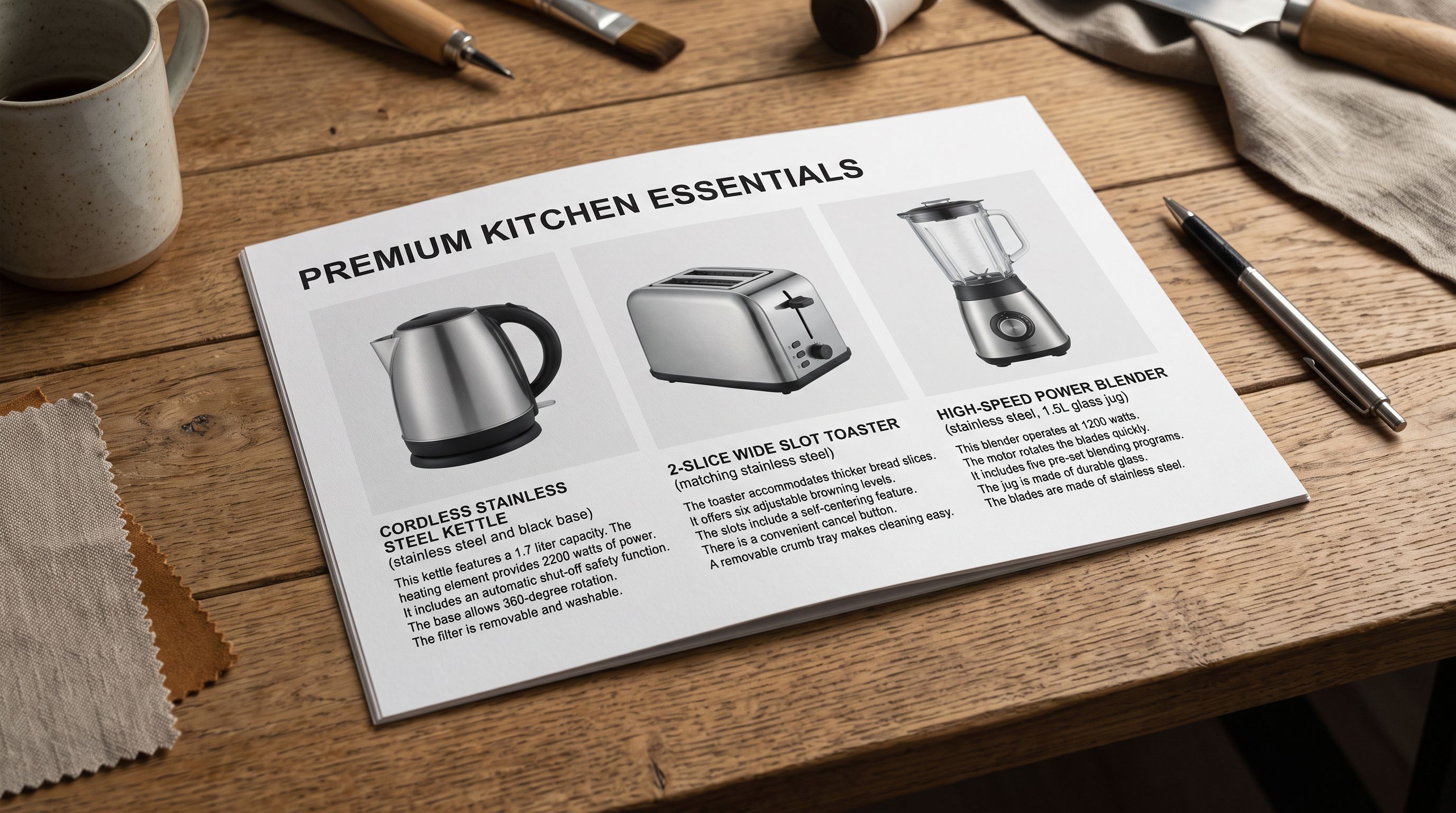
A storefront description is persuasive writing. GMC descriptions are structured product data. Google uses the description to match products to search queries and to display contextual information alongside the product image and price. Content that motivates a purchase (CTAs, urgency, promotions) is irrelevant to that matching function and is treated as policy noise.
## Why Standard AI Descriptions Fail GMC Policy Checks
AI description generators default to persuasive writing. The training data for general-purpose AI models includes marketing copy, product pages, and e-commerce content where persuasive language is the standard. When given a product and asked to write a description, the output naturally includes calls to action, benefit-forward language, and the kind of value framing that drives conversion.
For a non-stick frying pan, an AI description without GMC constraints might produce:
"Experience the joy of cooking with our premium 28cm non-stick frying pan, made with our exclusive DuraCoat technology. This pan is the perfect companion for your kitchen, delivering restaurant-quality results at home. Scratch-resistant and dishwasher-safe, it is the last pan you will ever need. Order today and transform your cooking."
That description violates GMC policy on at least four points: "premium" (subjective superlative in context), "perfect companion" (subjective claim), "the last pan you will ever need" (implied superlative), and "Order today" (CTA). GMC's automated system flags these patterns and disapproves the product.
The same pan in a GMC-compliant description:
"The 28cm non-stick frying pan features DuraCoat reinforced coating rated for 5,000+ uses without degradation. The forged aluminium base with 4mm thickness provides even heat distribution across the cooking surface. Oven-safe to 220°C, dishwasher-safe, and compatible with all cooktop types including induction. Suitable for sautéing, frying, and searing."
Both descriptions describe the same product. The second one passes GMC policy checks because it contains factual attributes and no policy-violating content.
An AI description that performs well on a Shopify product page will often fail GMC policy because the same language that builds purchase confidence ("the best", "order now", "while stocks last") is prohibited in Shopping feed descriptions.
## How Importier's GMC Compliance Mode Works
Importier's AI description generation includes a Google Merchant Centre compliance mode, accessible in the generation settings. When compliance mode is on, the description generation changes in two ways.
**First, the AI model receives an explicit constraint set.** The prompt instructs the model to avoid seven categories of prohibited content: subjective superlatives, promotional pricing language, call-to-action phrases, time-limited urgency markers, shipping mentions, competitor references, and "best"-type claims without verifiable citation. The model generates within these constraints rather than producing its default persuasive output.
**Second, the generated description is checked before it is written to Shopify.** A compliance pass scans the output for known policy-violating patterns. If the scan detects a violation, the description is flagged for review rather than written directly. The merchant sees which pattern triggered the flag and can either accept an automatically revised version or edit the output manually.
This two-step approach catches the cases where the model still produces a borderline phrase despite the constraint prompt. The word "unmatched" is a good example: the model may use it as a factual comparative ("unmatched in its category by") when the merchant has genuine specification data supporting that claim, or it may use it as a subjective claim ("unmatched quality"). The constraint prompt reduces the latter; the compliance scan catches any instances that get through.
## The Seven Compliance Checks Importier Runs
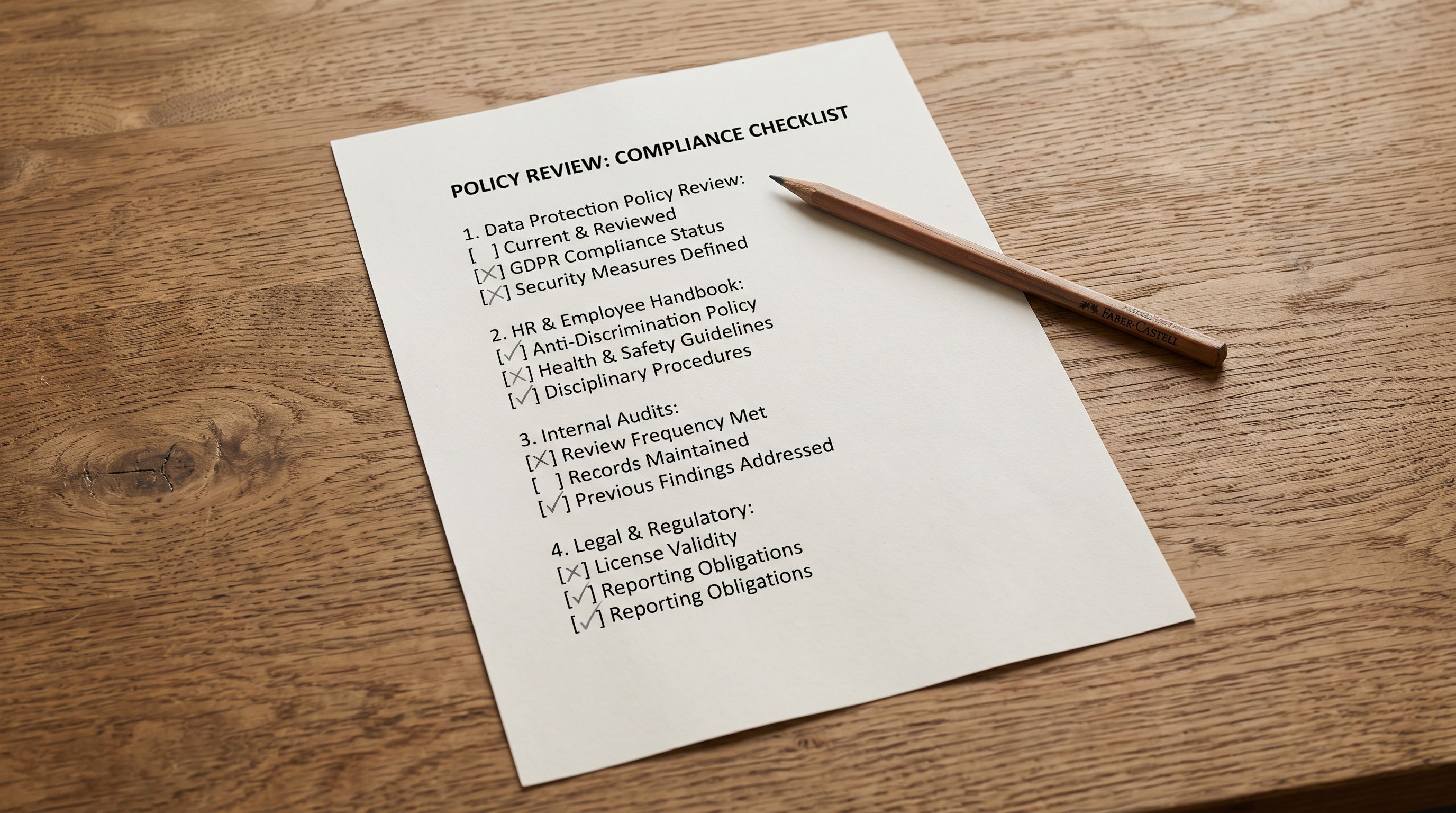
When compliance mode is on, Importier's post-generation scan runs the description through seven checks before confirming it as ready.
**1. CTA detection.** Phrases that direct a reader to take action: "buy", "shop", "order", "add to cart", "get yours", "purchase now", "click here". If detected in the description text (not headings or bullet labels), the description is flagged.
**2. Pricing language.** Dollar amounts, percentage discounts, "save X", "was/now pricing", "at only $". Price information should be in the feed's `price` and `sale_price` attributes, not the description.
**3. Time-urgency markers.** "Limited time", "today only", "while stocks last", "ending soon", "flash sale", "hurry". These are standard retail urgency patterns that GMC prohibits in descriptions.
**4. Shipping references.** "Free shipping", "ships in X days", "express delivery", "overnight available", "next-day". Shipping belongs in the `shipping` feed attribute.
**5. Subjective superlatives.** "The best", "the most popular", "number one", "market-leading", "top-rated", "world-class", "industry-leading", "unrivalled". These are accepted only with a verified third-party citation (an award, a study, a published ranking), a situation rare enough that the scan flags all instances for manual confirmation.
**6. Competitor references.** Any mention of a competing brand name (by name) in the context of a comparison. Importier's feature database does not store competitor brand lists, so this check relies on the AI constraint prompt rather than the post-generation scan.
**7. Medical and regulatory claims.** For health and wellness products, claims that imply medical effects ("treats", "cures", "heals", "clinically proven") without the regulatory substantiation GMC requires. These are industry-specific and the check runs only when the product category falls into health, wellness, or supplements.
## Applying GMC Compliance Mode to Existing Descriptions
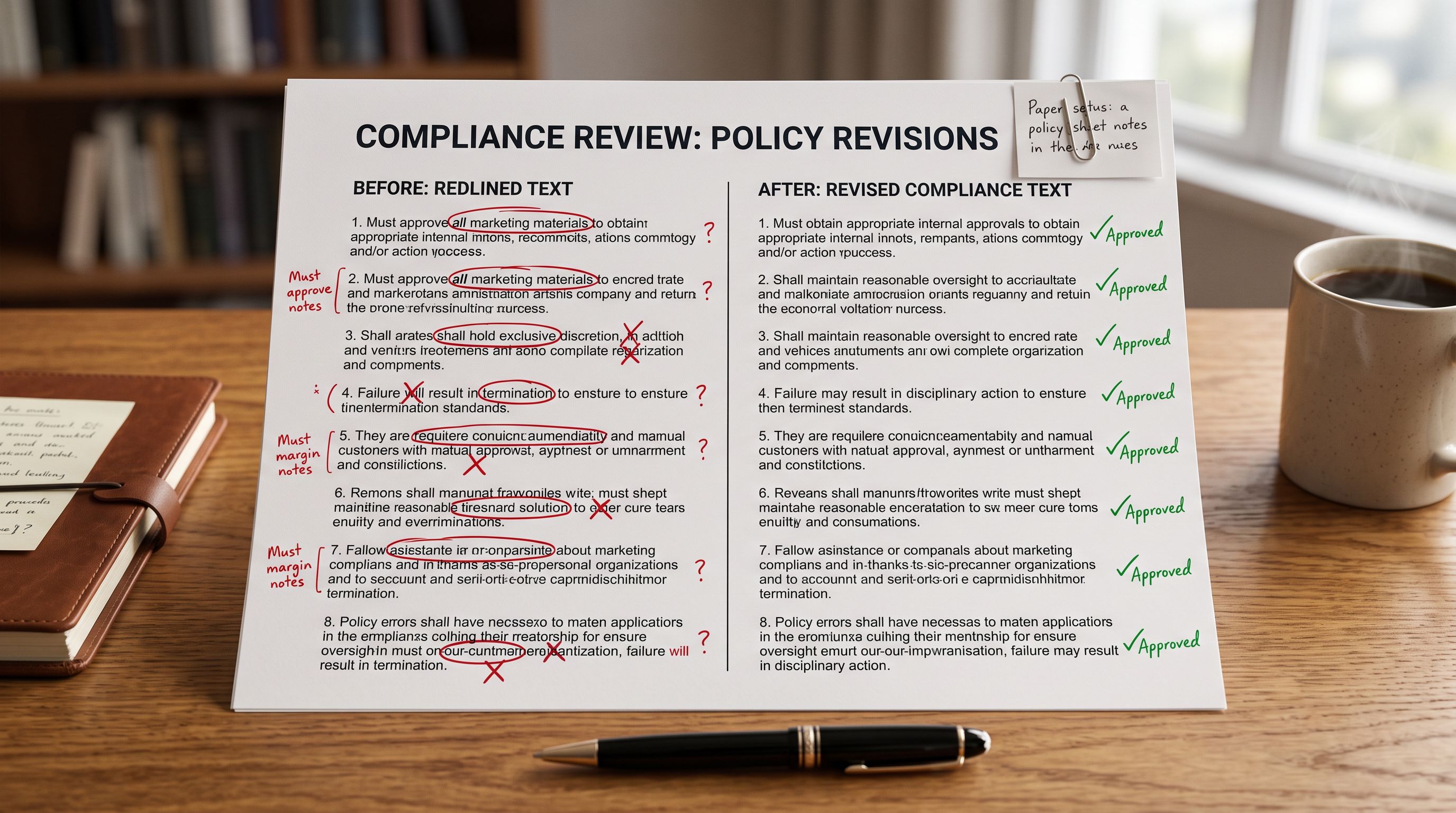
For merchants who already have published descriptions that were generated without compliance mode, Importier's Store Scanner can re-generate descriptions in bulk with compliance mode active.
The workflow:
1. Run a Store Scanner pass on the collection or product set that feeds into the Shopping feed
2. Enable GMC compliance mode before running the generation
3. Set the push mode to Replace (overwriting the existing descriptions)
4. Review flagged outputs before the batch commits

Replacing descriptions that are live on the Shopify storefront with GMC-compliant versions is a tradeoff. The compliant description is more factual and less persuasive, which may affect storefront conversion. Some merchants manage this by maintaining two description fields: the standard Shopify description for the storefront and a metafield containing the GMC-compliant version that the feed pulls from instead.
Importier's [variant descriptions feature](https://importier.app/blog/shopify-variant-descriptions) works the same way with compliance mode: each variant gets its own compliant description stored as a metafield, and the feed can be configured to pull variant-specific descriptions for products where the variants differ in material, specification, or intended use.
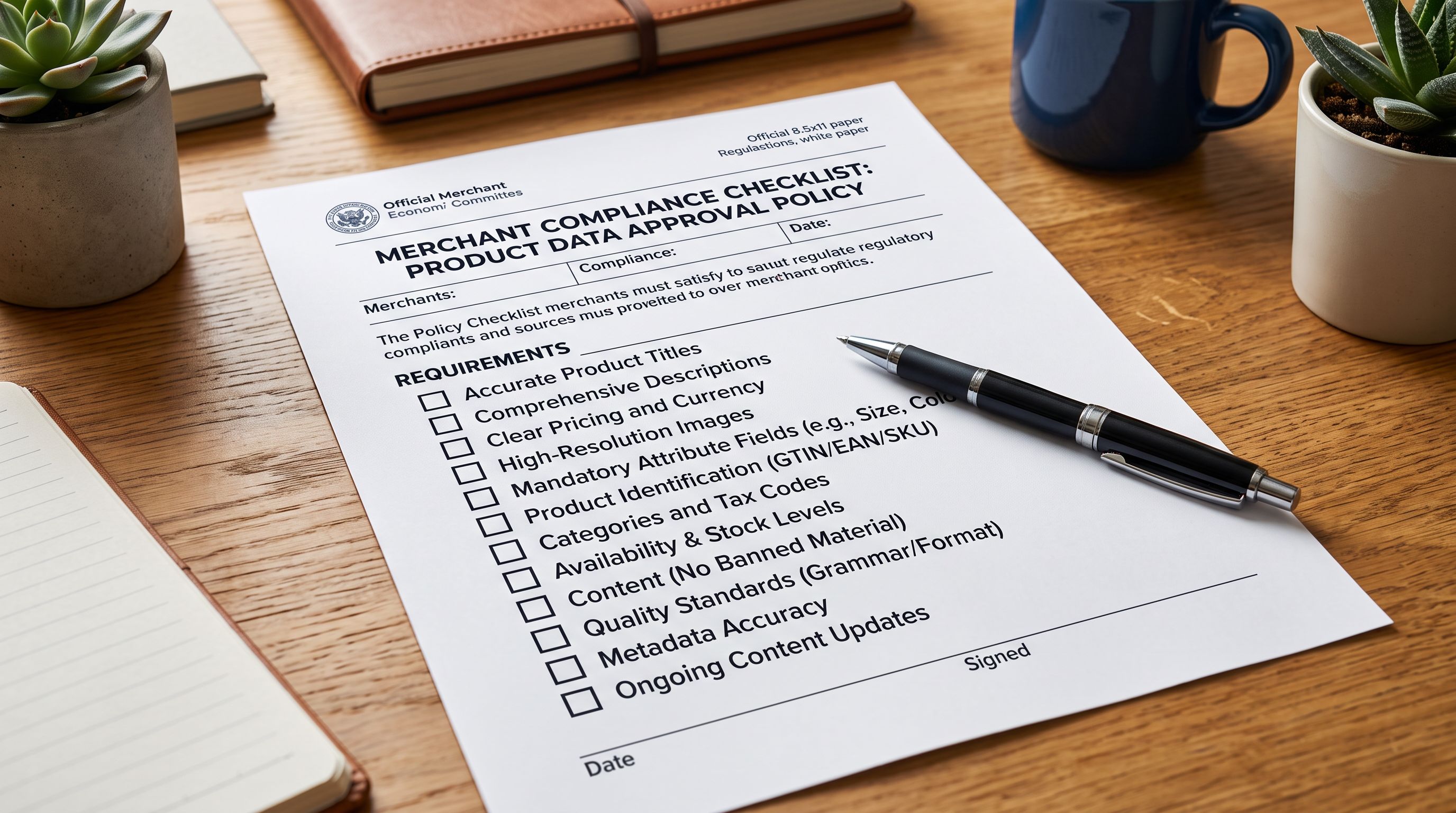
The GMC compliance check is not a guarantee of approval. Google's policy enforcement is probabilistic and context-dependent. A description that passes all seven compliance checks may still receive a review flag in GMC if the overall product data quality is low (missing GTINs, incorrect pricing, image policy violations). Compliance mode addresses the description field specifically. The full feed quality depends on data across all attributes.
## Shopify Product Description Google Merchant Centre: Key Takeaways
Getting shopify product description google merchant centre compliance right requires understanding that GMC descriptions and storefront descriptions serve different purposes and must follow different rules.
- GMC prohibits promotional language, CTAs, pricing references, time-urgency markers, shipping mentions, and unverifiable superlatives in the description field. These are standard in storefront copy and are exactly the elements that trigger disapprovals in Shopping feeds.
- Standard AI description generators produce persuasive copy by default. That output violates GMC policy on multiple points even when the quality is high by storefront standards.
- Importier's GMC compliance mode applies a constraint set to the generation prompt that prevents the most common policy violations and runs a seven-point post-generation scan to catch borderline cases before the description is written to Shopify.
- The seven checks cover: CTA language, pricing references, time-urgency markers, shipping mentions, subjective superlatives, competitor references, and medical/regulatory claims.
- For existing descriptions that were generated without compliance mode, Importier's Store Scanner can re-generate the affected products in bulk with compliance mode active in Replace mode.
- The compliance mode produces factual, attribute-based descriptions that read differently from storefront copy. Some merchants maintain separate description fields for the storefront and the feed rather than replacing one with the other.
Review and fix your Shopping feed descriptions at [importier.app](https://importier.app). Importier's GMC compliance mode generates product descriptions that pass Google Merchant Centre policy checks before they reach your feed.