# Shopify Product Import for Musical Instruments and Music Stores
> Music store catalogues split instrument models into hundreds of separate products and bury spec data buyers filter by. Here is how to configure Importier correctly.
- Published: 2026-07-10
- Author: Importier Team
- Category: Import Guides / File Imports
- Canonical: https://www.importier.app/blog/shopify-musical-instruments-import
---
Music retailers importing a supplier catalogue into Shopify face a data problem that arrives in two layers. The first is variant complexity: a single electric guitar model available in four colours, two body sizes, and two handedness options (right-handed and left-handed) arrives as sixteen rows in the supplier file. Without variant grouping, sixteen separate Shopify products appear for what is one instrument model with three configuration options. The buyer looking for a left-handed sunburst finish in a short-scale body has to navigate an untidy product listing or a confusing search result list to find their configuration.
The second layer is specification data. A buyer comparing guitars evaluates scale length, fret count, pickup configuration, and neck profile before they consider colour or price. When these specifications arrive as a combined "Specifications" column in a supplier CSV and get pushed to Shopify's body_html field, a buyer can read them but cannot filter by them. On Google Shopping, a query for "short scale electric guitar left handed" returns results based on structured attribute data, not keyword matching in description text. Products that carry their specification in prose do not appear for filtered queries.
This article covers how to configure Importier for a musical instruments catalogue: grouping colour, size, and handedness variants correctly, mapping specification data to structured attribute fields, generating descriptions for the mixed audience of musicians and gift buyers, and setting up title structures for specification-driven queries.
## Why instrument specification data belongs in structured fields
Musical instrument buyers are highly specification-literate. A guitarist comparing electric guitars knows the difference between a 25.5-inch scale length (bright, high-tension feel) and a 24.75-inch scale (warmer, easier bending). They know whether they need single-coil or humbucker pickups based on the tone they are after. A buyer asking for a "short scale electric guitar under $500" is filtering by a specific dimensional attribute, not by a keyword that might appear in a product title.
[Shopify's Standard Product Taxonomy](https://www.shopify.com/blog/product-taxonomy) includes specific category paths for guitars and basses, keyboards and pianos, wind instruments, percussion, and string instruments, each with corresponding specification attribute fields. When an instrument is assigned to the correct taxonomy category with populated attribute fields, both Shopify's on-site search and Google Shopping can serve it for filtered queries on scale length, fret count, or instrument type.
[Google's product data specification](https://support.google.com/merchants/answer/6324469) supports structured attributes for musical instruments including size, material, and compatibility attributes. Merchants who declare these as structured fields rather than combined specification text allow Shopping to serve their products for the model-specific queries that serious buyers use when they have already decided on their requirements.
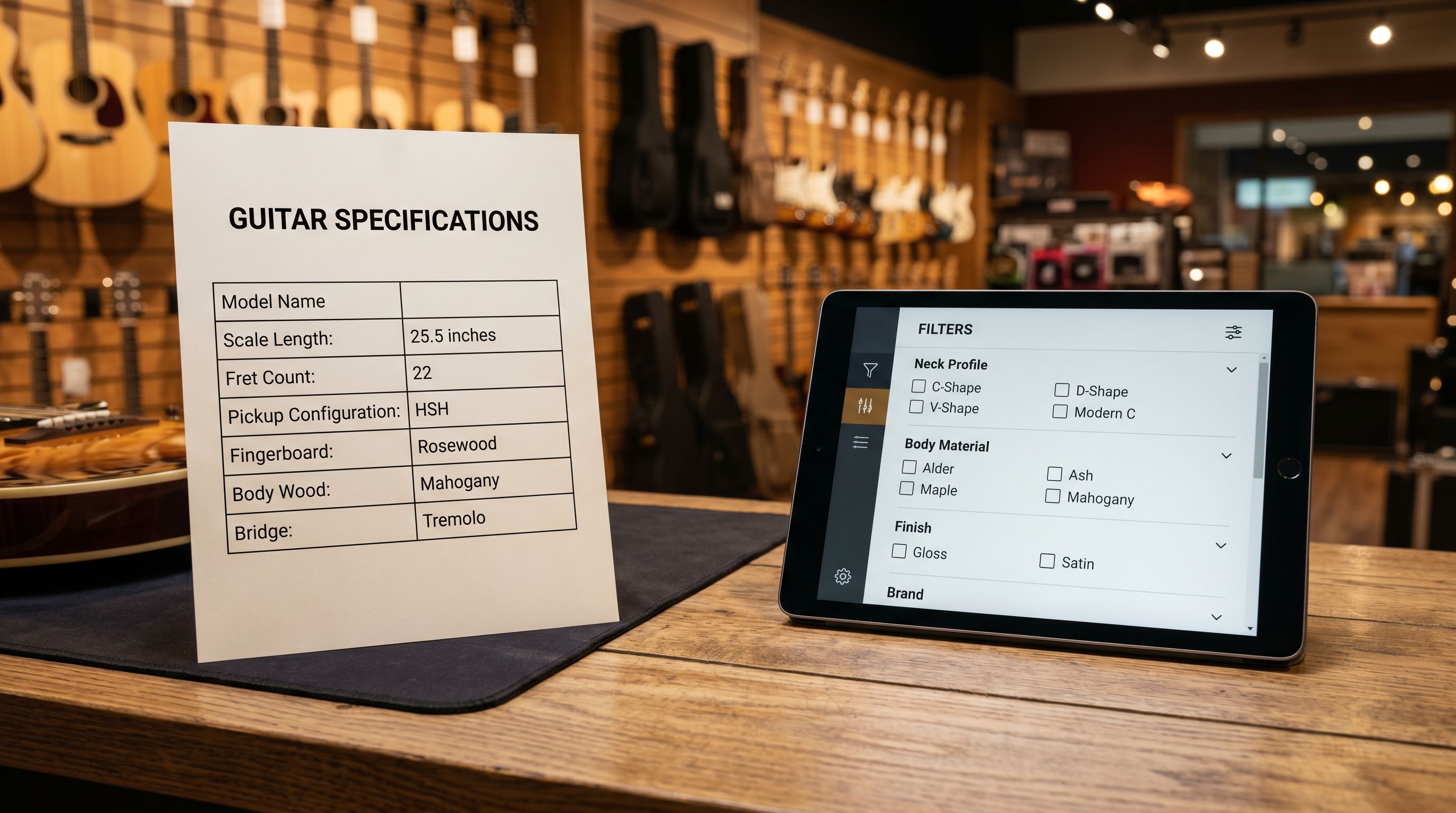
A guitarist searching for a "left-handed short scale humbucker guitar" is filtering by three structured attributes. When those attributes are in description prose rather than taxonomy fields, the instrument does not appear in filtered search results on Google Shopping or Shopify's faceted search.
## Handling colour, size, and handedness variants at import
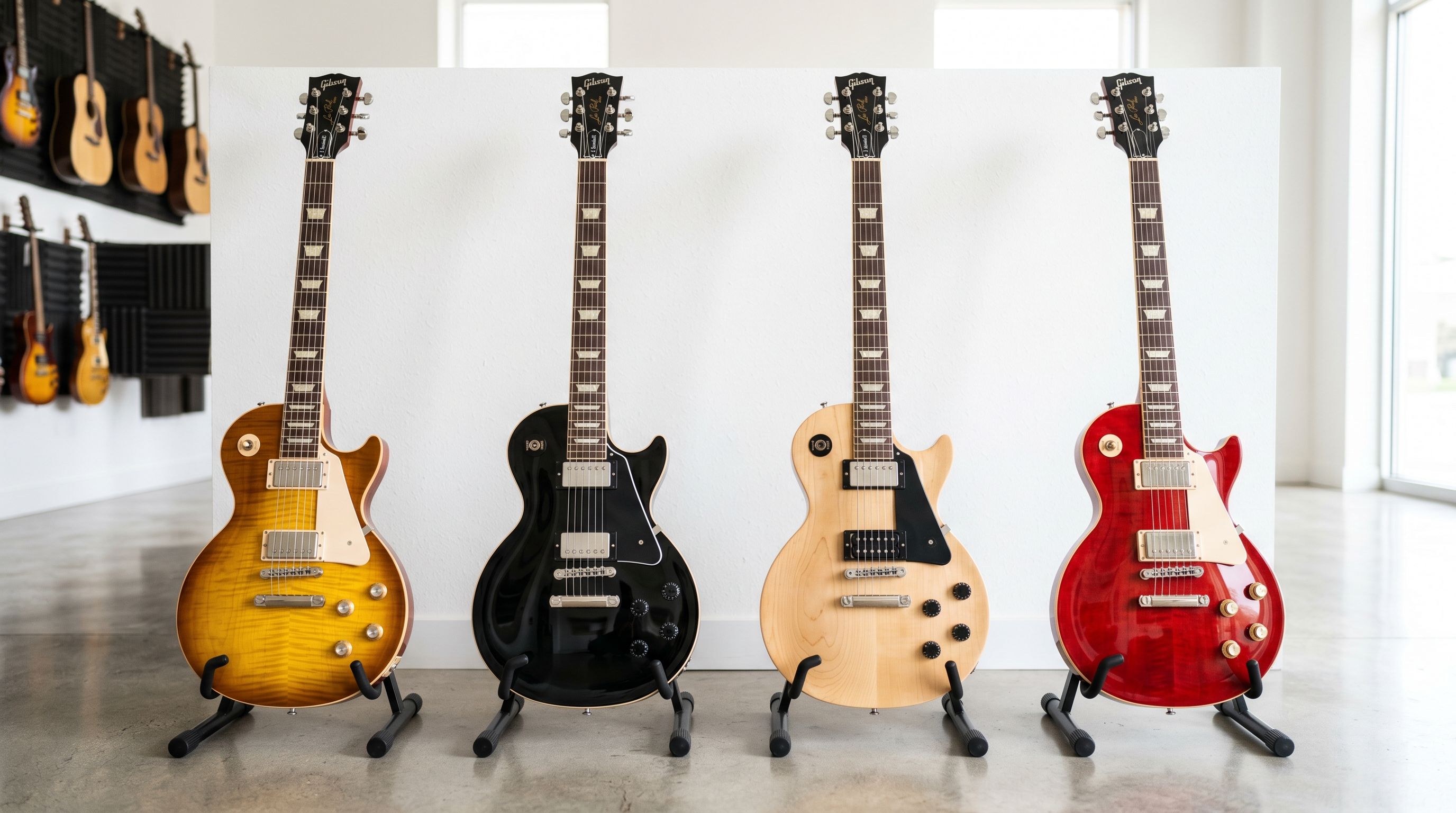
A standard supplier catalogue for electric guitars carries each variant combination as a separate row. A popular beginner guitar available in Sunburst, Black, Natural, and Red, in both full-scale and three-quarter-scale bodies, and in both right-handed and left-handed configurations, arrives as 16 rows in the supplier file. Without grouping, 16 separate Shopify products appear for one instrument model, which fragments the product's search ranking and creates a poor browsing experience.
Importier's Smart Variant Detection identifies colour (Sunburst, Black, Natural, Red), size (Full Scale, Three-Quarter Scale), and handedness (Right-Handed, Left-Handed) as three separate option dimensions. The 16 rows group into one Shopify product with three option dropdowns: Colour, Size, and Hand. The buyer selects their preferred configuration from a single product page and sees the correct stock availability per variant combination.
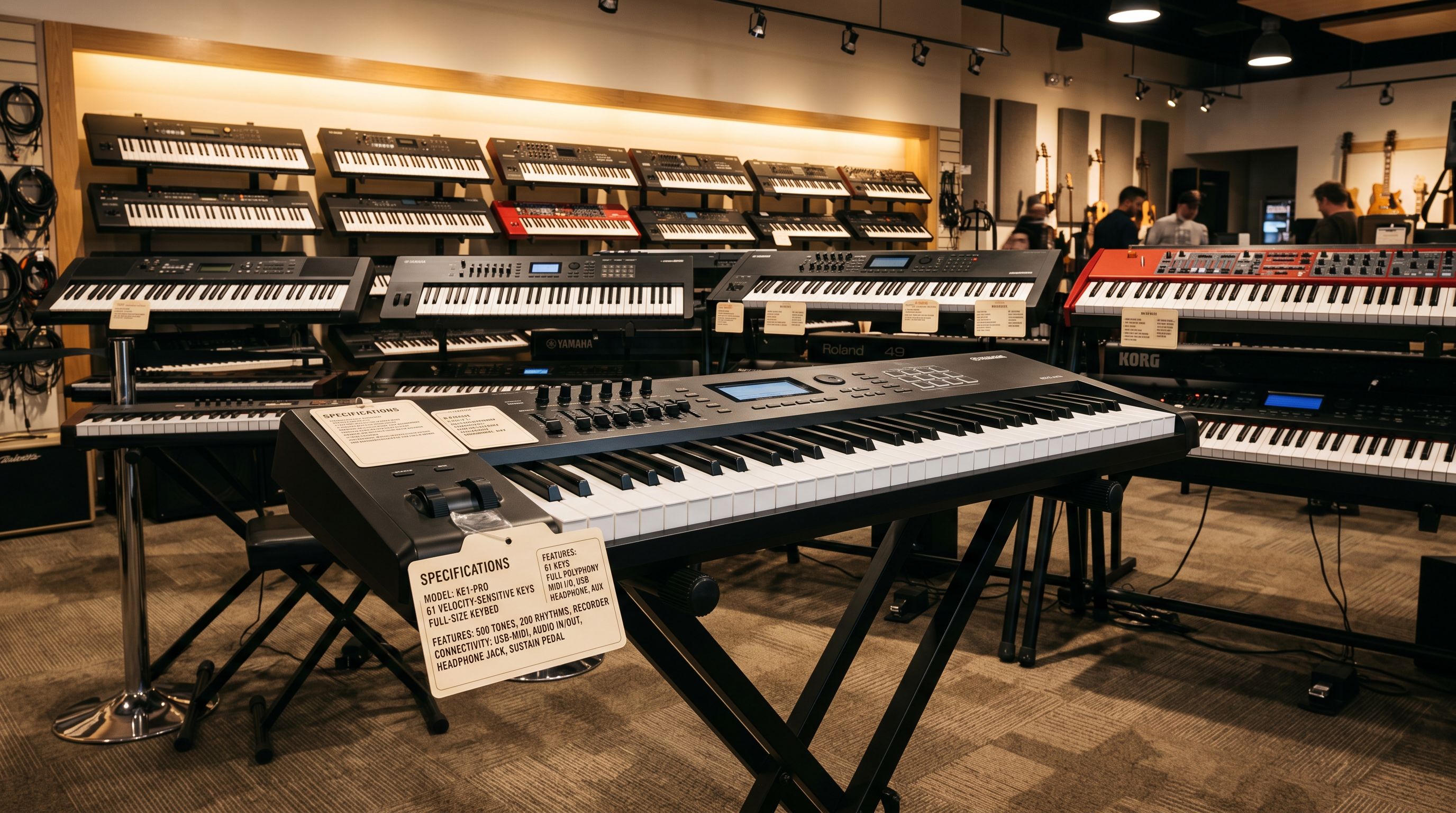
For acoustic guitars and ukuleles where a single model comes in a full-size and a concert body, the body size works as the Size option. For keyboards where a model comes in 49-key, 61-key, and 88-key configurations, the key count works as the Size option. For woodwind instruments (saxophones, clarinets) where the same model comes in different finishes (lacquer, silver plate, black lacquer), the finish works as the Colour option.
For beginner instruments sold as a pack with accessories (guitar plus bag, strap, tuner, and picks), the bundle configuration can appear as a separate variant option: "Guitar Only" versus "Starter Pack". These two rows carry the same product base but different price points and SKUs, and grouping them into one product with a Configuration option gives the buyer a clean choice on one page.
Read more about [how Smart Variant Detection groups option rows at import](https://importier.app/blog/shopify-import-product-variants).
## Mapping specification data to structured attribute fields
The core data problem for music store imports is specification information arriving as a combined string. A guitar supplier file may carry all specifications in a single column formatted as "Scale: 25.5in, Frets: 22, Pickups: 2x Single Coil, Neck: C-Shape, Body: Alder, Fingerboard: Rosewood". When this column is mapped to the description body in Shopify, the data is readable by a buyer who scrolls to it, but it is not queryable as a filter.
Importier's category attributes for musical instruments include the fields that buyers and Search engines use to filter:
- **Scale length** (in inches or centimetres: 24.75, 25.5, short scale 30, medium scale 32)
- **Number of frets** (typically 21, 22, or 24 for guitars; 76, 88 for keyboards)
- **Pickup configuration** (Single Coil, Humbucker, P90, Active, Piezo)
- **Neck profile** (C-Shape, U-Shape, V-Shape, Slim Taper)
- **Body material** (Alder, Mahogany, Basswood, Maple, Ash)
- **Fingerboard material** (Rosewood, Maple, Ebony, Richlite, Laurel)
- **Number of strings** (6-string, 7-string, 8-string for guitars; 4-string or 5-string for basses)
- **Key or pitch** (for wind instruments: Bb, Eb, C, F; for harmonicas)
- **Age suitability** (for beginner and student instruments: child, junior, adult)
- **Included accessories** (for starter packs: bag, strap, tuner, capo, picks)
For supplier files where specification data arrives as a combined string, the AI reads the specification column during the enrichment phase and assigns the extracted values to the correct attribute fields. A note in the enrichment context field confirming the format ("Specifications column contains scale, frets, pickups, and neck separated by commas") guides the parsing so the correct value reaches the correct field.

Read more about [how Industry Packs assign category metafields to your products](https://importier.app/blog/shopify-industry-packs).
## Descriptions for instrument buyers and gift buyers
Music stores serve two distinct buyer types, and the correct description style depends on which buyer is most likely to be landing on a given product.
**The specification-literate buyer** is an existing musician who knows what they are looking for. They scan product pages for scale length, pickup configuration, and neck profile before they evaluate anything else. The Technical Gadget description style serves this buyer by leading with the primary specification in the first sentence: "25.5-inch scale, 22-fret maple neck with C-shape profile, two single-coil pickups in a classic three-pickup Strat configuration." The buyer confirms their requirements in two sentences and proceeds to evaluate colour options and pricing.
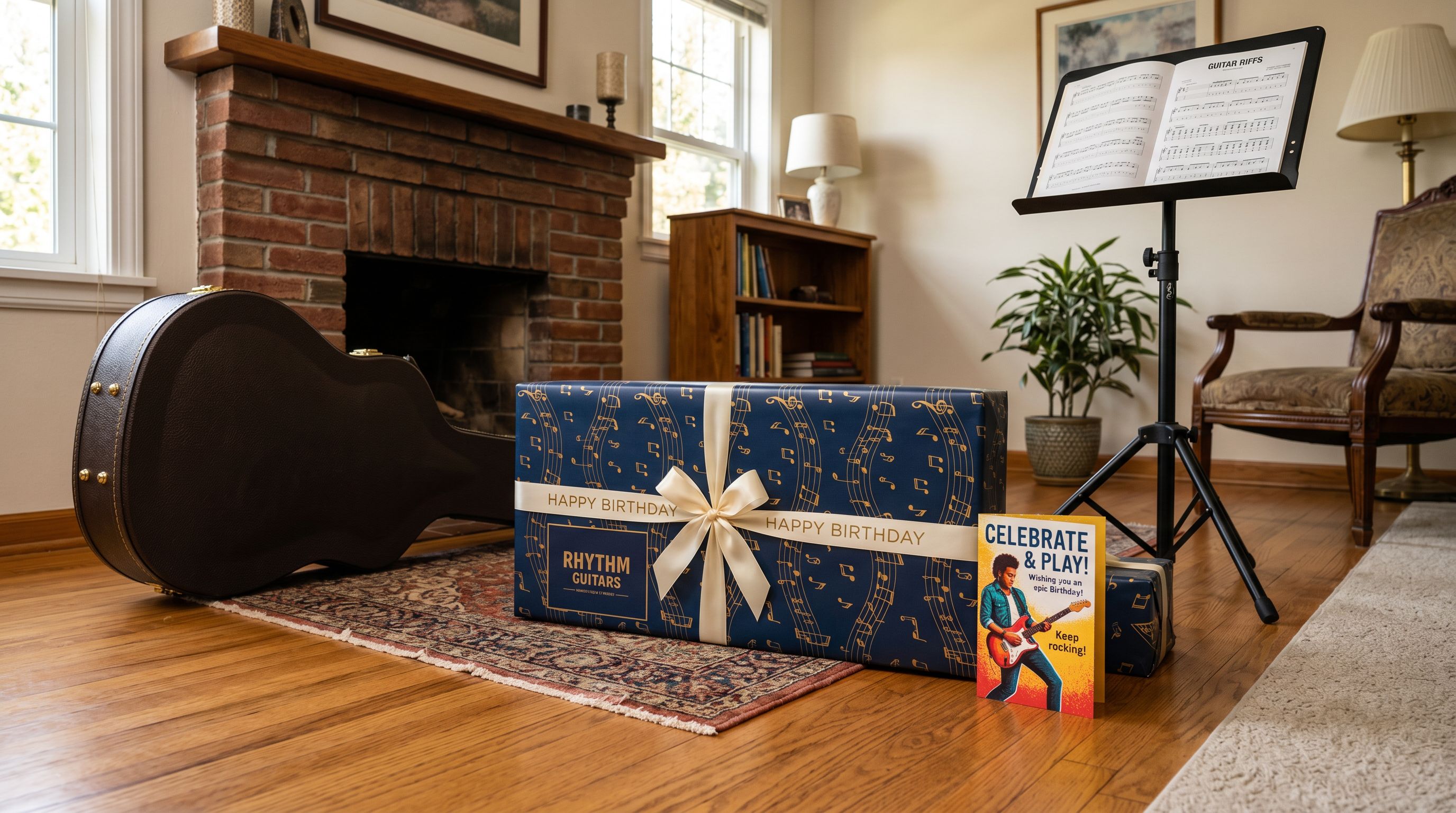
**The gift buyer** is purchasing an instrument for someone else: a parent buying a first guitar for a teenager, a grandparent buying a ukulele as a birthday gift, a partner buying a keyboard for a musician who mentioned wanting to learn. This buyer does not know pickup configurations or scale lengths. They need to know what age and skill level the instrument is appropriate for, what accessories are included, and why this particular model is a good choice for a beginner. The Benefits-First description style serves this buyer by leading with the outcome ("a complete setup for a first electric guitar player") before covering the technical details.
Importier's 156 expert personas include Music Retail Buyer, Guitar Specialist, Music Teacher, and Instrument Retail Advisor options. The Guitar Specialist persona produces descriptions that confirm technical credentials first, in the vocabulary a guitarist uses. The Music Teacher persona writes for a buyer who is making an educational purchase: instrument suitability for age, ease of setup, playability for small hands.
A guitar product page serves two completely different buyers in the same session. The specification-literate buyer reads the first two sentences and makes a decision. The gift buyer needs the instrument's purpose and suitability confirmed before they trust the specification.
For starter packs that bundle an instrument with accessories, the Benefits-First style covers what the buyer gets for their money in the first paragraph: "everything a beginner needs to start playing the same day the package arrives." Technical Gadget would lead with the guitar's specification, which is irrelevant to a gift buyer evaluating whether the bundle represents good value for a first instrument.
## Title structure for specification-driven searches
Musician buyers use specific search terms when they know what they want. A guitarist looking for a beginner electric guitar searches "sunburst strat style electric guitar right handed" or "three quarter scale electric guitar for kids". A pianist searches "61 key weighted keyboard USB MIDI". These query patterns carry the primary specification attributes in a predictable order.
Effective title structure for guitars: Body Style + Scale + Fret Count + Pickup Configuration + Brand. "Strat-Style Electric Guitar 25.5-Inch 22-Fret SSS BrandName" positions the primary specification filter attributes before the brand name, which is where Search preserves them within the visible title length on Shopping.
For keyboards: Key Count + Feature + Brand. "61-Key MIDI Keyboard Controller USB BrandName" leads with the attribute buyers filter by first. For beginner packs: Age Group + Instrument Type + What's Included + Brand. "Kids Three-Quarter Guitar Starter Pack with Bag and Tuner BrandName" tells the gift buyer everything they need in the title before they click through.
Importier's Title Optimizer applies the Google Merchant Centre preset with the primary specification front-loaded in the first 50 characters of the title, matching the title structure to the query pattern the buyer is most likely to use.
## Recommended import settings for musical instruments catalogues
**Category selection:** Guitars and Basses for electric, acoustic, bass, and classical guitars. Keyboards and Pianos for digital pianos, MIDI controllers, and synthesisers. Wind Instruments for saxophones, clarinets, flutes, and brass. Percussion for drum kits, cajon, and hand percussion. String Instruments for violins, cellos, and ukuleles. For mixed catalogues, run separate import sessions per instrument category.
**Description style:** Technical Gadget for products aimed at experienced musicians who are comparing specifications. Benefits-First for beginner instruments, starter packs, and gift-positioned products where the buyer is not evaluating technical specifications. For product ranges that include both beginner and advanced models, the description style can be set per product segment in separate import sessions.
**Persona:** Guitar Specialist for electric and acoustic guitar ranges aimed at practising musicians. Music Retail Buyer for general catalogue imports covering multiple instrument types. Music Teacher for beginner and student instrument ranges where educational context matters. Instrument Retail Advisor for high-value instruments where the buyer is making a considered purchase.
**Variant options:** Confirm Colour (finish or colour name), Size (body size, key count, or string count), and Hand (right or left) in the variant grouping preview. For starter packs, confirm a Configuration option (Instrument Only vs. Starter Pack) where the same base instrument is sold both ways.
**Enrichment:** Add a note to the enrichment context field if your specification column uses a combined format. For branded instruments with EAN or UPC codes, barcode lookup retrieves manufacturer-confirmed specification data from international product registries, reducing the manual work of populating scale length, fret count, and pickup configuration for large catalogues.