# Shopify Industrial Equipment Import: Compliance and Safety
> CE, OSHA, ATEX, GHS hazard class: the compliance codes industrial safety importers must map to Shopify metafields before their first import.
- Published: 2026-07-27
- Author: Importier Team
- Category: Industry Guides
- Canonical: https://www.importier.app/blog/shopify-industrial-safety-equipment-import
---
Importing industrial safety equipment to Shopify is a compliance data problem disguised as a product data problem. A wholesale PPE distributor imports 180 products from their supplier catalogue: hard hats rated to EN 397, arc flash face shields with ATEX certifications, confined space rescue equipment carrying OSHA 29 CFR 1910.146 compliance references.
The import finishes cleanly. Every product appears in the Shopify admin. Titles, descriptions, and prices are all there.
Three months later, a safety officer at a chemical plant searches "EN 397 Type I hard hat" on the distributor's storefront. Zero results. The EN standard sits in the product description as unindexed prose.
Shopify's search does not parse standard references out of rich text, and neither does the procurement platform the plant uses to log approved equipment.
The data was never missing. Every product in the supplier catalogue had thorough compliance documentation: CE marking directive, OSHA CFR reference, ATEX category, GHS hazard classification for any chemical-rated gear, and IP ingress protection rating.
The problem was destination. A standard CSV import had nowhere to put any of it, so all of it landed in the description body: invisible to search, invisible to procurement tools, invisible to the filters a safety officer actually uses.
In our experience, this is the most consistent failure pattern when industrial distributors move to DTC. The compliance data exists. It just ends up in the wrong place.
## Why industrial safety catalogues create a different shopify import problem
Most Shopify import guides are written for retail catalogues: apparel with sizes and colours, homewares with dimensions and materials, supplements with flavours. Industrial safety equipment carries compliance evidence from multiple regulatory frameworks simultaneously, and none of it maps to Shopify's standard product columns.
A single cordless angle grinder might carry CE marking under the Machinery Directive (2006/42/EC), a Group II Category 3 ATEX rating for use near explosive atmospheres, an OSHA 29 CFR 1926.302 compliance reference for construction sites, and an IP54 ingress protection rating for dust and splash resistance. That is four separate compliance identifiers on one product.
For a retail merchant, only the IP rating is relevant to a consumer buyer. For an industrial distributor, all four are discoverable criteria that procurement managers use to approve or reject a product.
Industrial products also have technical specifications that behave like variant dimensions rather than product copy. Load ratings, working load limits, voltage configurations, rated breaking strengths, and protection class levels are filterable data points for procurement.

When a safety manager needs a 5-tonne rated shackle and not a 3-tonne one, that is not a preference; it is a load calculation requirement. If load rating is embedded in a description sentence rather than stored in a filterable metafield, the correct product cannot be found programmatically.
B2B buyers purchasing industrial safety equipment search on compliance codes first. If "EN 166 eye protection" or "Class C1 hard hat" is not stored in a filterable metafield, the product is invisible to procurement tools and site-specific approved equipment lists, regardless of how well the description reads.
## The compliance code types you will encounter
Understanding what each code type is determines where it should live in Shopify. Industrial safety catalogues typically contain five distinct compliance frameworks, and each one warrants a different treatment at import time.
**CE marking and EU directives.** CE marking is not a single certification; it is a declaration of conformity to a specific EU directive. A hard hat certified under EN 397 conforms to the EU PPE Directive (2016/425), while a power tool CE marked under EN 60745 conforms to the Machinery Directive. Both the applicable directive and the harmonised standard number need to be stored as distinct metafields, not blended into a single description sentence where neither is searchable.
**OSHA compliance references.** OSHA does not certify individual products; it sets minimum performance standards by CFR reference number. A product that meets OSHA 29 CFR 1910.135 (head protection general industry) or OSHA 29 CFR 1926.102 (eye protection construction) carries that CFR reference as a compliance claim, not a marketing statement. US industrial buyers in regulated facilities filter products by CFR reference when building approved equipment lists.
**ATEX certification.** Equipment for potentially explosive atmospheres carries an ATEX category that specifies the zone in which it can be legally operated. Group I equipment is rated for mines; Group II covers all other explosive atmospheres, with categories 1, 2, and 3 indicating the required level of protection from highest to lowest. The [UK Health and Safety Executive's ATEX guidance](https://www.hse.gov.uk/fireandexplosion/atex.htm) covers zone classification requirements in detail. If ATEX classification is in the description rather than a metafield, that product does not appear in filtered results.
**GHS and UN hazard classifications.** Chemical safety equipment such as spill kits, chemical-resistant PPE, absorbent materials, and containment berms often carries GHS hazard classifications indicating which substance classes it is rated for. The [OSHA Hazard Communication Standard](https://www.osha.gov/hazcom) aligns US HazMat communication with the UN's Globally Harmonised System (GHS), so the same classification system applies across US and international markets. These are identifiers that matter to EHS teams, not copy for a product description.
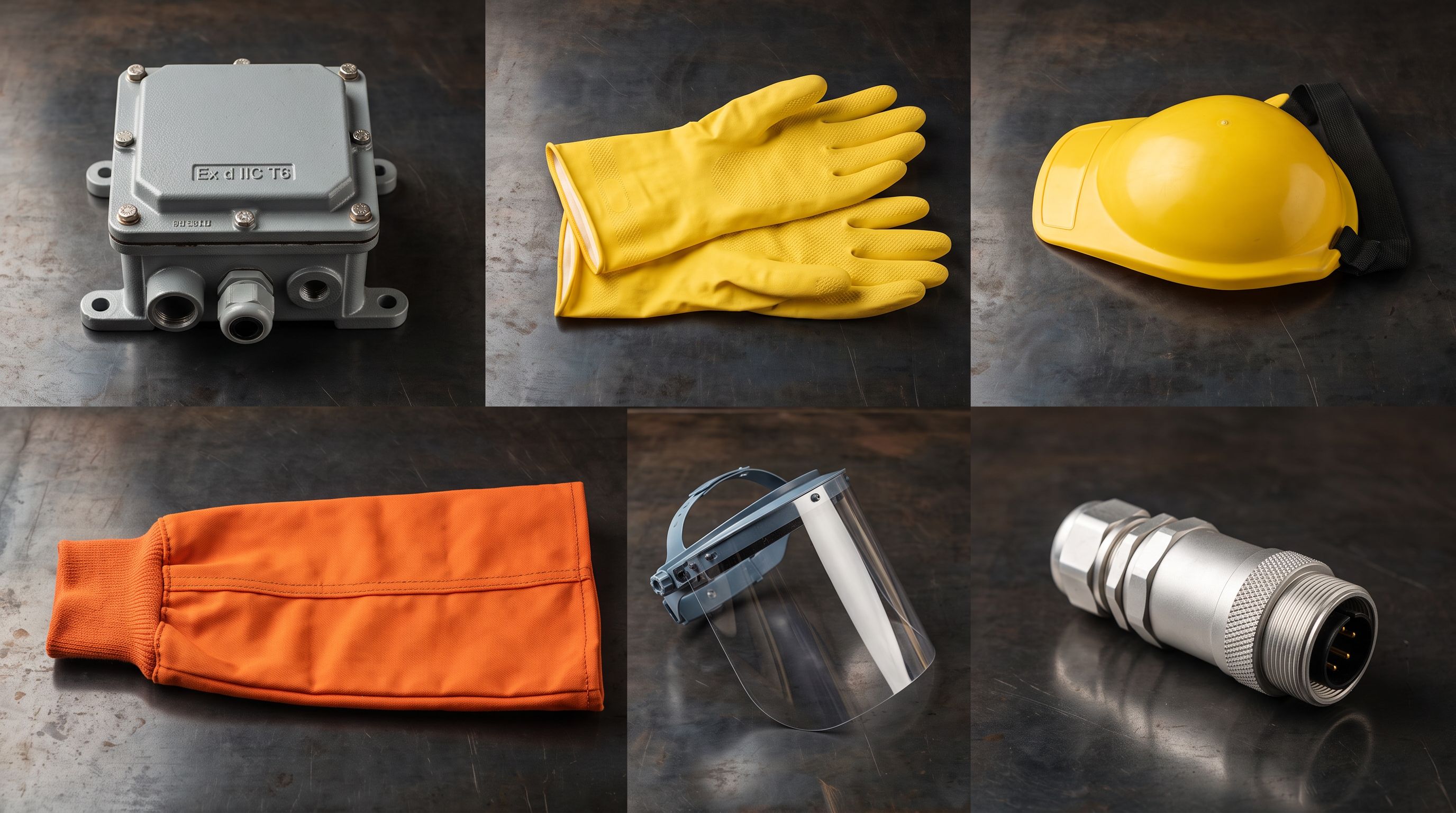
**IP ratings.** Ingress Protection ratings (IP54, IP65, IP67, IP69K) specify resistance to dust and water at precisely defined thresholds. They appear on industrial sensors, safety lighting, enclosures, and power tools. A procurement manager specifying equipment for a food processing environment with daily wash-down procedures will filter on IP69K and exclude IP54. If IP rating lives in a product title or description rather than a structured metafield, it cannot be filtered.
## Where standard imports lose compliance data
A standard Shopify CSV import defines specific columns: Title, Body (HTML), Vendor, Product Category, Tags, and a set of variant columns. None of those columns are named CE Marking, OSHA Reference, ATEX Category, or IP Rating.
What happens in practice: a supplier provides a specification spreadsheet with columns including Certification, Standard Number, Compliance Code, Hazard Class, IP Rating, and Max Working Load. A merchant maps Certification to Tags because that is the closest available destination. Standard Number disappears into the description body.
Compliance Code has no mapping and is omitted. The result is a Shopify catalogue with compliance data scattered across unindexed fields, partially lost, and not queryable by any procurement integration.
We recommend treating this as a data architecture decision, not a content cleanup task. The correct destination for compliance codes is Shopify's product metafield system. Metafields created at import time are indexable, filterable via the Shopify Storefront API, and readable by third-party procurement tools through the metafield API endpoint.
## Mapping compliance fields in Importier
Importier's 14-step import wizard includes a column mapping step designed to handle non-standard supplier columns. When your supplier CSV contains a column named ATEX Category or UN Hazard Class, you can map it to a custom metafield namespace rather than forcing it into Tags or the description body.
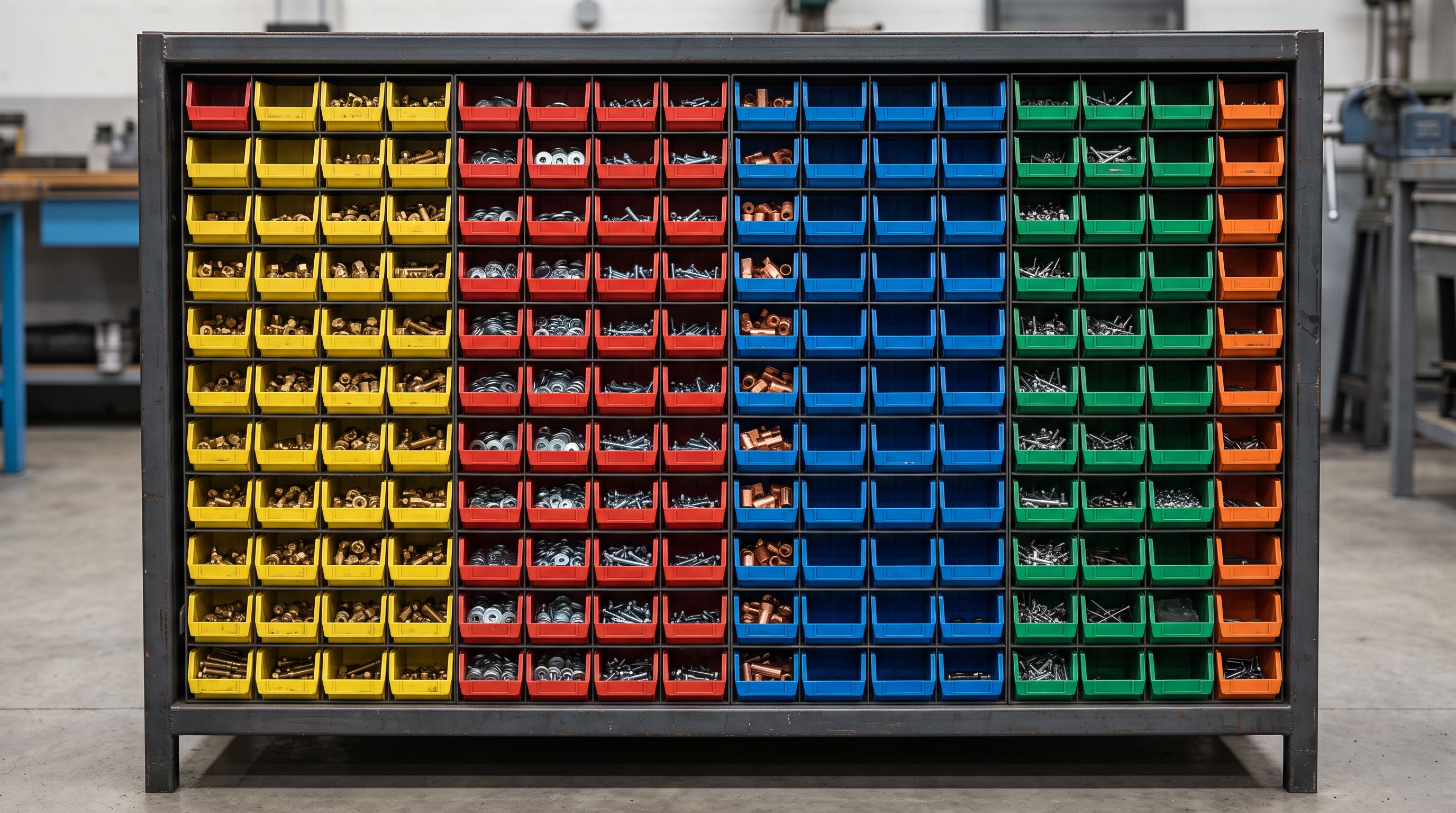
The mapping handles any field type. Binary compliance fields (ATEX Certified: Yes/No, CE Marked: Yes/No) map to boolean metafields. Rated values such as IP Rating: IP65 map to text metafields with a structured key.
Multi-standard products that carry multiple EN standard references simultaneously use multi-value metafield types to preserve all values. A glove that is simultaneously rated to EN 388 (mechanical risks), EN 374 (chemical risks), and EN 511 (cold risks) needs all three stored as separate, searchable entries rather than a comma-separated string in a single field.
The practical consequence extends beyond storefront search. B2B procurement platforms, ERP integrations, and marketplace connections that pull from Shopify do so via the metafield API. A compliance code embedded in description HTML is not retrievable through the product metafield endpoint; it requires scraping or manual extraction.
A compliance code mapped to a named metafield namespace is immediately available to any integration without additional processing. Importier's [category metafields guide](https://importier.app/blog/shopify-category-metafields-guide) covers the broader metafield architecture if you are new to how Shopify structures this data.
## Multi-variant industrial products: load ratings, voltage, and compliance tiers
Industrial safety equipment has a variant structure that differs substantially from apparel or homewares. The most common variant dimensions in industrial catalogues are not colour or size; they are engineering specifications that determine safe use under load or in specific environments.
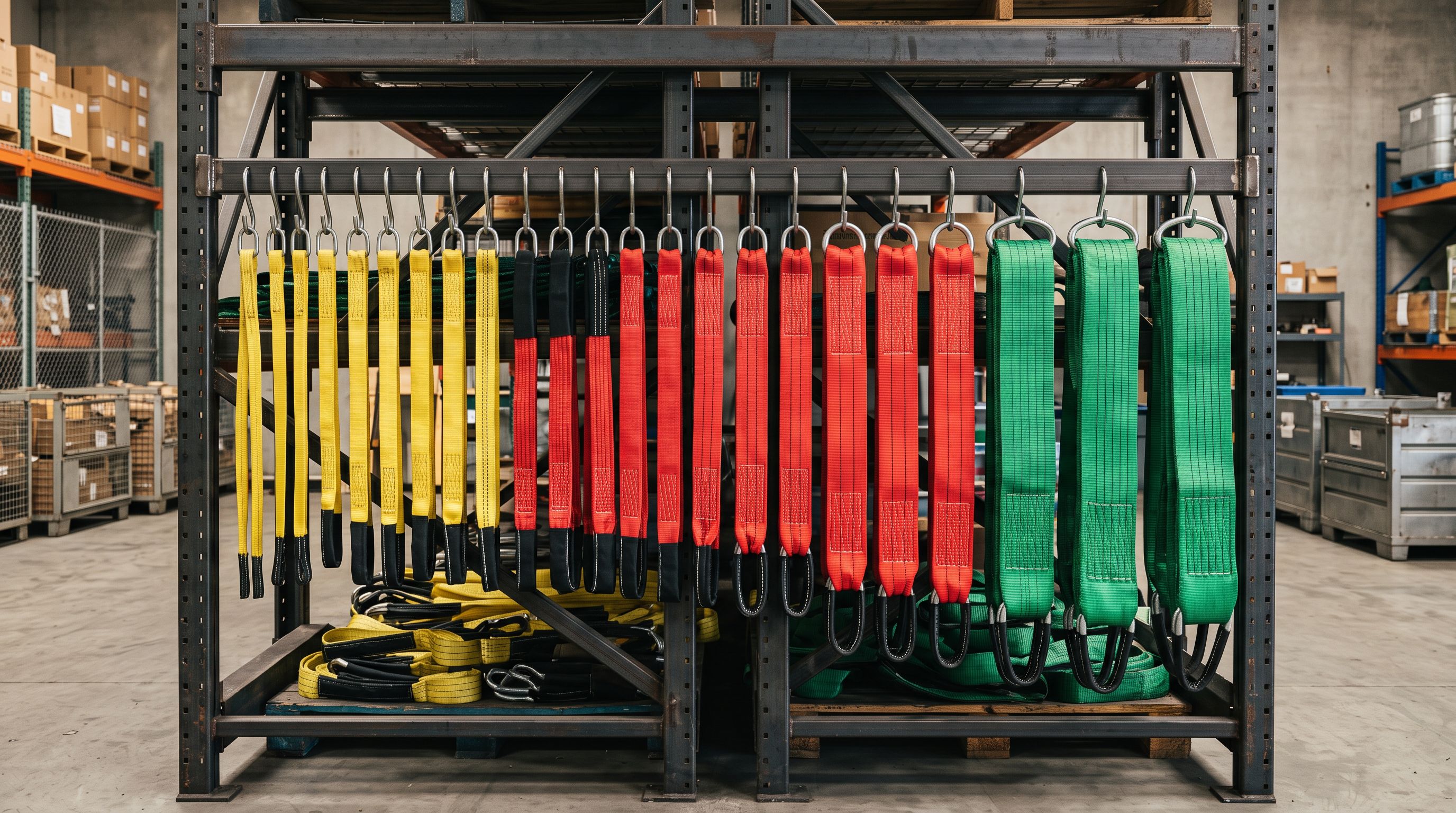
**Working load limits and rated capacities.** A safety sling might be available in 1-tonne, 2-tonne, 5-tonne, and 10-tonne WLL configurations. A lifting eye bolt might span 0.5-tonne to 12-tonne. These are not size variants; they are load engineering specifications. Importier's Smart Variant Detection covers 150+ variant detection patterns across 15+ industries, including weight and load patterns. The [Shopify tools and hardware import guide](https://importier.app/blog/shopify-tools-hardware-import) covers load rating as a variant dimension in more detail for general tools and hardware catalogues.
**Voltage and power class.** Industrial power tools commonly ship in 110V (the UK site safety standard for portable tools) and 230V configurations, alongside 18V, 36V, and 60V cordless tiers from the same manufacturer. Voltage operates simultaneously as a variant dimension (the buyer selects it at purchase) and a taxonomy attribute (it appears in product filtering). Importier's column mapping can direct voltage to both the Shopify variant option and the product category metafield in a single import pass.
**Compliance tier variants.** Some PPE products are sold in multiple compliance protection levels that function as distinct variants: a disposable respirator available in EN 149:2001+A1:2009 FFP2 and FFP3 ratings, or a chemical-resistant glove available in Category II and Category III PPE protection levels. The protection class is the meaningful variant. Grouping Category II and Category III as the same product with different options is the correct structure, but only if the import recognises the protection class as a variant dimension rather than treating each as a separate product.
A safety sling rated to 1-tonne WLL and one rated to 5-tonne WLL are not size variants. Treating them as sizes produces incorrect Shopify option labels and risks a buyer selecting the wrong rated capacity for a lifting application.
## AI descriptions for industrial B2B buyers
Industrial safety equipment descriptions serve two distinct audiences: the procurement officer who needs to verify compliance credentials before approving a purchase, and the end user (the worker) who needs to understand fit, application, and comfort. A description written entirely like a safety data sheet loses the end user. A description written as retail product copy fails the procurement officer.
Importier's Technical Gadget description style suits industrial catalogues. It leads with specifications and performance characteristics, structures rated values as part of the product narrative, and closes with application context and appropriate use cases. Combined with an industrial or professional services persona from Importier's 156 expert personas across 43 industries, the style produces descriptions that reference protection class and application environment in B2B-appropriate language.
One specific consideration for this category: AI descriptions should reference a product's compliance context (what it is rated for, what environment it is designed for, what protection level it offers) without restating raw compliance codes as product claims. CE marking under the PPE Directive is a legal declaration made by the manufacturer. ATEX certification is a verified classification by a Notified Body.
Those declarations belong in the compliance metafields, where procurement tools can verify them against approved equipment registers. The product description covers what the equipment does for the person using it. For more on how Importier handles regulated product categories, the [Shopify medical devices import guide](https://importier.app/blog/shopify-medical-devices-import) covers a similar compliance-versus-description distinction for CE marking under the EU Medical Devices Regulation.
## Configuring a compliance-first import session
Industrial and safety equipment catalogues benefit from a session configuration that is defined once and applied to the full catalogue, rather than product-by-product configuration on each import run.
Set up the session with Technical Gadget as the description style and select an appropriate industry persona from Importier's industrial or professional services group. Apply the Tools and Hardware Industry Pack to activate Standard Product Taxonomy attributes for power source, voltage, material, and load rating. Configure Brand Voice for a professional B2B tone with any product-specific vocabulary your catalogue requires: material names, standard abbreviations, or industry-specific terminology your buyers expect.
Define the custom metafield namespace mapping once in the column mapping step. Every subsequent import from the same supplier inherits that mapping. When a supplier sends an updated catalogue with new SKUs, revised ATEX classifications, or updated CFR references, the Scheduled Import feature re-runs the same column mapping automatically.
For distributors managing multiple supplier formats where one supplier uses "CE Standard" and another uses "Certification Code" for the same field, create a separate Importier session per supplier, each with its own column mapping configuration. Sessions are independent, so the mapping for Supplier A does not affect Supplier B. Each session preserves its column mapping configuration across runs.
Industrial safety equipment is one of the more data-intensive categories to onboard to Shopify, but the compliance code problem is solvable at import time with deliberate column mapping and metafield configuration.
**Key takeaways:**
- Map compliance codes (CE directive, OSHA CFR, ATEX category, GHS class, IP rating) to named metafields at import time, not to Tags or description body
- Load ratings and compliance protection levels are variant dimensions, not descriptive text
- Define your metafield namespace mapping once; Scheduled Imports re-apply it on every subsequent supplier file
- AI descriptions should reference compliance context without restating the raw compliance code as a product claim
- Solving the compliance data architecture before products touch Shopify means procurement tools, ERP integrations, and safety officers all work from structured, queryable data from day one
Try Importier free at importier.app.
## Related Articles
- [Shopify Tools and Hardware Import: Part Numbers and Specs](/blog/shopify-tools-hardware-import)
- [Shopify Medical Devices Import: CE Marking and UDI Guide](/blog/shopify-medical-devices-import)
- [Shopify Category Metafields: The Complete Guide](/blog/shopify-category-metafields-guide)