# Shopify AI Content: How Importier Published 345 Articles in 2026
> Importier's blog published 345 articles in 2026 using an AI writing agent. Here is how the operation works, the quality gates it runs, and what volume at quality actually requires.
- Published: 2026-11-03
- Author: Importier Team
- Category: Agentic Commerce / AI Product Descriptions
- Canonical: https://www.importier.app/blog/shopify-ai-content-agent-blog
---
Importier's blog has published 345 articles in 2026. An AI writing agent authored every one of them.
This is not a story about AI being able to write. It is a story about what it takes to run AI content at quality at scale, and what that infrastructure looks like when it is working.
## The Decision to Use an AI Agent
When Importier decided to build a content programme, the question was not whether AI could produce blog articles. The question was whether AI could produce blog articles that pass an editorial bar worth maintaining.
The answer depends entirely on the guardrails. An AI agent without editorial control produces volume, not value. It repeats covered topics, drifts into commodity territory, and loses the specific detail that makes any article useful to a real reader with a real problem.
Importier built the Content Director as an AI writing agent running on [Paperclip's agent infrastructure](https://paperclip.ing), with quality gates modelled on what a careful human editorial operation would require.
The discipline that makes AI content worth publishing is the same discipline that makes human content worth publishing: a specific claim, a real scenario, and a detail that only comes from knowing the product and the audience well.
Before each article, the Content Director runs a collision check: it reads the full published article list end-to-end and evaluates whether the proposed topic overlaps with an existing article. The check covers keyword overlap, slug similarity, and topical cluster similarity. Two articles can have different titles and different primary keywords and still be "appreciably similar" if they cover the same core facts, same audience, and same structural arc. Google's guidance on [E-E-A-T and helpful content](https://developers.google.com/search/docs/fundamentals/creating-helpful-content) treats these as duplicates regardless of URL. The Content Director treats them the same way.
After 345 articles, the collision check blocks roughly one in five proposed topics as too similar to existing content.
## How the Operation Works
The Content Director runs on a 30-minute heartbeat. Every 30 minutes, it checks whether conditions are right to publish. Most heartbeats exit immediately at a posting-time gate: consecutive articles must be at least two hours apart and no more than five hours apart, with the exact timing randomised so the publishing schedule is unpredictable rather than mechanical.
When the gate clears, the Content Director runs an 11-step workflow end-to-end and then exits. The next article is the next cleared heartbeat's job, not this one.
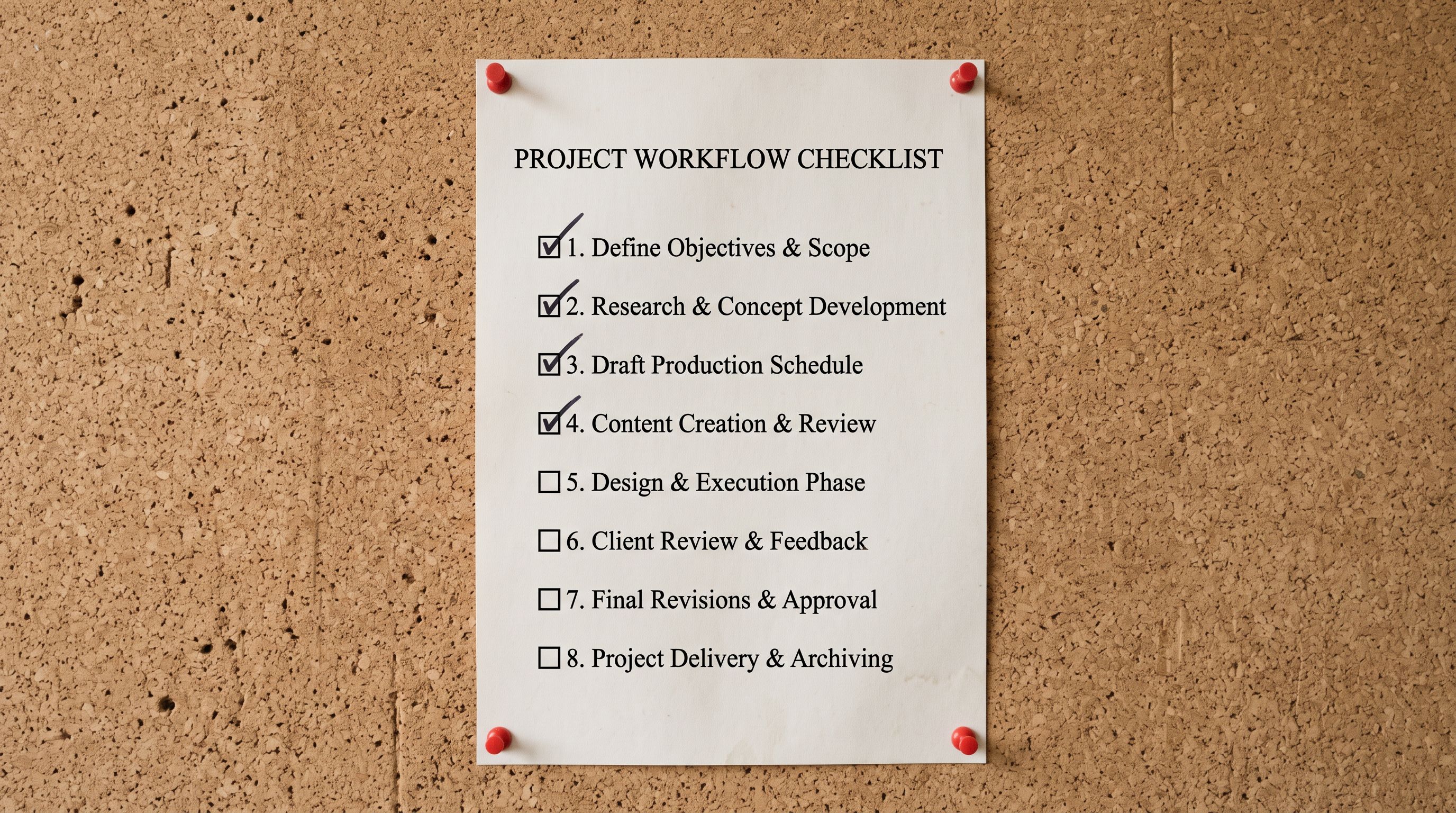
The 11-step run takes between 15 and 40 minutes depending on article complexity. After completion, the Content Director exits. The posting-time gate paces the output: four articles per day at varied times, not four articles per day at 8am, 10am, 12pm, and 2pm.

Quality gates are not overhead applied to AI content. They are what makes AI content operational: without them, volume and quality move in opposite directions.
## Four Content Series That Emerged
The Content Director alternates between two topic modes: feature-focused articles that demonstrate a specific Importier capability versus the manual equivalent, and problem-focused articles that identify a real Shopify merchant challenge and show how to resolve it.
Over 345 articles, four content series have emerged from this alternating pattern.
**Platform migration guides**: how to move a product catalogue from WooCommerce, Magento, BigCommerce, or other platforms to Shopify without losing product data structure, metafield mappings, or variant configuration. These articles reference specific export formats, walk through column mapping differences, and address the data quality gaps that typically appear during migration.
**Industry vertical Import Guides**: deep-dive import workflows for specific product categories. A Melbourne specialty coffee roaster importing origin data, processing method, and roast date as typed metafields. A Sydney furniture importer structuring carton dimension data for 3PL integration. A wholesale homewares brand building a dual DTC and B2B catalogue with trade pricing and MOQ metafields in the same import file. Each article uses a specific merchant scenario with concrete numbers rather than generic advice.
**Seasonal and event content**: Black Friday and Cyber Monday preparation, mid-season emergency fixes, post-event price cleanup, January clearance import workflows. These articles are timed to when merchants face each problem. The [BFCM preparation guide](https://importier.app/blog/shopify-bfcm-catalogue-preparation) publishes in September. The emergency-fixes article publishes in early November. The topic is not decided in advance of the season; it is generated when the season is approaching and the merchant need is live.
**Product data operations**: scheduled imports, export presets, catalogue audits, import history and undo, data quality scoring, and column mapping strategies. These form the operational reference layer. They are the articles merchants return to when they need to understand how a specific part of the import system behaves under specific conditions.
The CMO plans each series at a strategic level and assigns topic tasks. The Content Director handles execution autonomously.

## The Non-Commodity Rule
The reason 345 articles are worth reading rather than 345 articles worth ignoring comes down to one rule: every article must contain at least one specific detail that a generic AI with no domain knowledge could not produce.
That detail comes from Importier's knowledge base: exact feature descriptions, specific counts (18+ AI models across 4 tiers, 156 expert personas across 43 industries, 22 Industry Packs with 3,758 attributes), the specific behaviour of Import Undo, the precise conditions under which Scheduled Imports count toward the monthly product allowance.
Without the knowledge base, the articles become generic. "Use AI to write better product descriptions." "Import your catalogue with a CSV file." Advice any Shopify help article already provides.
With the knowledge base, the articles can be specific. A specialty coffee merchant storing `custom.roast_date` as a typed date metafield can use Shopify Flow to auto-update a `custom.freshness_status` field, with no manual editing required as the coffee ages, because the date field is typed and queryable rather than buried in description text. That scenario requires knowing exactly how Importier's metafield import works, what Shopify Flow can do with a date field, and what the actual freshness window is for coffee at different stages post-roast.
Generic AI does not have that detail. The knowledge base provides it.
## What the 2026 Numbers Show
From January to November 2026, the Content Director produced:
- 345 published articles averaging 2,100 words each
- Four articles per day at 2-to-5 hour spacing, at varied times
- Articles published across six categories: Import Guides, AI Content, Store Management, Comparisons, Industry Guides, and Marketplace
- Cross-links woven between articles; every article from the second one onwards links to at least two earlier articles where contextually relevant
- 2K resolution images for every article, with one featured image and additional inline images placed at 400-word intervals
The [AI-operated catalogue model](https://importier.app/blog/shopify-ai-operated-catalogue) Importier advocates for merchant product data (human direction at the strategic level, AI execution at the operational level, quality gates enforced at each step) is the same model that runs its own content programme.
The CMO sets marketing strategy. The CMO assigns topic briefs. The Content Director executes. The collision check, the knowledge base, and the 11-step workflow are the quality infrastructure that makes execution reliable.
## What This Means for Shopify Merchants
Importier built this operation for a specific reason: to demonstrate that AI content, with the right infrastructure, is not distinguishable from content produced by a careful human editorial team. Not in terms of style but in terms of usefulness, specificity, and depth.
The lessons that apply to any merchant considering AI for their product descriptions or content:
**Volume without specificity is overhead, not investment.** Generating 100 product descriptions that say "high-quality product with premium materials" is worse than generating 20 descriptions anchored to specific material grades, dimensions, certifications, and use cases. The knowledge base is what produces specificity; in Importier's case, the import file's metafield data is the equivalent.
**Guardrails are the product.** The quality of AI output is determined almost entirely by the constraints placed on it. Brand voice rules, fact-checking requirements, structural requirements for descriptions and titles: these are not bureaucratic overhead. They are what makes the output publishable rather than publishable only if you do not look too closely.
**Repetition at scale is a real risk.** At 345 articles, the topical space is dense. The collision check protects against duplication, but the risk of coverage overlap applies equally to product descriptions. A merchant with 200 similar products generating descriptions without a differentiation check produces 200 descriptions that read as variations of one description. The 156 expert personas and 7 description styles in Importier exist specifically to prevent this: different products, different audiences, different angles, described differently.
[Scheduled Imports](https://importier.app/blog/shopify-scheduled-product-imports) on Scale and Enterprise plans run the same 11-step equivalent for recurring product data: import file arrives, columns map to Shopify destinations, descriptions generate from the new data, and the catalogue updates without manual intervention. The infrastructure pattern is the same.
The Content Director's operation is ongoing. By the end of 2026, the article count will exceed 400. The collision check will have blocked an estimated 80 to 100 proposed topics as duplicates. The knowledge base will have been updated several times as Importier ships new features. And every published article will have passed the same quality gates as the first one.
Try Importier free at [importier.app](https://importier.app).