# How Perplexity Shopping Evaluates Shopify Product Pages
> Perplexity Shopping surfaces products inside answer threads. Your product data must resolve buyer questions, not match keywords. Here is what matters.
- Published: 2026-07-13
- Author: Importier Team
- Category: Agentic Commerce / AI Product Descriptions
- Canonical: https://www.importier.app/blog/perplexity-shopping-shopify
---
A merchant searches [Perplexity](https://www.perplexity.ai) with a phrase their buyers use: "best waterproof trail running shoes under $150". Perplexity returns three product recommendations, each with a sourced excerpt from a product page. Their waterproof trail runner at $129 does not appear.
The product description says "excellent grip and all-weather performance." One of the recommended products says "Gore-Tex membrane with 1.5m waterproof rating, drain holes in the midsole prevent water retention after stream crossings."
Perplexity did not search for "waterproof" as a keyword. It looked for product pages that could answer the buyer's question with specificity. This is how perplexity shopping shopify merchants need to understand product data: not as keyword optimisation, but as answer-resolution.
## How Perplexity Shopping works differently from Google
[Perplexity AI](https://www.perplexity.ai) is an answer engine. When a buyer asks a shopping question, Perplexity synthesises an answer by reading and citing product pages, review sources, and specification databases. Pro subscribers can see product recommendations with buy links directly inside the answer thread.
Unlike Google Shopping, where ranking depends on bidding, keyword relevance, and Merchant Centre data quality, Perplexity's commerce mode reads page content to determine which product best answers the query. A product does not need to match the query keyword. Its page needs to contain an answer to the question behind the query.
This distinction changes what optimisation means. For Google Shopping, GTIN gets you into the index. For Perplexity Shopping, the description needs to resolve the query.
Google Shopping ranks by relevance to a keyword. Perplexity Shopping ranks by how completely a product page answers the buyer's question. A description that contains specifications answers questions. A description that uses adjectives does not.
Read more about [how Shopify product data performs across AI shopping agents](https://importier.app/blog/shopify-product-data-ai-shopping-agents) and how Perplexity fits into the broader AI commerce landscape.
## Descriptions that resolve queries, not match keywords
The most direct optimisation for perplexity shopping shopify merchants is writing product descriptions that contain the answers buyers are asking for.
A buyer searching "noise-cancelling headphones for open-plan offices" is asking several questions at once: how effective is the noise cancellation? Does it filter human voices, or only mechanical noise? Can you take calls in that environment? A description that says "advanced noise-cancelling technology with professional-grade sound" does not answer any of those questions specifically.
A description that says "active noise cancellation reduces ambient office conversation by 25dB, optimised for human voice frequencies in open-plan environments, with a clear call mode for video conferencing" answers all three. Perplexity cites that description as a source for that query.

The practical implication: each product description should contain the answer to the most likely question a buyer in your category would ask. For electronics, that question is usually about performance under a specific condition. For clothing, it is usually about fit or material composition. For tools, it is usually about compatibility or capacity.
A description that answers a question is worth more to an answer engine than a description that contains a keyword.
Importier's seven description styles each approach this differently. The Technical Gadget style front-loads specifications before features. The Benefits-First style leads with use-case outcomes. For Perplexity optimisation, both styles produce descriptions rich with specific, answerable details. Read more about [Shopify and Perplexity Commerce: what product data matters for recommendations](https://importier.app/blog/shopify-product-data-perplexity-commerce).
## FAQ signals as direct question-matching
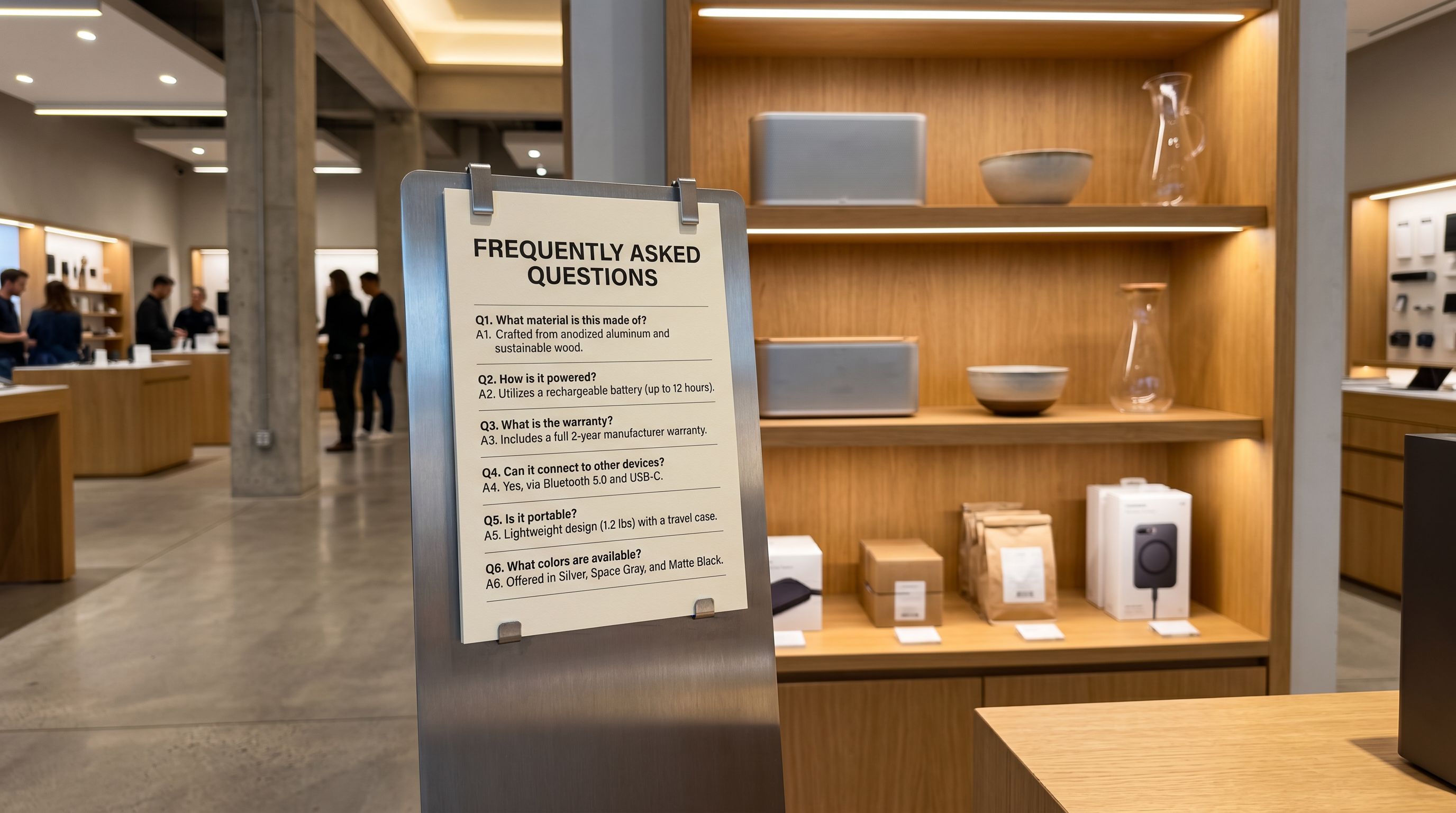
Perplexity reads the full product page, including FAQ sections. A product FAQ that directly addresses buyer questions is one of the most targeted optimisation signals available for perplexity shopping shopify product pages.
A FAQ entry such as: "Q: Is this jacket waterproof or water-resistant? A: The jacket uses a Gore-Tex Pro membrane rated to 28,000mm hydrostatic head. It handles sustained rain, not just light showers." This entry resolves a query for "waterproof jacket heavy rain" as accurately as any description passage.
FAQs are also the most natural format for questions that do not fit a prose description. Compatibility questions, sizing notes, care instructions, and warranty terms all belong in FAQs and all feed Perplexity's question-resolution scoring.
## GTIN and external product identity
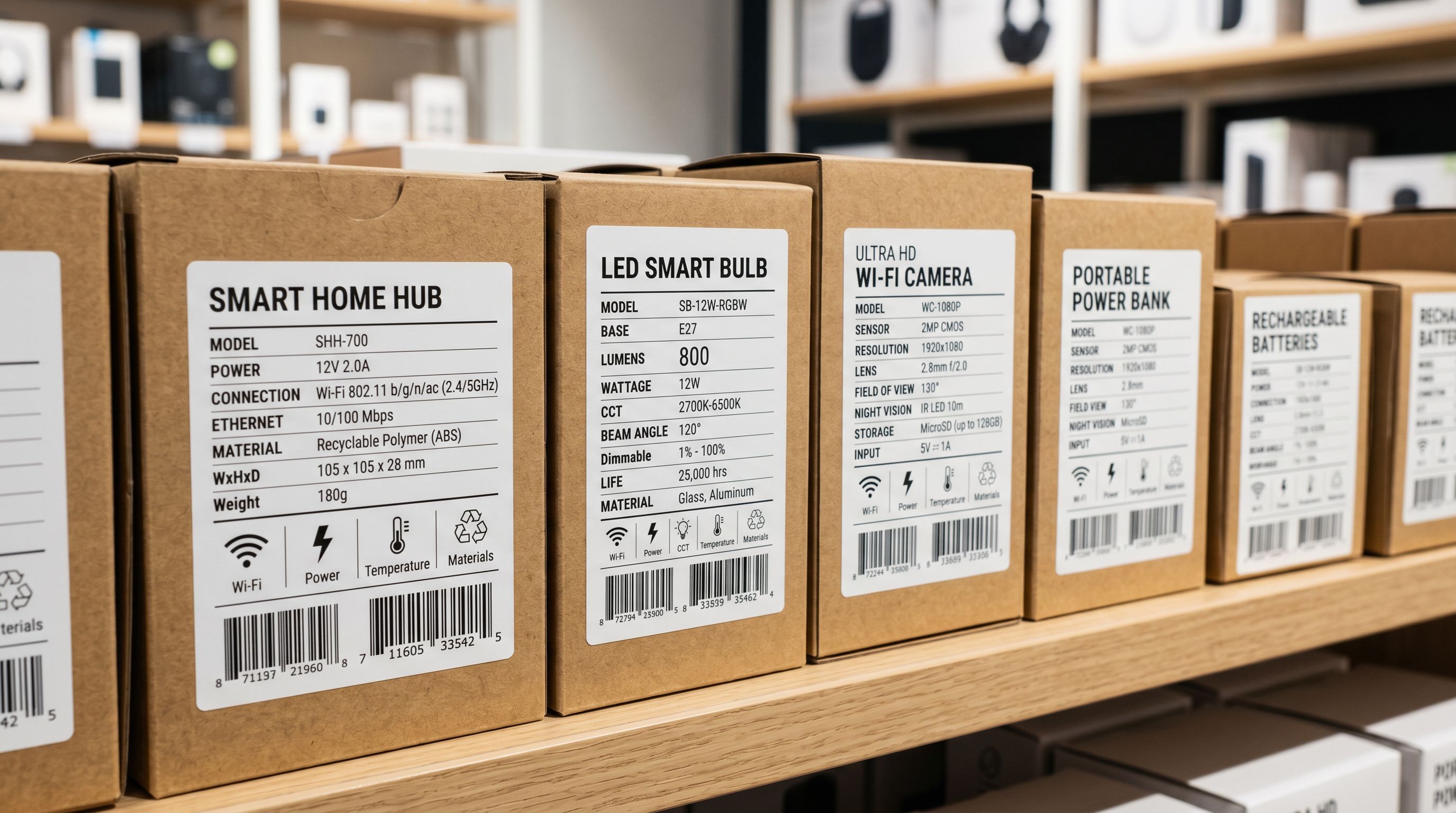
Perplexity does not only read your product page. For products with GTINs, Perplexity cross-references product identity against external specification sources, review aggregators, and price comparison databases.
A product with a valid GTIN gives Perplexity a way to verify the product independently of what your page says. This matters for recommendation confidence: Perplexity can confirm that the product you are selling is the same item reviewed on specialist sites and listed in manufacturer databases. That cross-referencing adds signal weight to your page's sourcing.
A product without a GTIN is an unverified entity. Perplexity must rely entirely on your page content to understand what the product is, with no external verification available.
The [schema.org Product specification](https://schema.org/Product) defines the `gtin` property that Shopify outputs in its JSON-LD structured data. A barcode entered in GS1 format (EAN-13, UPC-A) produces a valid `gtin13` property that Perplexity reads from the page. A blank barcode field produces no GTIN property.
## Category metafields as attribute signals
Perplexity's faceted queries (for example: "waterproof hiking boots, brown, size 10, under $200") resolve against specific attribute values. A product with category metafields for waterproofing, colour, shoe size, and price range can match all four dimensions simultaneously from structured data, not just prose extraction.
Shopify's Standard Product Taxonomy metafields appear as `additionalProperty` items in the schema.org Product JSON-LD on your product page. Perplexity reads these alongside the prose description and FAQ content. Completing category metafields at import time means the structured attribute layer is present from the first day a product is live.
## Testing your Perplexity visibility
The most direct way to evaluate how your products perform in Perplexity Shopping is to search for your category as a buyer would.
Use Perplexity Pro and search for category phrases with buyer intent: "best [product type] for [use case] under $[price]". Read the sources Perplexity cites for each recommended product. The excerpts it pulls into the answer are the page sections that resolved the query.
Compare those excerpts against your product descriptions. If Perplexity cannot cite your page for a query your product should answer, the page does not contain a clear enough answer to that query. The gap between what Perplexity cites and what your page says is a content brief.
Read more about [how Shopify product page FAQs improve AI search visibility](https://importier.app/blog/shopify-product-page-faq). FAQ content is often the section Perplexity cites most directly.
## Prioritisation for merchants starting out
If your catalogue has not been optimised for answer-engine search, the highest-return starting points are:
The first priority is the 20 products with your highest existing traffic or revenue. These products already have some page authority signal. Improving their description quality and adding FAQs amplifies a signal that already exists. Starting with the full catalogue spreads effort across pages that may never reach Perplexity's attention anyway.
The second priority is GTIN completion for those same products. Barcode completion feeds both Google Shopping eligibility and Perplexity's product identity cross-referencing. It is a single field change with returns across two channels.
The third priority is applying the relevant Industry Pack to add category metafields. The Industry Pack assigns the correct taxonomy attribute fields for your product type and populates values where the data exists. This builds the structured attribute layer that faceted queries resolve against.
The optimisation that does not work is rewriting descriptions to add keyword density. Perplexity is not reading for keywords. It is reading for answers. A description that contains "waterproof" twelve times is not more useful to Perplexity than one that contains "waterproof" twice alongside a specific waterproof rating and the conditions it was tested under.
## What to take away from this
Perplexity Shopping evaluates product pages as answer sources, not keyword containers. The same product data quality improvements that serve Google Shopping also serve Perplexity Shopping, though for different reasons.
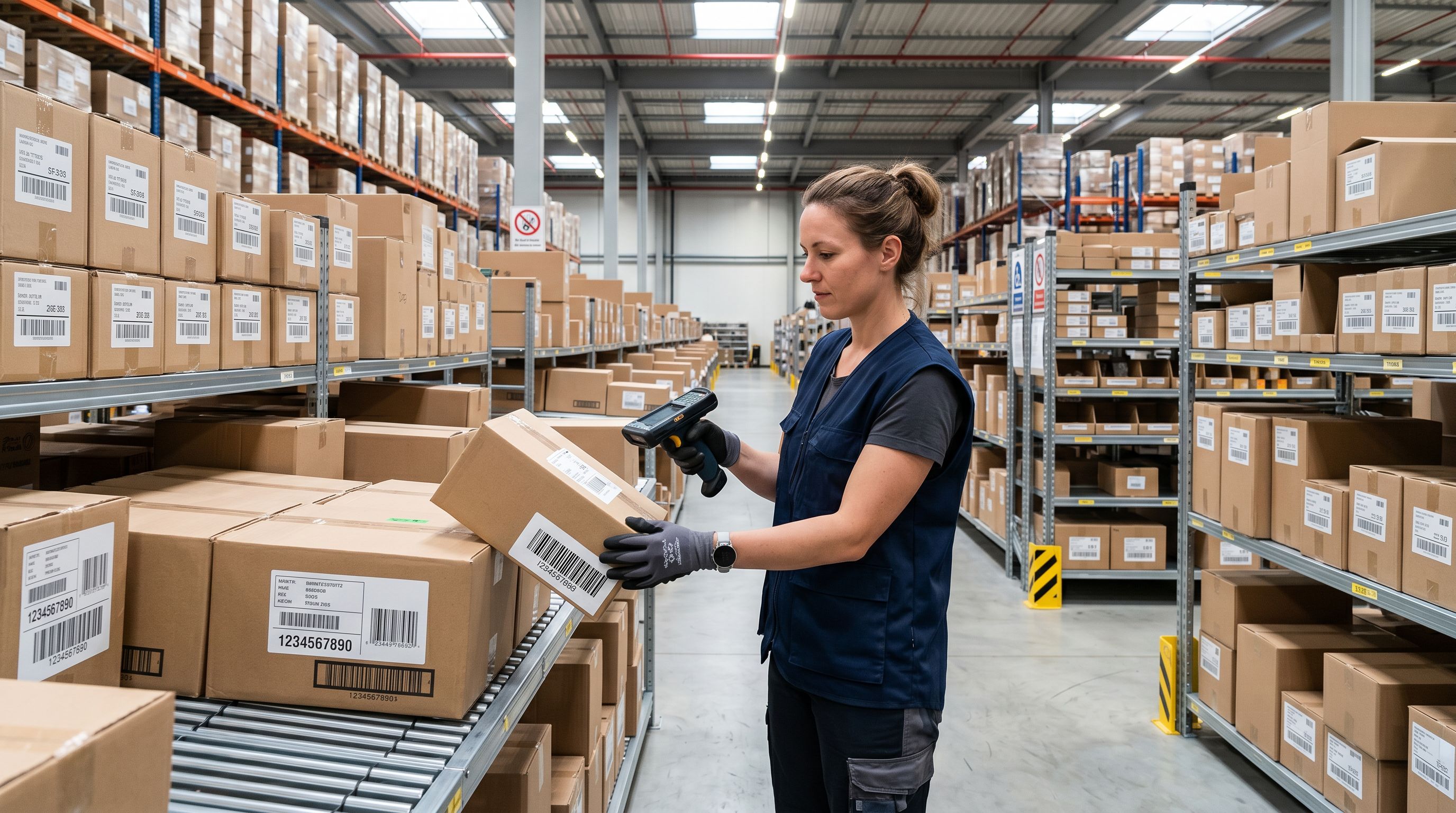
Google Shopping rewards GTIN for feed eligibility. Perplexity Shopping rewards GTIN for product identity confidence. Google rewards description depth for crawl completeness. Perplexity rewards description specificity for query resolution.
Key points:
- Perplexity Shopping surfaces products inside answer threads. The product page that most completely answers the buyer's question is the one Perplexity cites.
- Description quality for Perplexity means specificity and question-resolution. Replace adjectives with measured values and tested conditions.
- FAQ entries are direct question-matching signals. A FAQ that answers "is this waterproof?" resolves waterproofing queries even when "waterproof" does not appear in the product title.
- GTINs give Perplexity a mechanism to verify product identity against external sources, adding recommendation confidence beyond what the page alone provides.
- Category metafields as `additionalProperty` in schema.org allow Perplexity to resolve faceted queries against specific structured attribute values rather than extracting them from prose.
Try Importier free at [importier.app](https://importier.app): AI descriptions, FAQ generation, GTIN enrichment, and category metafields all improve how your Shopify product pages perform as answer sources in Perplexity Shopping.